Easy Fencing Ideas to Keep Dogs Safe: 10 Simple Setups That Actually Work for Any Yard
If you’ve ever watched your dog launch himself at the fence like it’s an Olympic sport, you know the panic. I’ve been there — standing in the yard at 7 a.m. in my pajamas, wondering how my very determined beagle found yet another gap.
The good news? You don’t need a contractor, a huge budget, or a week of vacation to make your yard genuinely safe. I’ve tried a lot of fencing fixes over the years, from fancy to embarrassingly cheap, and some of the simplest ones worked best.
Here are 10 easy fencing ideas that actually keep dogs contained — whether you rent, own a tiny yard, or share your space with the world’s most talented escape artist.
1. Start With a Low Picket Fence for the Front Yard
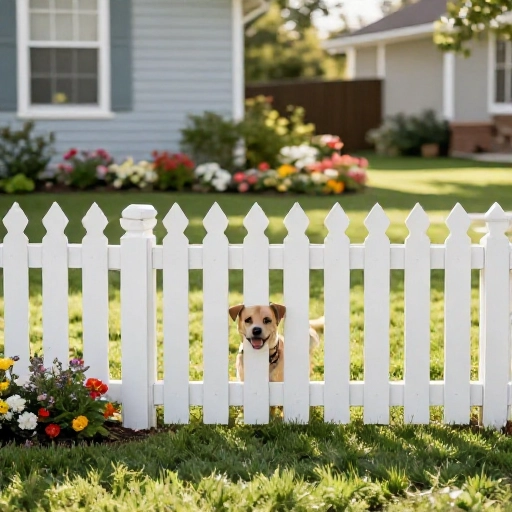
A white picket fence isn’t just charming — it’s a great first line of defense. A fence around three to four feet tall stops most dogs from bolting toward the street, and the vertical slats make it hard to climb.
I like picket fencing because it looks friendly and doesn’t make your house feel like a fortress. Aesthetically, it’s a win. Practically, it tells your dog where the boundary is before he even tests it.
One tip: make sure the gap between slats is too narrow for a paw or a nose. If your dog is small, choose a tighter spacing or add a layer of mesh behind it.
2. Try Freestanding Panels If You Rent
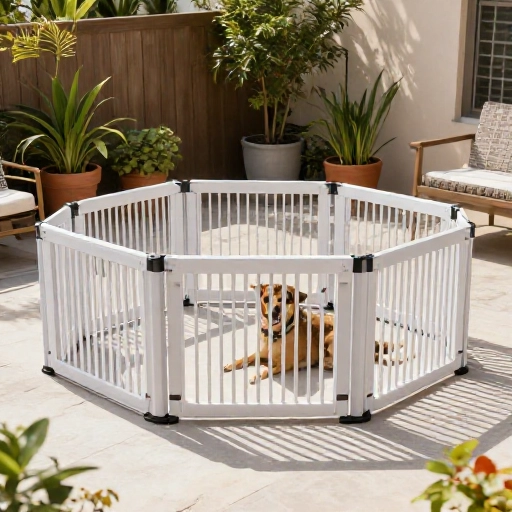
Renters, this one’s for you. No-dig, freestanding fence panels — sometimes sold as “temporary fencing” or “puppy panels” — just stand up and lock together. No holes, no landlord drama.
I used these to section off a potty area when I lived in an apartment with a shared yard, and honestly? They held up better than I expected. They’re also great for blocking off a pool, a garden bed, or a gate you don’t trust.
Look for panels with a stake or weighted base so a strong dog can’t push them over. Zip-tie them together at the corners for extra stability.
3. Bury the Bottom — It’s the Cheapest Upgrade You’ll Ever Make
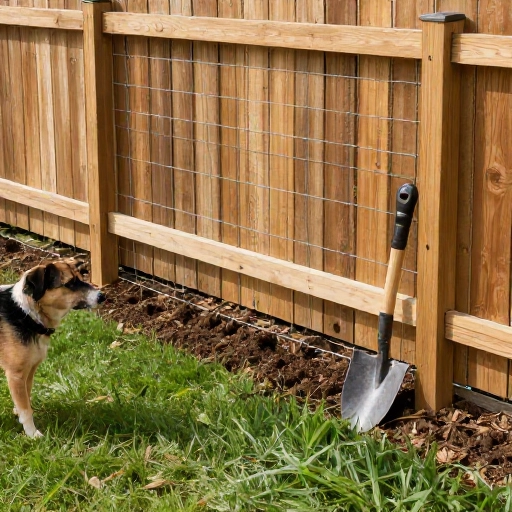
Dogs don’t jump fences nearly as often as they dig under them. If you skip this step, everything else is just decoration.
My favorite low-effort fix: attach a strip of wire mesh to the bottom of your fence and bend it into an “L” shape, then bury the horizontal part just a few inches under the soil. When your dog digs down, he hits wire instead of freedom.
If you can’t dig at all, lay patio pavers or heavy rocks along the base of the fence. It’s not pretty, but it works — and you can hide it later with mulch.
4. Add a Fence-Top Extension for Jumpers
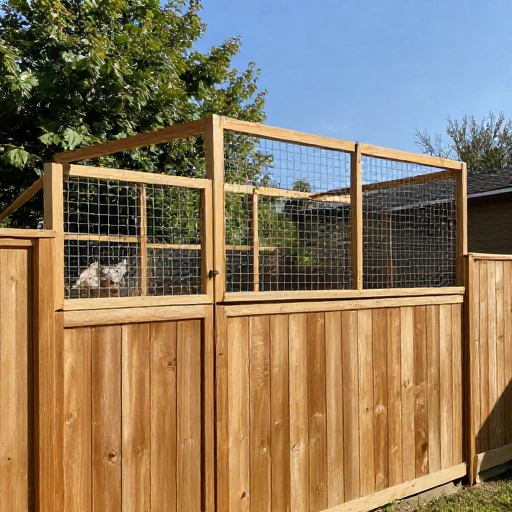
Some dogs are part kangaroo. If yours clears a four-foot fence like it’s a curb, don’t rebuild the whole thing — just make it taller at the top.
A welded wire extension, angled slightly inward, adds height without much cost. You can attach it with fence ties or heavy-duty zip ties, and it looks far less intense than a full privacy fence.
- Angle the extension inward (toward your yard) so a climbing dog can’t get a grip.
- Use rigid wire, not floppy netting — floppy netting tends to sag and invite escape attempts.
- Check local fence height rules before you build.
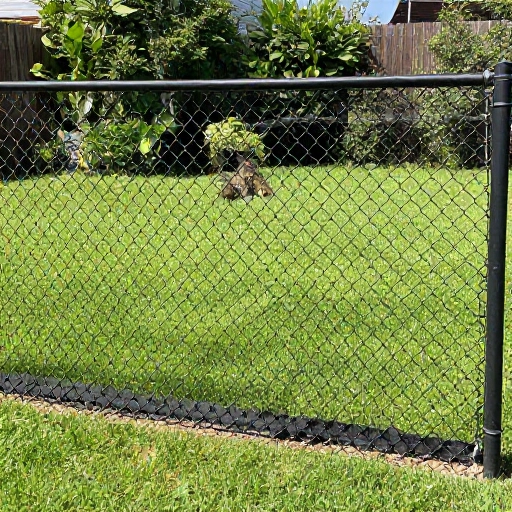
5. Reinforce an Existing Chain-Link Fence With Mesh
Chain-link is affordable and sturdy, but those big diamond gaps are basically an invitation for small dogs to squeeze through. The fix is almost embarrassingly easy.
Run a roll of small-gauge wire mesh along the inside of the chain-link and secure it with zip ties every foot or so. It takes an afternoon, costs very little, and instantly makes the fence dog-proof for tiny breeds.
I also love that this keeps the fence see-through, so your dog doesn’t feel walled in and you can still keep an eye on him.
6. Build a Small Dog Run or Potty Zone
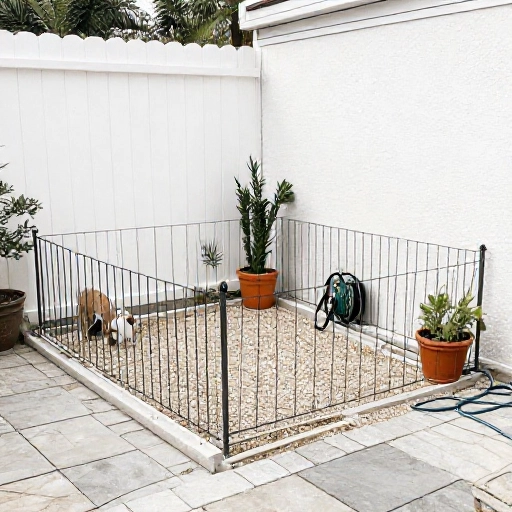
You don’t have to fence the whole yard. Sometimes fencing a small, safe zone works better — for your dog and for your sanity.
A dedicated run along the side of the house gives your dog a place to sniff, stretch, and do his business without you hovering. Use kennel panels or a simple post-and-wire setup, and add a little shade if it’s sunny.
I like pairing this with a gravel or mulch surface for easy cleanup. It’s a game-changer in rainy seasons.
7. Use Raised Beds and Short Borders to Protect Your Garden
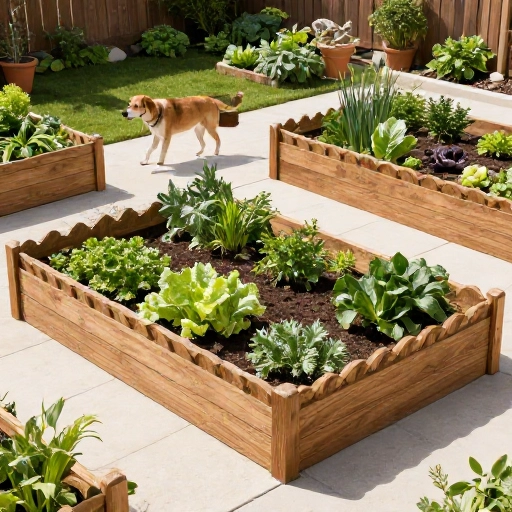
Fencing isn’t only about keeping your dog in — it’s also about keeping him out of your tomatoes. A short, decorative border around garden beds does both jobs at once.
Low picket edging, lattice panels, or even a single rail of wire between posts can signal “off limits” to most dogs. It’s less about physical force and more about clear, consistent boundaries.
Bonus: raised beds mean less digging temptation, since the soil is up and away from curious paws.
8. Add Privacy Slats to Stop Fence-Fighting and Barking
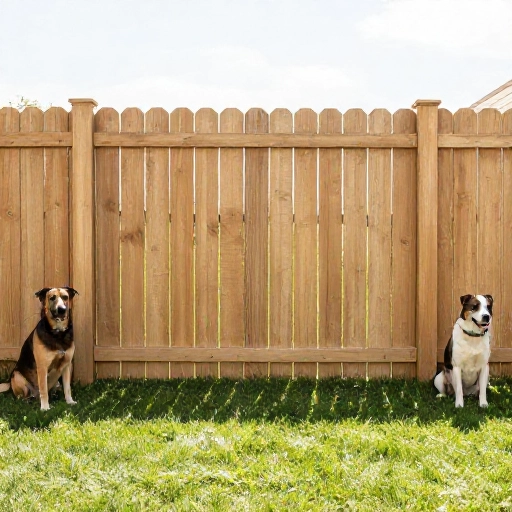
If your dog barks nonstop at the neighbor’s dog through the fence, the issue isn’t the fence itself — it’s the view.
Privacy slats, bamboo screens, or even a roll of shade cloth woven through the fence blocks the visual trigger. Most dogs calm down almost immediately once they can’t make eye contact through the gaps.
This is one of those fixes that feels small but changes everything. Fewer barking episodes, calmer neighbors, happier dog.
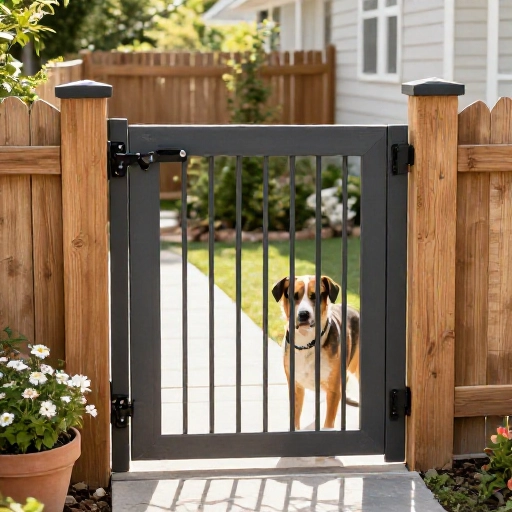
9. Upgrade Your Gates With Self-Closing Hinges and an Airlock
Most escapes happen at the gate, not the fence. Someone leaves it open for three seconds, and your dog is gone.
Self-closing hinges are cheap and solve half the problem automatically. Add a latch your dog can’t nudge open, and you’ve solved the other half.
If you have the space, build a double-gate “airlock” — one gate closes before the other opens. It’s a small change that saves a lot of heartbreak.
10. Use a Wireless or GPS Fence as a Backup, Never a Replacement
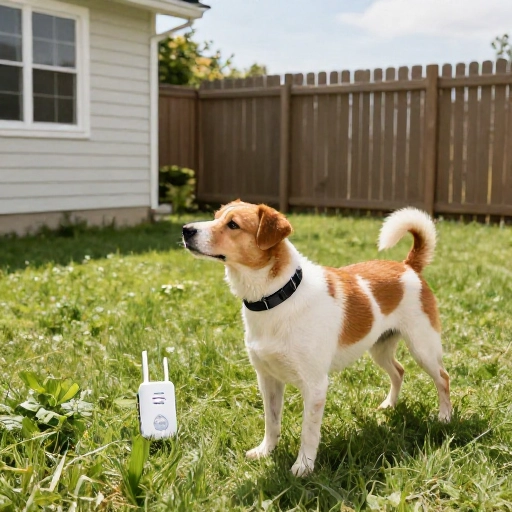
I’ll be honest: I don’t think invisible fences should be your only defense. Some dogs will run straight through a correction when they’re excited enough.
But as a backup layer on top of a real fence, they can be useful. They cover the gaps you missed and give you a heads-up if your dog gets close to the edge of your property.
If you go this route, pair it with training and always keep physical fencing as your main barrier. Technology fails; a good fence doesn’t.
Final Thoughts: Layer It, Don’t Overthink It
You don’t need the fanciest fence on the block. You need one that fits your dog’s personality — his size, his jump height, his digging habits, and his determination level.
Start small. Fix the bottom, secure the gate, block the view. Then add layers as you go. Most of these ideas cost less than a vet visit, and the peace of mind is worth every penny.
Frequently Asked Questions
How tall should a fence be to keep a dog in?
Four feet works for most small and medium dogs. If your dog is a jumper or a climber, go for five to six feet, and consider an inward-angled extension at the top.
What’s the cheapest way to dog-proof a fence?
Burying wire mesh along the base and adding small-gauge mesh to any large gaps. Both are inexpensive and solve the most common escape routes.
Can I dog-proof a yard if I rent?
Absolutely. Freestanding panels, no-dig temporary fencing, and portable dog runs give you real containment without damaging the property.
Do invisible fences actually work?
They work for some dogs, but they’re best used as a backup to a physical fence — not as your only barrier. Training and consistency matter a lot here.
How do I stop my dog from digging under the fence?
Attach wire mesh to the bottom of the fence, bend it into an L-shape, and bury the horizontal section a few inches down. Pavers or heavy rocks along the base work too.