Teaching the Quiet Command for Dogs: How to Turn Barking into Calm

We love our dogs for their loyalty, their joy, and their never-ending enthusiasm. But let’s be honest—there are moments when the barking feels… a bit much.
If your dog’s barking has started to stress you out—or worse, strain your relationship with neighbors or family—it might be time to introduce one of the most underrated but powerful tools in training: the quiet command for dogs.
This isn’t about silencing your pup completely. Barking is a natural and even important part of how they communicate. But teaching them when to stop barking can bring peace, calm, and a better connection between you and your best friend.
Why Dogs Bark in the First Place
Before diving into the training, it helps to understand what’s behind the noise.
Dogs bark because:
- They’re alerting you to something
- They’re excited or anxious
- They’re bored or seeking attention
- It’s become a habit or response
The quiet command for dogs isn’t meant to suppress their voice entirely—it’s about giving them guidance. You’re not saying, “Don’t ever bark.” You’re saying, “Thanks for the heads up, you can relax now.”
And that’s a powerful message for your dog to understand.
Step 1: Start With a Trigger
Pick a common situation that makes your dog bark—maybe a knock at the door or the sound of the doorbell. Be ready with treats and a calm, clear tone.
Let your dog bark a few times, then gently say “quiet” once.
As soon as they pause—even for a second—reward them immediately. Don’t wait. Timing is everything here. The goal is to catch the silence and turn it into a positive association.
You’re not punishing the bark. You’re rewarding the stillness.
Step 2: Pair with a Hand Signal
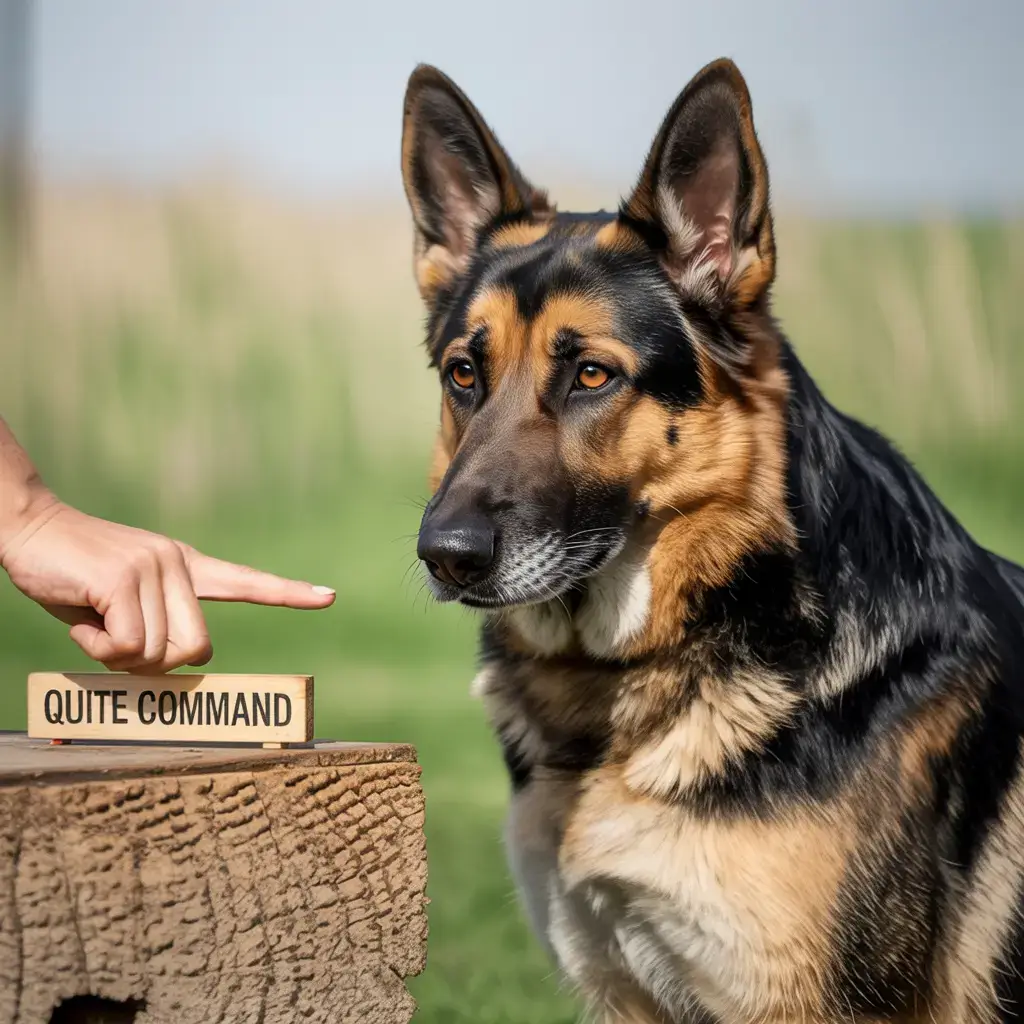
Many dog trainers recommend pairing verbal commands with hand gestures. For the quiet command, try putting your finger to your lips or holding your hand up with your palm facing your dog.
With repetition, your dog will start to link the visual cue to the behavior—even if there’s background noise.
This layered communication is what makes the quiet command for dogs so effective in real-life situations.
Step 3: Practice in Different Environments
Dogs don’t generalize like we do. Just because your dog learns to be quiet in the living room doesn’t mean they’ll stay calm in the backyard or at the park.
So practice the quiet command in a variety of places: near the window, at the front door, in the yard, or even while on a leash during a walk.
Every new environment is an opportunity to reinforce calm.
Step 4: Be Consistent and Patient
Like all good training, this takes time. Your dog won’t master the quiet command in a single day. And that’s okay.
Stay calm. Be consistent. Don’t yell “QUIET!” over their barking—it only adds more noise. Instead, use a confident, even tone. Your dog responds not just to the word, but to your energy.
With every successful pause, treat, and praise, your dog learns that quiet gets them what they want—your approval, your love, and maybe a tasty snack too.
When to Ask for Help
If your dog barks excessively due to anxiety, trauma, or compulsive behavior, the quiet command for dogs may only be part of the solution.
In those cases, working with a certified trainer or canine behaviorist can help you uncover the root cause and offer a more comprehensive plan.
There’s no shame in asking for help. It just shows how much you care.
Final Thoughts
The quiet command isn’t about control. It’s about communication. It’s about helping your dog feel confident and calm in a noisy world. It’s about creating space for peace—without taking away your dog’s voice.
When you teach the quiet command for dogs, you’re not just fixing a behavior. You’re strengthening trust. You’re offering clarity. And you’re giving your dog one more way to succeed.
Because at the end of the day, your dog doesn’t want to be disruptive. They just want to be understood.
And when you guide them with patience and kindness, they listen—not out of fear, but out of love.