10 Adorable DIY Outside Cat Houses Your Feline Will Love

As a cat lover with a few outdoor roamers, I’ve always worried about them having a safe, cozy spot when the weather turns. Buying a cat house can be expensive, and honestly, they often lack that personal, charming touch. That’s why I turned to DIY projects.
Creating a DIY outdoor cat shelter is easier than you think. It’s a rewarding weekend project that gives you total control over the size, insulation, and style. Plus, it’s a fantastic way to upcycle materials you might already have lying around. Let’s dive into ten of my favorite adorable and practical ideas.
1. The Cozy Cooler Cottage
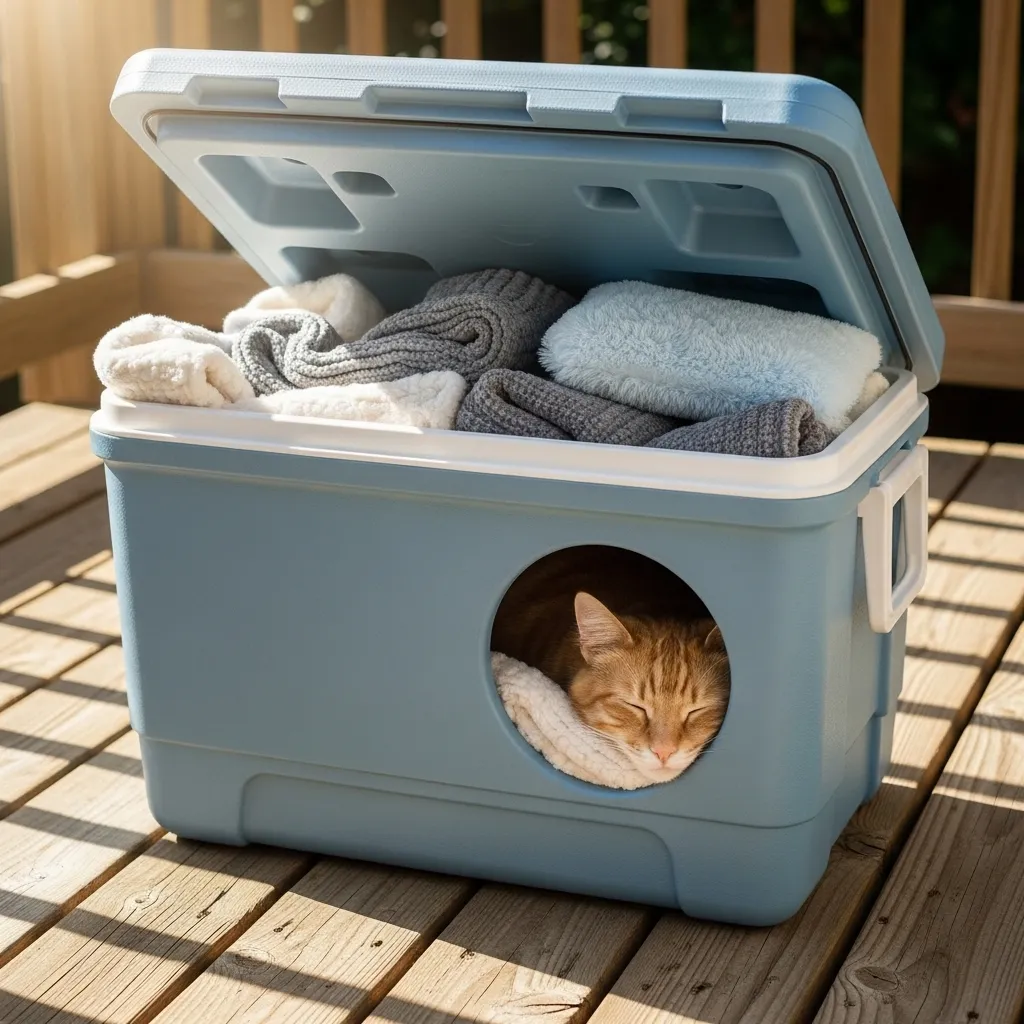
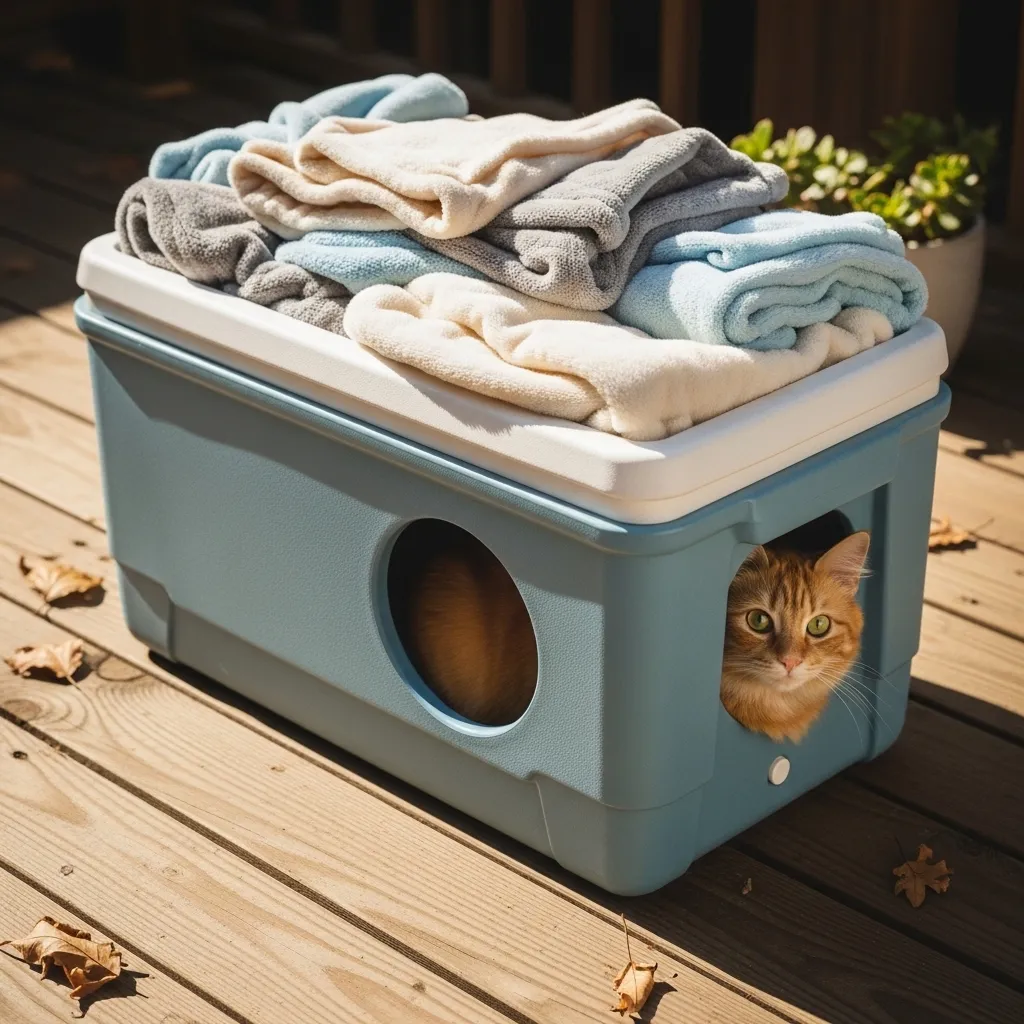
Don’t toss that old styrofoam cooler! It’s actually a purr-fect starting point for a super-insulated cat house. The thick walls naturally keep the cold out and warmth in.
Simply cut a small entrance hole in one of the short sides. Line the inside with a soft fleece blanket for bedding. For extra protection, you can place the whole cooler inside a larger plastic tote, adding a layer of straw insulation between them.
It’s waterproof, lightweight, and surprisingly stylish with a little paint.
2. The Rustic Wood Crate Cabin
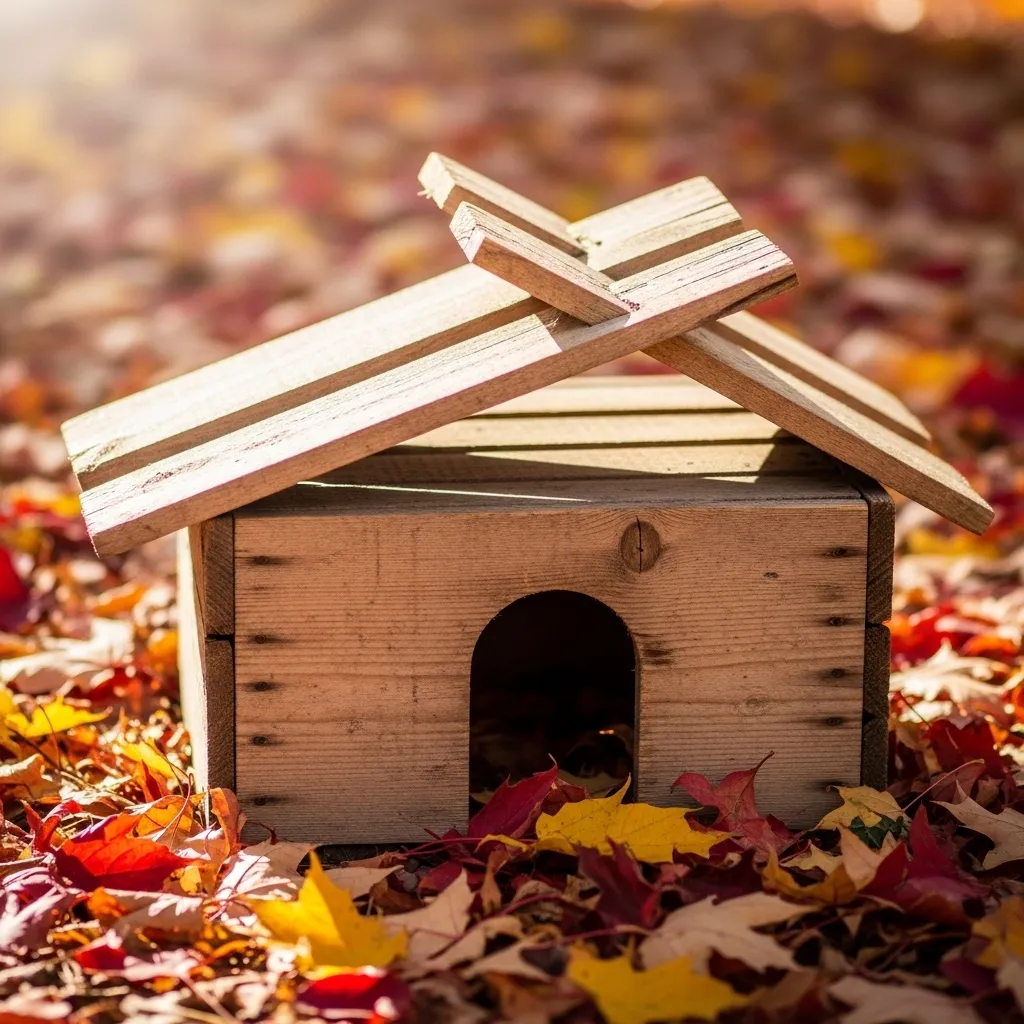
Wooden crates have that instant rustic charm. I found one at a local market and knew it was destined to be a feline chalet.
Flip it on its side, add a slanted roof with some spare plywood or shingles, and cut a circular doorway. Sand down any rough edges. I stained mine with a pet-safe, weatherproof sealant to help it last through the seasons.
It looks so cute on a porch or nestled under a tree.
3. The Upside-Down Storage Bin Shelter
This is one of the simplest and most effective designs. You just need two plastic storage bins—one slightly smaller than the other.
- Cut a doorway in both bins.
- Place the smaller bin inside the larger one.
- Fill the gap between them with insulation like straw or foam boards.
- Secure the lids, and you have a double-walled, weatherproof fortress.
It’s incredibly durable and easy to clean.
4. The Adorable Fairy-Tale Toadstool House
For a truly magical garden addition, why not make a toadstool house? Use a large terracotta pot as the base and a wooden bowl or a smaller pot as the red, spotted roof.
Seal the drainage hole in the base pot to create a dry floor. Paint the “roof” with bright red, weather-resistant paint and add white dots. It’s a whimsical hideaway that doubles as garden art.
My cats adore peeking out of the round doorway.
5. The Simple & Effective Styrofoam Box
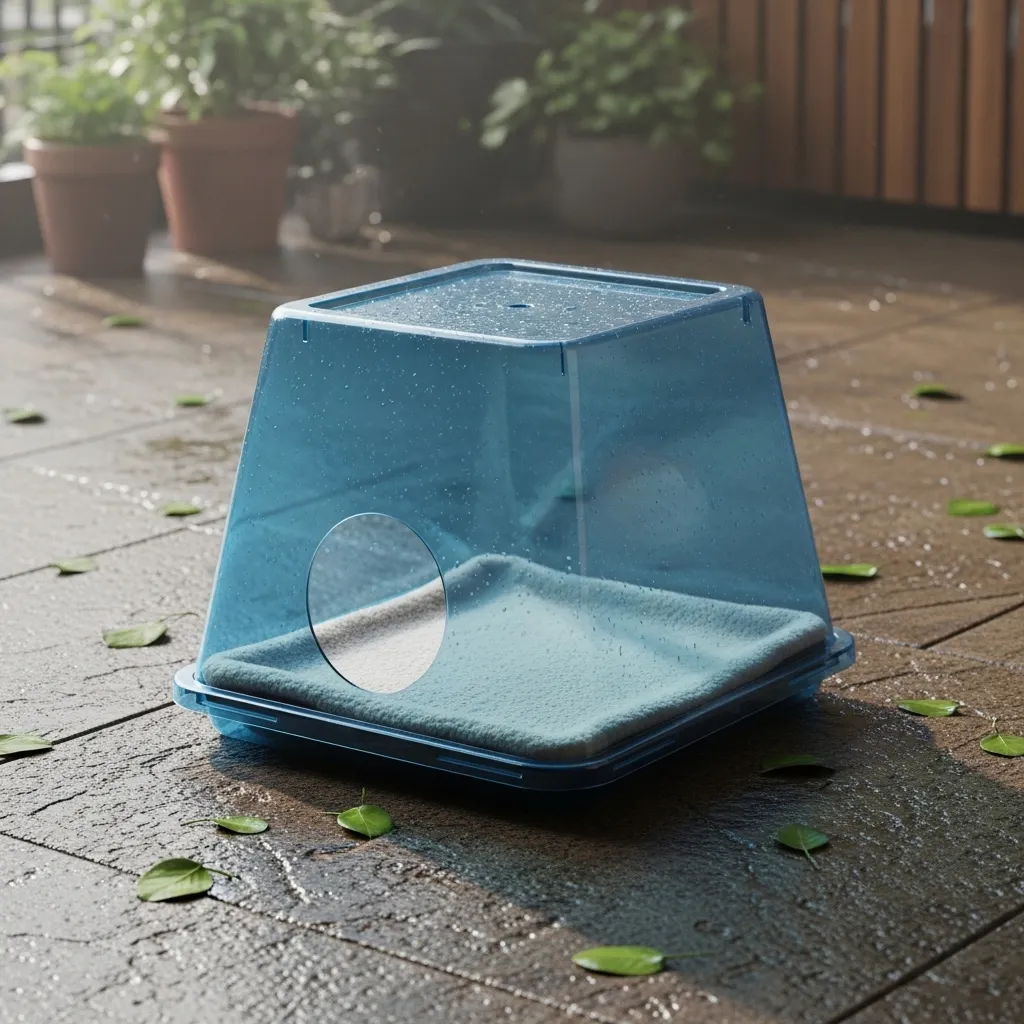
If you receive packages with thick styrofoam inserts, save them! These are excellent for quick, temporary, or emergency shelters.
Tape two pieces together to form a box, cut an entrance, and line it with a reflective emergency blanket (the silver kind) followed by a towel. It’s not the prettiest, but it’s incredibly warm. You can always disguise it inside a decorative box or under a porch.
6. The Chic Painted Barrel Hideaway
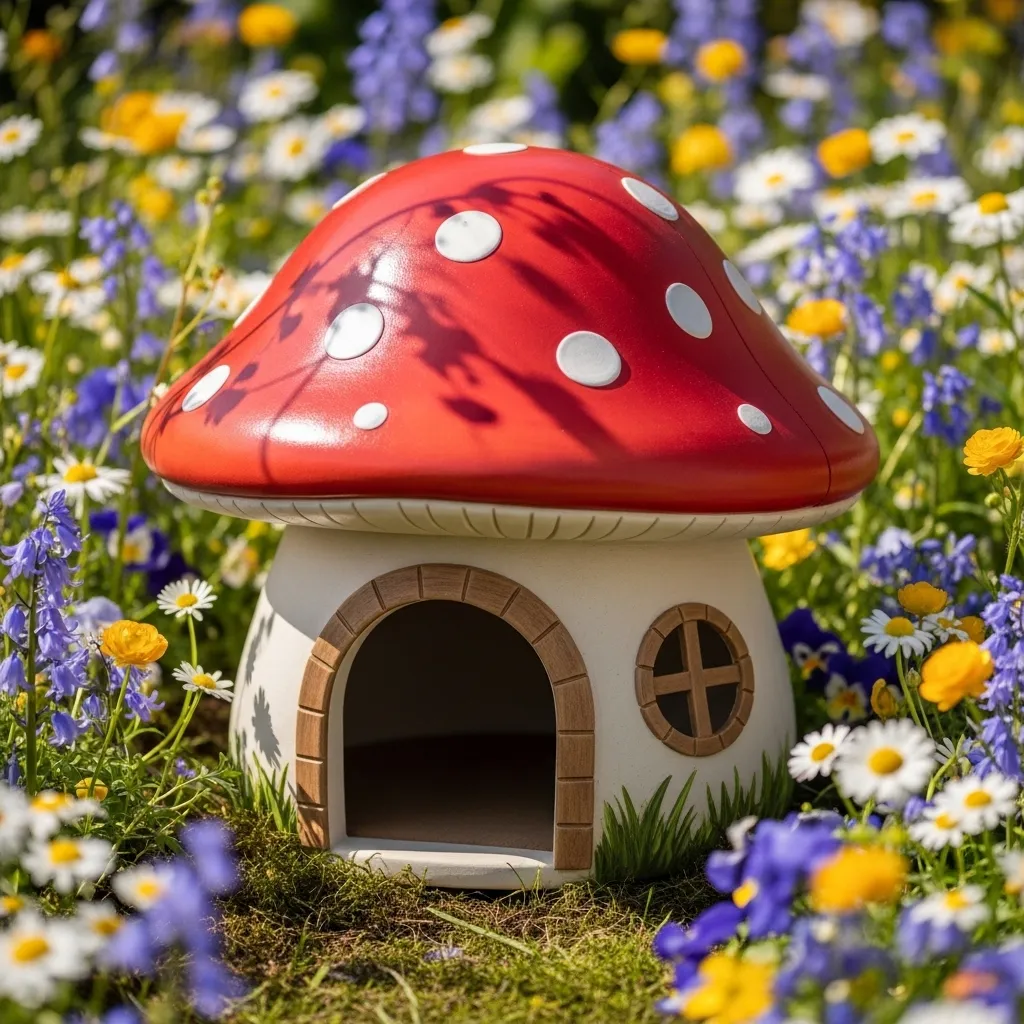
A small, wooden barrel cut in half lengthwise creates an instantly charming cat cave. I found one at a garden center.
Sand it well, paint the outside in a fun color (I used a sunny yellow), and apply a clear waterproof coat. Mount it on a couple of flat boards to keep it off the damp ground. Add a cushion inside, and it becomes a cozy, rounded nook that looks intentional in any yard.
7. The Repurposed Cabinet Kitty Condo
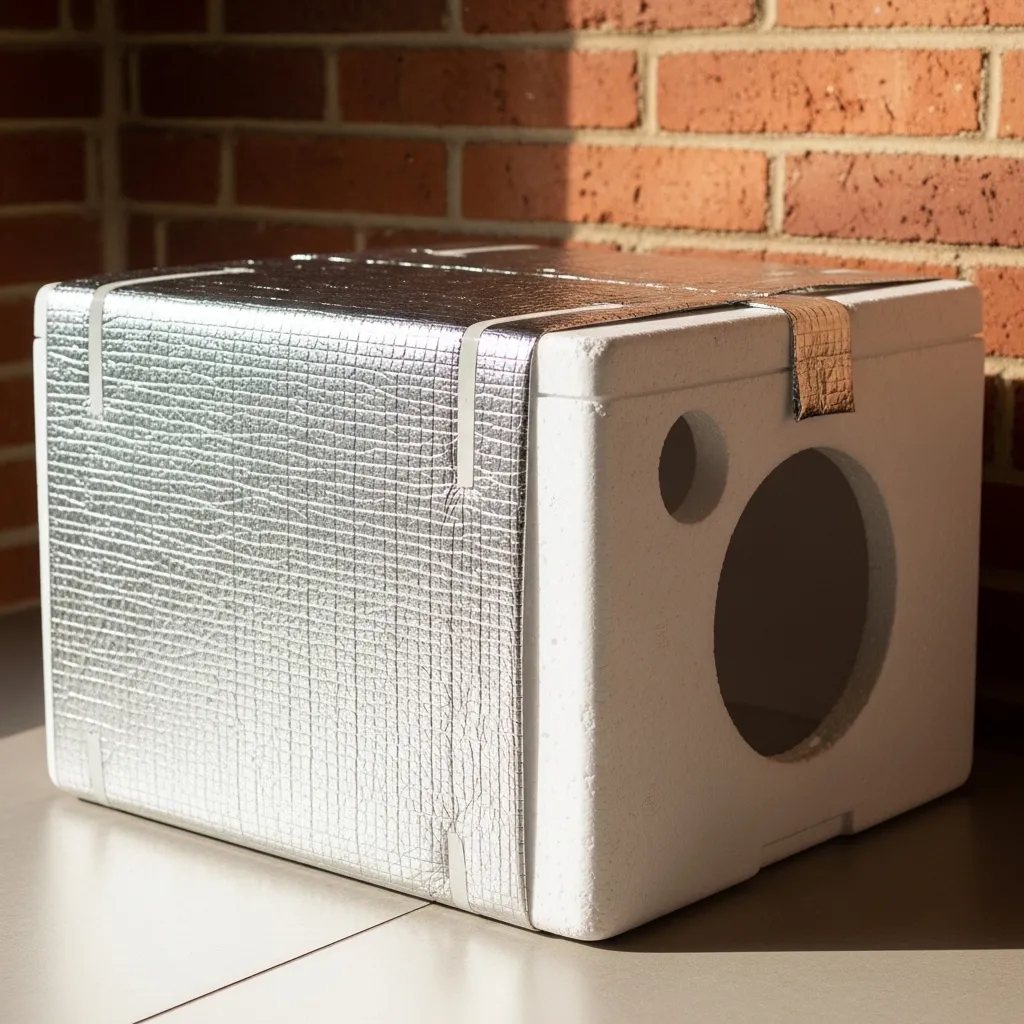
An old nightstand or a small cabinet destined for the curb can become a luxury cat apartment. Remove the drawers, and you have instant compartments.
- Cut a doorway in the side.
- Add carpet or sisal rope to the top for a scratching post.
- Weatherproof it with outdoor paint and add a small overhang to the roof for extra rain protection.
It’s spacious and has so much character.
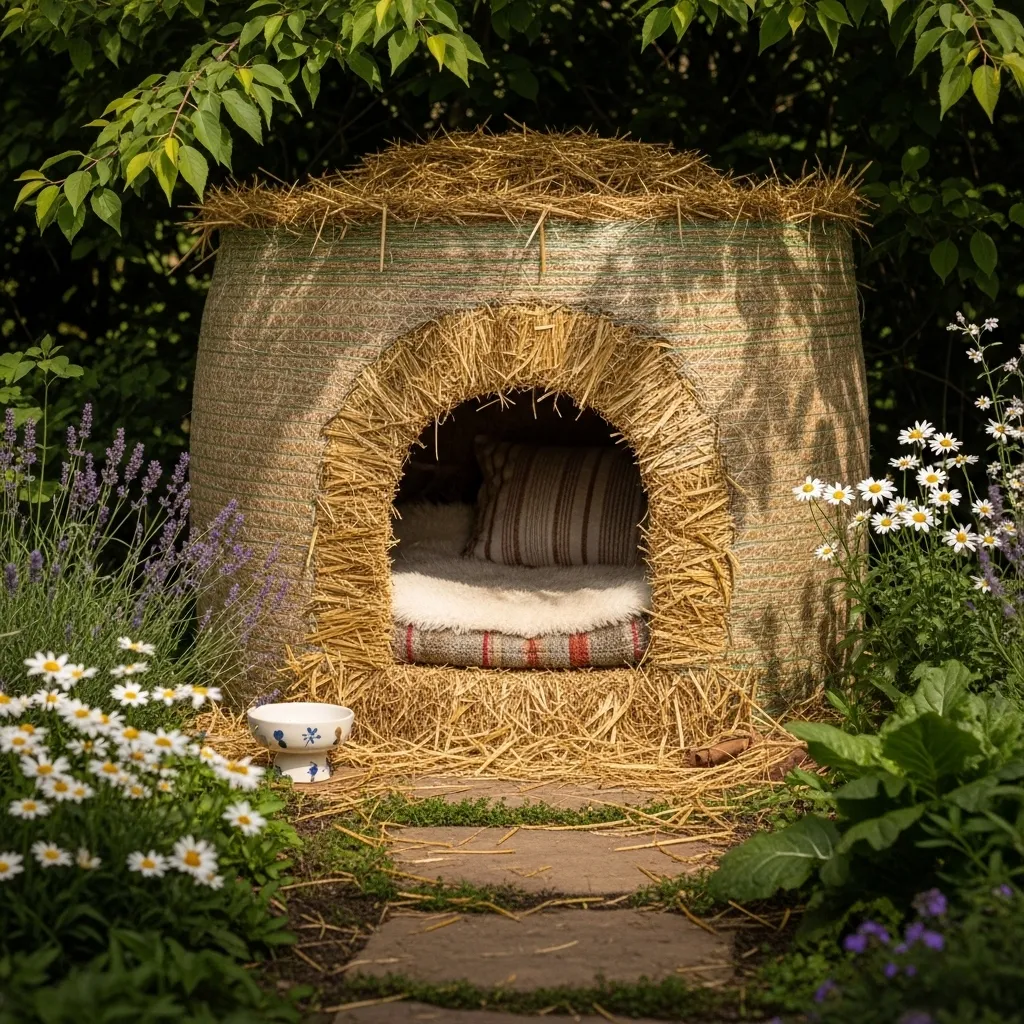
8. The Snug Straw-Bale Retreat
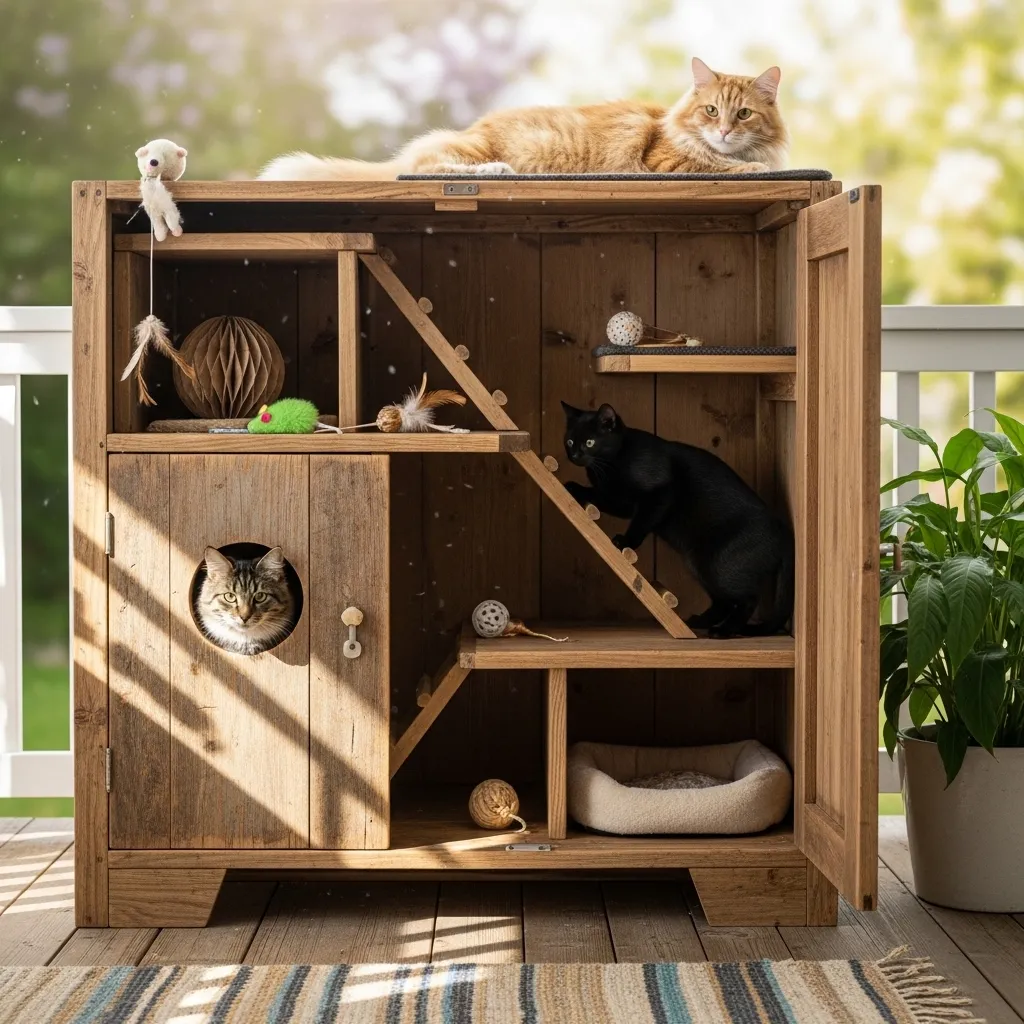
For a natural insulator that’s hard to beat, try a straw-bale house. Stack two bales in an L-shape to form two walls and a roof nook.
Place a piece of plywood on top as a roof, weigh it down, and pile straw on top for camouflage. The interior stays remarkably dry and warm. It’s a fantastic, biodegradable option that blends right into a more natural garden setting.
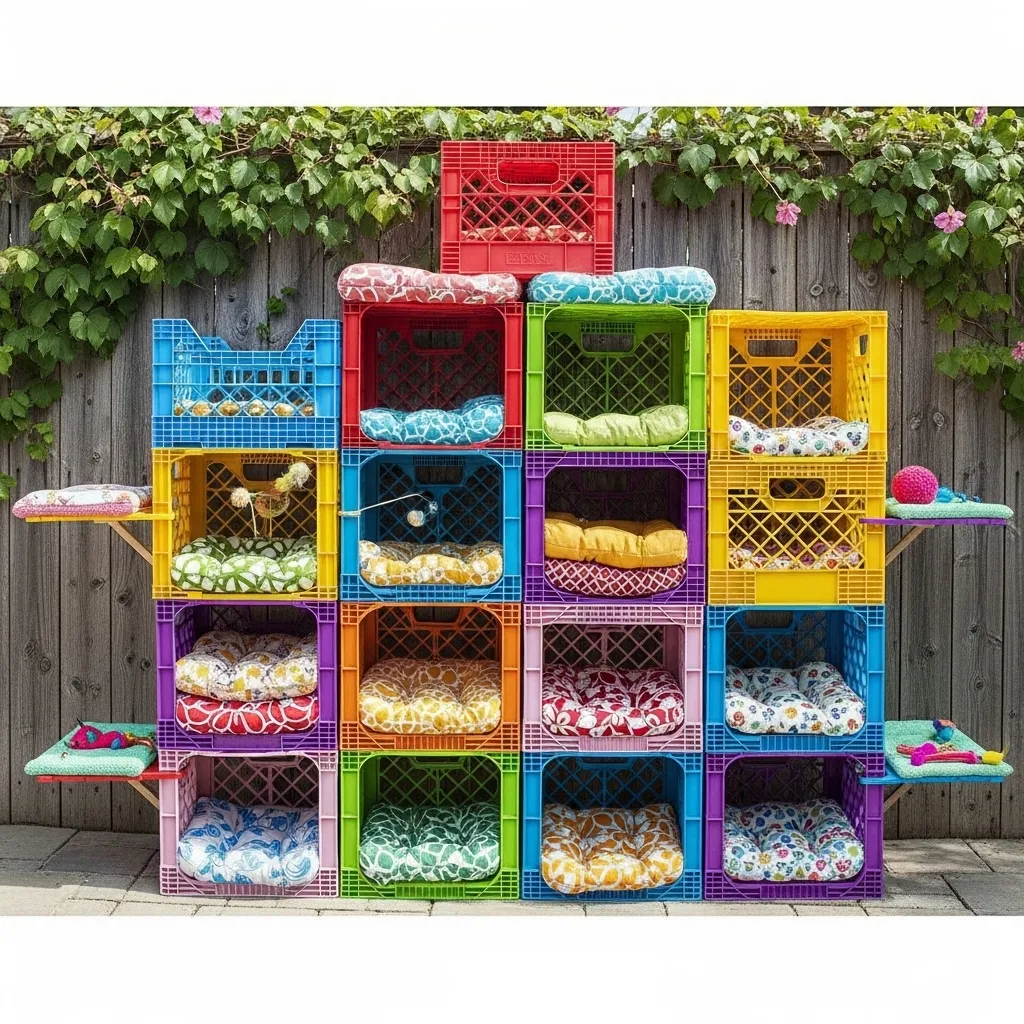
9. The Colorful Milk Crate Castle
Plastic milk crates are sturdy, ventilated, and stackable. I used zip ties to secure two crates together, one on top of the other.
I cut a fabric-backed vinyl tablecloth to size and draped it over as a waterproof roof, securing it with more zip ties. A soft bed inside makes it cozy. You can even stack them sideways to create a multi-room complex! It’s a very modern, modular look.
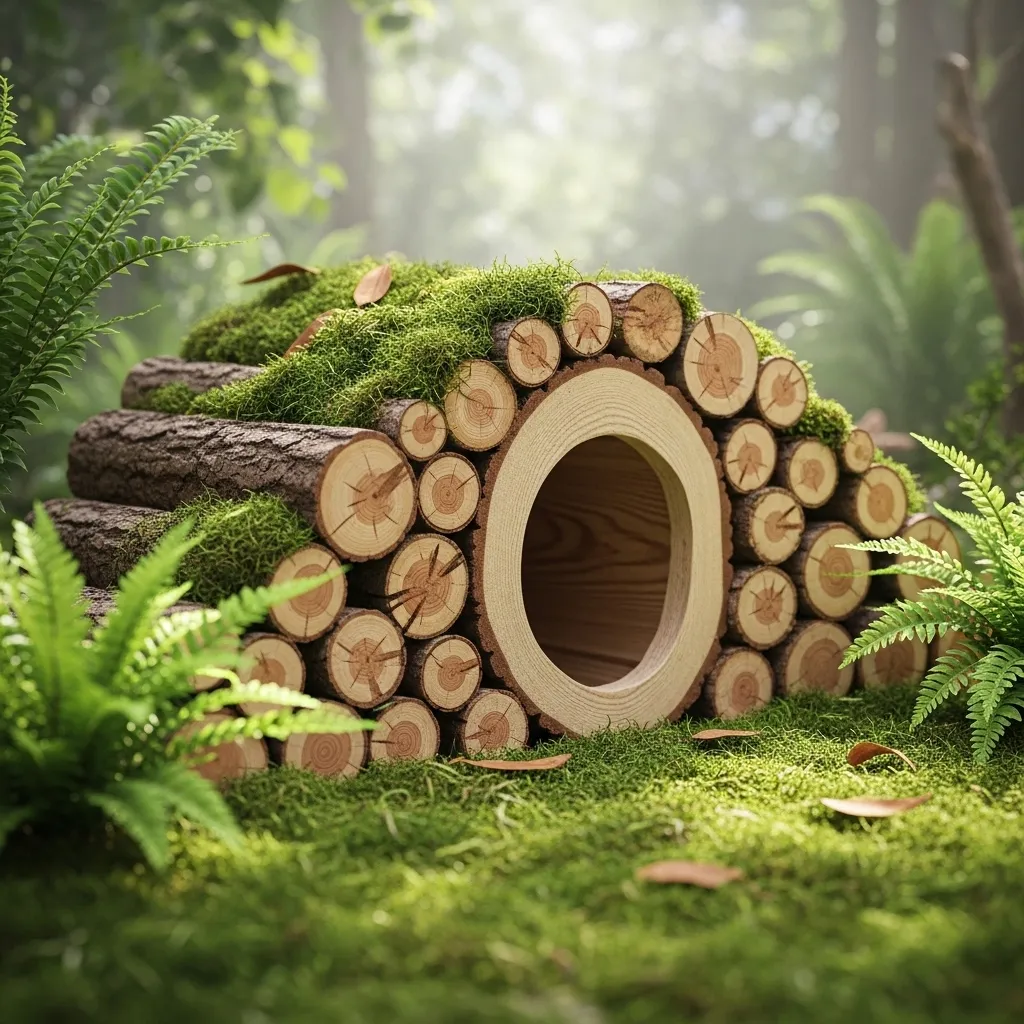
10. The Enchanted Log Pile Den
If you have access to some logs or thick branches, you can build a natural-looking den. Create a sturdy teepee or square frame with the logs, leaving a small entrance.
Thatch the roof with more sticks, dried grasses, or even a layer of sod. It provides excellent camouflage and insulation. My cats feel like wild little forest creatures when they use this one.
Wrapping Up Your DIY Cat House Project
Building a shelter for your outdoor cats is one of the most caring projects you can do. Remember to place the house in a quiet, elevated spot away from heavy foot traffic. Always use straw for bedding, as it stays dry and doesn’t hold moisture like blankets or towels can. Most importantly, make it your own—a splash of paint, a cute sign, or some decorative stones can turn a simple shelter into a beloved home.
FAQs About DIY Outdoor Cat Houses
Q: What is the best insulation for an outdoor cat house?
A: Straw is the absolute best. It repels moisture and provides excellent warmth. Avoid hay, which can mold, and towels/blankets which can get damp and freeze.
Q: How big should the entrance hole be?
A: Just big enough for your cat—about 6-8 inches in diameter. A smaller hole helps keep body heat in and larger predators or bad weather out.
Q: Should I put food and water inside the house?
A: No. Keep food and water well away from the sleeping area to avoid attracting insects or other animals to their safe space.
Q: How do I keep the house clean?
A: Choose designs with removable lids or roofs for easy access. Regularly replace the straw bedding and wipe down the interior with a pet-safe disinfectant.
Q: Will my cat actually use a DIY house?
A> They might be skeptical at first! Place a familiar-smelling item inside, like a toy or an old t-shirt of yours. Position it in a spot they already frequent, and be patient. They’ll discover its coziness soon enough.