11 DIY Dog Gates Perfect for Small Spaces That Won’t Clutter Your Home
Living in a small apartment or a cozy house with a dog can sometimes feel like a balancing act. You need to keep your pup safe and contained, but you definitely don’t want a bulky, ugly gate taking over your hallway or living room. Over the years, I’ve tested so many store-bought options that just didn’t fit my narrow doorways or my style.
The good news? You can build a custom gate that fits your space perfectly without needing a workshop full of tools. These 11 DIY dog gate ideas are designed for tight spots, tiny corners, and renters who can’t drill huge holes. Let’s get into the best space-saving solutions that actually look good.
1. The Tension-Mounted Accordion Gate for Odd Doorways
If you have a doorway that’s an unusual width, a standard pressure gate just won’t cut it. I love this DIY version because it uses a simple wooden accordion fold. You just need thin plywood strips, hinges, and tension rods at the top and bottom.
It’s perfect for blocking off a narrow kitchen entrance or a hallway leading to the bedroom. Since it mounts with tension, there are zero holes in your walls—ideal for renters. Plus, when you don’t need it, it folds flat against the wall and takes up less than four inches of space.
Materials needed: Plywood, small hinges, two tension rods, and wood glue.
2. The Baby Gate Alternative: A Sliding Barn Door Gate
Traditional swing gates eat up floor space, which is the last thing you want in a tight living room. Instead, I built a sliding barn door gate that glides along a track mounted above the doorway. It looks super stylish and saves every inch of floor space.
You can use a pre-made barn door hardware kit and a piece of MDF or pine board. Paint it to match your trim, and it just looks like a design feature. When the gate is open, it sits flush against the wall, completely out of the way.
Pro tip: Add a small lock on the side so your clever pup can’t nudge it open.
3. The Under-the-Table Gate for Tiny Kitchens
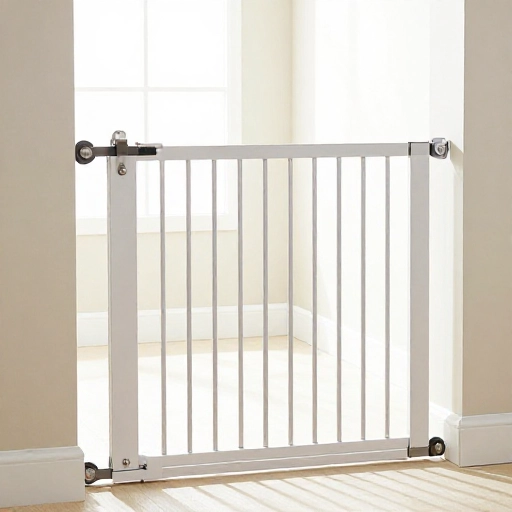
Kitchens in small homes often have a table or counter that leaves a gap between the counter edge and the wall. Instead of blocking the whole kitchen, I built a small, removable gate that fits right under the table overhang.
This gate is literally just a wooden frame with vertical dowels. It sits on the floor and is held in place by the tabletop above. It’s incredibly simple to build in an afternoon and keeps the dog out of the kitchen without blocking your own movement.
This works best if your table has a solid top that sits about 30 inches high.
4. The Fabric Tension Gate for Lightweight Blocking
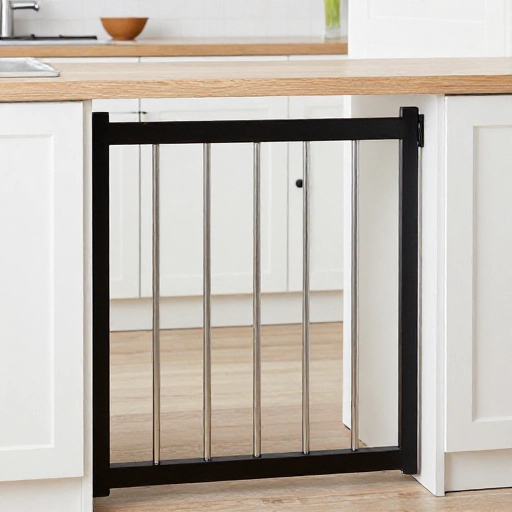
Not every gate needs to be a fortress. For keeping a small dog out of a specific room or off the stairs, a fabric tension gate is perfect. I made mine using a strong canvas fabric, two tension curtain rods, and some Velcro.
You roll the fabric around the top tension rod and attach the bottom rod for weight. It wedges tightly into the doorway. It’s lightweight, completely collapsible, and costs under $15 to make. Just wash the fabric when it gets dirty.
Best for: Small breeds or puppies who don’t jump.
5. The Plant Pot Gate for Balcony Safety
If you have a small balcony or a patio door, a traditional gate feels bulky. I got creative and built a gate that doubles as a planter box. The gate is a low wooden box filled with heavy soil and pet-safe plants. It sits in front of the door opening.
It’s heavy enough that a small dog can’t push it over, but you can easily step over it. It adds greenery to your small space while creating a physical barrier. Just make sure the plants are non-toxic to dogs.
This is a fantastic solution for ground-floor apartments with sliding doors.
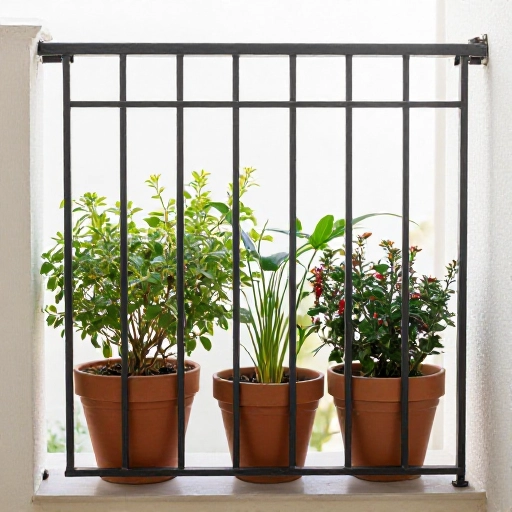
6. The Retractable Mesh Gate for Narrow Hallways
Narrow hallways are a nightmare for standard gates because you always have to step over them. I built a retractable mesh gate using a spring roller and some mesh fabric. It mounts on one side of the hallway and pulls across to a small hook on the other side.
When it’s not in use, it rolls up into a small casing that’s only about two inches wide. It doesn’t block the path at all. You can buy the roller mechanism online and attach your own fabric for a custom color.
It’s not for heavy chewers, but it’s perfect for quick containment.
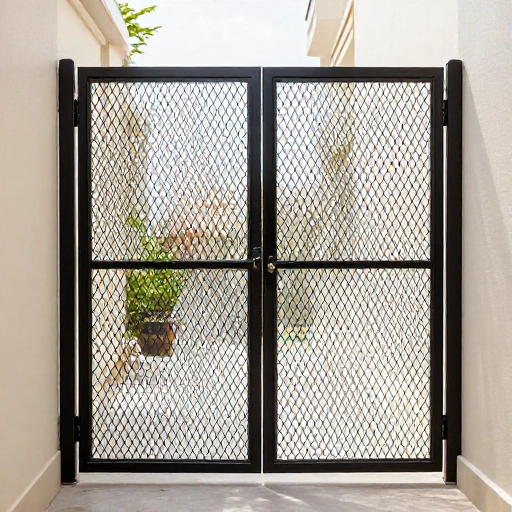
7. The Freestanding Room Divider Gate
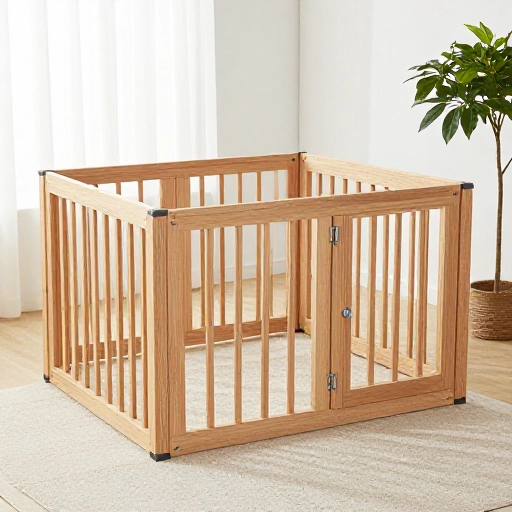
In an open-concept small apartment, you sometimes need to block off a whole zone. I built a freestanding gate that looks like a wooden room divider. It’s three hinged panels made from lattice or slatted wood.
You don’t attach it to the walls at all. It stands on its own and can be folded into a zigzag shape to fit any opening. It’s great for blocking off a dining area or a home office corner. The slats allow light to pass through, so it doesn’t make your space feel dark or cramped.
Add a coat of white paint to keep it feeling airy.
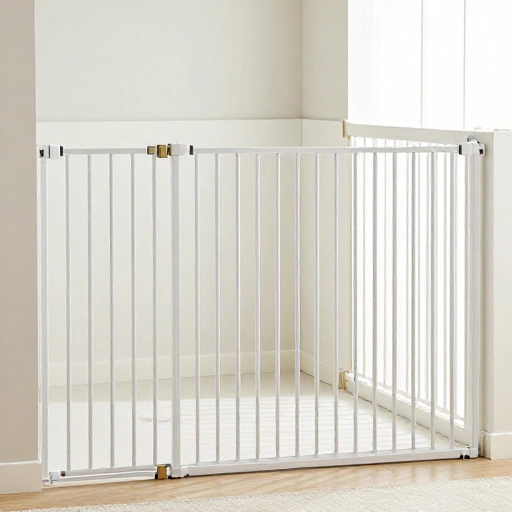
8. The Crate Door Gate for Multi-Functional Spaces
If your dog already has a crate, you can turn the crate door into a room gate. I removed the front door of my dog’s wire crate and attached it to the bedroom doorway using simple hinges and a latch.
It’s the same size as the crate door, so it’s compact and sturdy. When you need to contain the dog in the bedroom, you just swing the gate closed. It matches the crate, so everything looks cohesive. It’s basically a free gate if you already have the crate parts.
Just reinforce the hinges so they don’t sag over time.
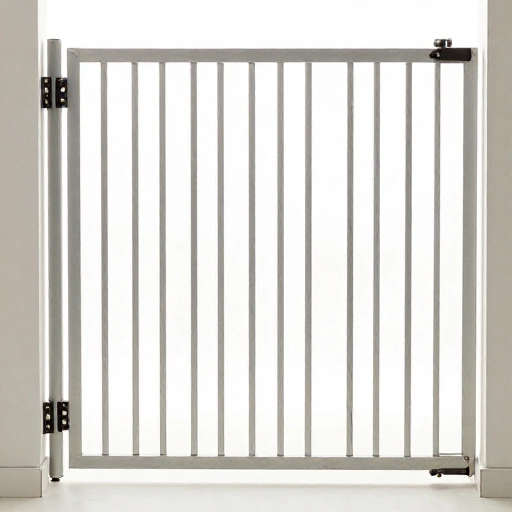
9. The Under-Stair Storage Gate
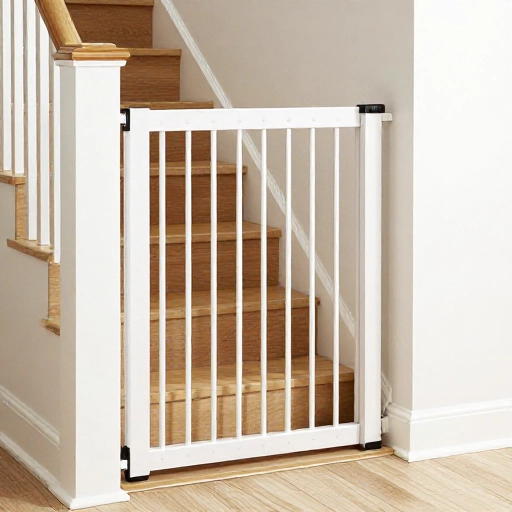
Stairs in small homes often have a weird little nook underneath. I built a custom gate that blocks off the space under the stairs to keep the dog away from stored items or cords. This gate is a simple wooden frame that fits the exact angle of your staircase.
Measure the height and width of the opening under the first few steps. Build a rectangular frame and attach a sheet of plexiglass or wooden slats. It keeps the dog out but lets you still use the storage space by opening the gate.
This turns a wasted area into a functional, dog-free zone.
10. The Tension Rod Gate for Closet Doors
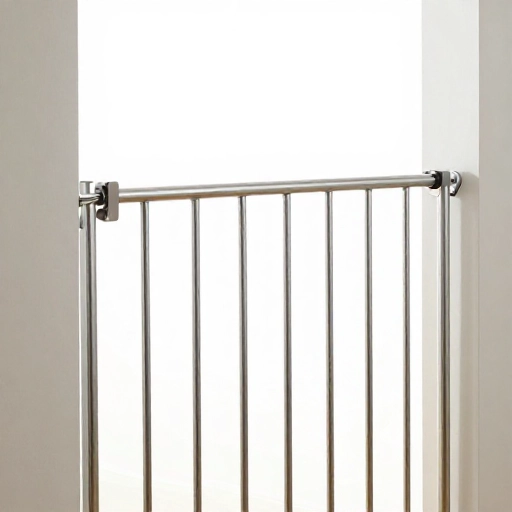
Do you have a closet in your bedroom that you don’t want your dog sneaking into? I use a simple tension rod gate. It’s just a heavy-duty tension rod wedged between the closet door frame, with a piece of fabric or a small wooden board hanging from it.
It’s super easy to install and remove. You can slide it up or down to adjust the height. It works best for closets that are less than 36 inches wide. It’s not a heavy-duty deterrent, but it stops curious noses from pushing open the door.
This took me five minutes to set up.
11. The Magnetic Screen Door Gate for Patios
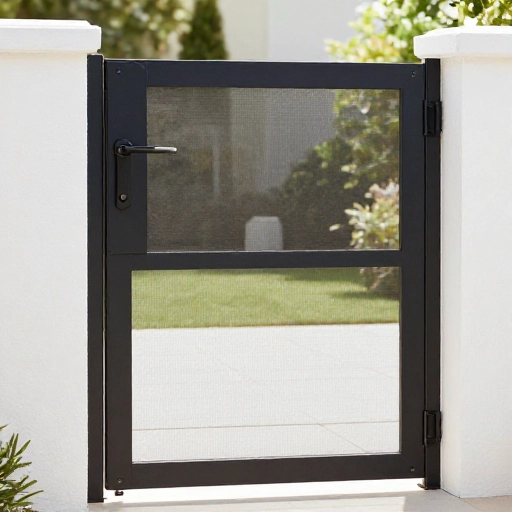
For a sliding glass door, a heavy gate is a hassle. I made a magnetic screen door that acts like a gate. It’s a mesh screen with magnets down the center that stick together after your dog walks through. You install it in the sliding door track.
It allows you and your dog to come and go freely, but it keeps the dog inside when the main door is open. It’s not a lock, but it’s a gentle barrier. If your dog pushes through, the magnets close right back up. It’s perfect for letting in fresh air without losing your pup.
Materials: Mesh screen kit, strong magnets, and Velcro tape.
I hope these ideas give you the inspiration you need to create a safer, more functional home for you and your furry friend. Remember, the best DIY gate is the one that actually fits your lifestyle and your space. Don’t be afraid to modify these concepts to match your exact measurements and decor style.
Frequently Asked Questions
What is the easiest DIY dog gate for a beginner to build?
The fabric tension gate is hands-down the easiest. You only need a tension rod and a piece of fabric. It requires zero power tools and can be done in under ten minutes. It’s perfect for blocking off a doorway temporarily.
How do I make a DIY dog gate without drilling holes?
Use tension-based systems. Tension rods, spring-loaded curtain rods, or freestanding room dividers all work without a single screw. The accordion gate and the fabric gate I mentioned are completely hole-free options.
What is the best material for a DIY dog gate in a small space?
Plywood and pine boards are lightweight and easy to cut. For a lighter look, use fabric or mesh. Avoid heavy metal unless you have a very strong chewer. Light wood painted white helps the gate blend into small rooms and makes the space feel bigger.
Can I make a DIY gate that is safe for puppies?
Yes, but make sure the gaps are small enough that a puppy can’t squeeze through or get their head stuck. Vertical slats spaced no more than two inches apart are safe. Also, ensure the gate is stable and cannot tip over onto the puppy.
How do I make my DIY gate look stylish?
Paint it the same color as your trim or wall. Use decorative lattice or slatted wood instead of solid panels. You can also add a small piece of molding to the top edge. The goal is to make it look like intentional home decor, not a pet barrier.