11 Smart DIY Cat Litter Box Hideaways You Can Make Today (Easy, Cheap & Stylish!)
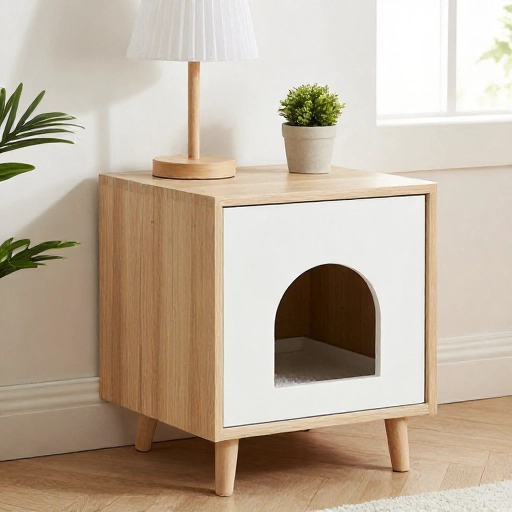
I love my cats, but I don’t love tripping over a plastic litter box in the middle of my home. If you feel the same, a DIY cat litter box hideaway is a total game changer. It keeps the box out of sight, gives your cat some privacy, and can even cut down on tracked litter.
The best part? You don’t need fancy tools or a huge budget. Most of these ideas use furniture you already have, thrift-store finds, or simple materials from the hardware store. I’ve rounded up 11 smart DIY cat litter box hideaways you can make today.
Just remember the golden rules: good ventilation, easy access for scooping, and a size that fits your cat comfortably. Now let’s hide that litter box in style.
1. IKEA Nightstand Hack with a Cat Door
This is one of my favorite beginner-friendly projects. Grab a small IKEA nightstand like a Rast or Tarva, then cut a cat-sized opening on one side. I used a jigsaw, but a hand saw works if you take your time.
Seal the inside with peel-and-stick vinyl or a cheap plastic liner. That makes accidental misses way easier to wipe clean. Add a small litter mat just inside the door to catch granules.
Leave the back panel slightly loose or drill a few ventilation holes. Cats need airflow, and so does your nose.
2. Wooden Storage Bench with a Hidden Cubby
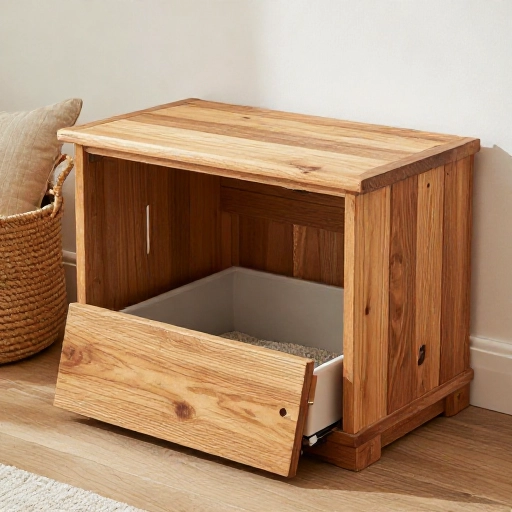
A storage bench is already useful, so turning it into a litter box hideaway feels like a double win. Look for one with an open cubby or a lift-up lid. Cut an entry hole on the side or back.
If the bench has a solid bottom, line it with waterproof shelf paper. I also added a thin wooden lip at the front to keep litter from spilling out when my cat digs.
The top gives you extra seating or a place for baskets. Just make sure the bench is sturdy and won’t tip when your cat jumps in and out.
3. Vintage Trunk or Suitcase Hideaway
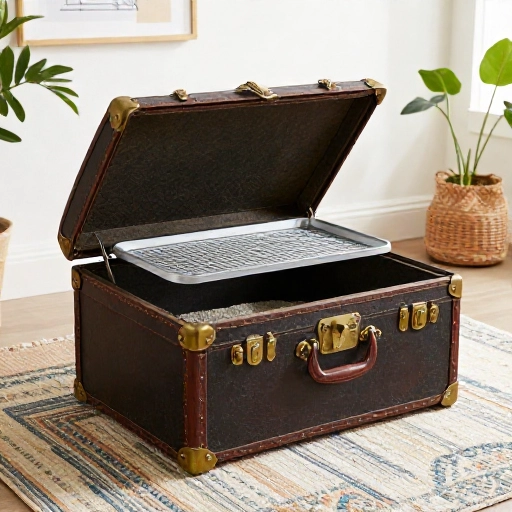
Thrift stores are full of old trunks and hard-shell suitcases. They make charming litter box hideaways with a ton of personality. Cut a rounded hole on one side using a drill and jigsaw.
Reinforce the cut edge with a strip of wood or a rubber trim so it doesn’t snag your cat. Put a shallow litter pan inside and a removable tray underneath for easy cleaning.
Because vintage trunks can trap odors, I prop the lid open a crack or add discreet vent holes near the top. A cute basket on top hides the gap.
4. Side Table with a Curtain
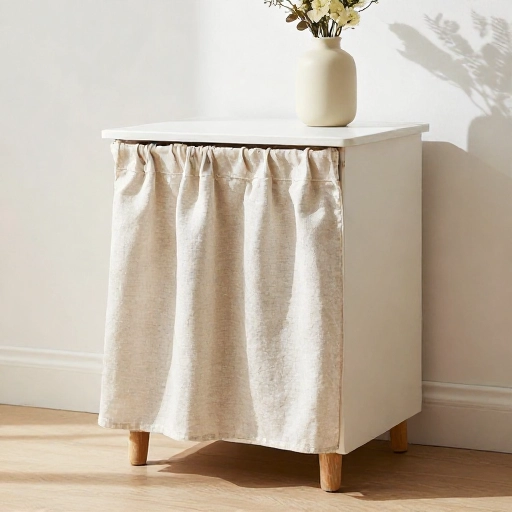
This might be the fastest DIY on the list. Find a small side table or console table with open space underneath. Slide the litter box below, then add a tension rod and a short curtain.
I chose a washable fabric so I can toss it in the laundry when it gets dusty. My cat learned to push through the curtain in about a day.
This setup works great in apartments because it looks like normal decor. Just leave a little gap at the bottom for airflow and easy sweeping.
5. Storage Ottoman with a Cutout
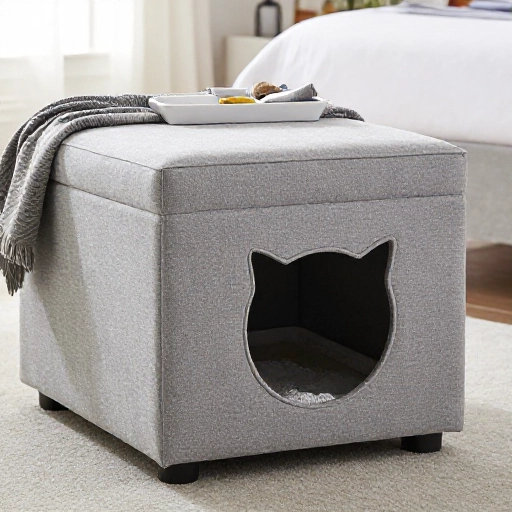
A storage ottoman can hide a litter box right in your living room. Choose a sturdy one with a firm frame, not a flimsy collapsible cube. Cut a hole on one side and sand the edges smooth.
Line the inside with a waterproof mat or a piece of vinyl flooring. That protects the fabric from urine and makes cleanup much easier.
I like ottomans with a removable lid because I can scoop quickly without moving the whole thing. If your cat is a heavy digger, add a small internal wall to contain litter.
6. Cube Shelving Unit with a Hidden Cubby
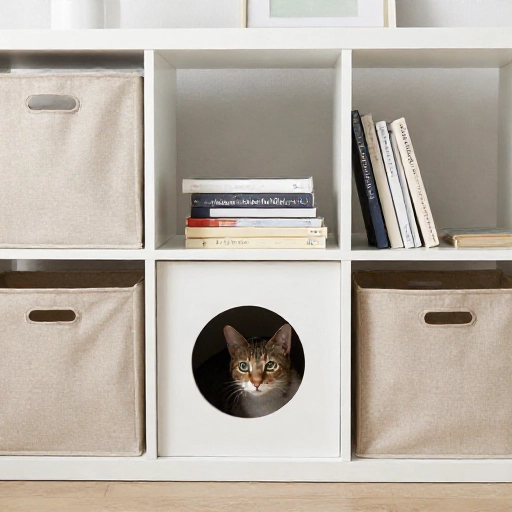
Cube organizers are cheap, customizable, and easy to find. Use a 2×2 or 4×2 unit, remove one cube, and place the litter box inside. Cut a cat door in the side panel or back panel.
Fill the other cubes with fabric bins to hide supplies like scoop, bags, and extra litter. It looks like a normal bookshelf or storage unit.
Check that the shelf is anchored to the wall. Cats can be surprisingly strong when they jump out of a hidden box.
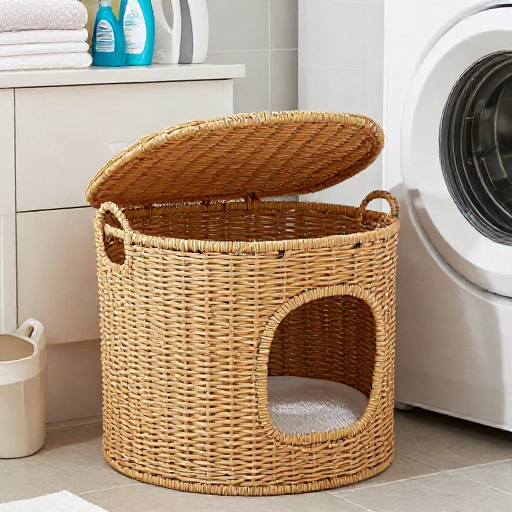
7. Laundry Hamper Hideaway
An old laundry hamper can become a sneaky litter box cover in minutes. Plastic hampers are easy to cut; wicker ones need a little more care. Cut a door opening near the bottom.
Place a small litter pan inside. If the hamper has a lid, keep it slightly open or drill ventilation holes around the top. This is perfect for bathrooms or small laundry rooms.
I used Velcro strips to keep the lid secure but still easy to lift. It’s not fancy, but it works and costs almost nothing.
8. Plastic Storage Tote Enclosure
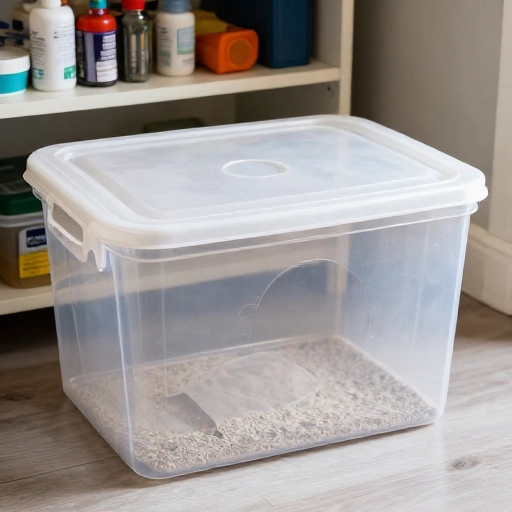
This is the budget-friendly, waterproof option. Buy a large plastic storage tote with a lid, then cut a hole in one side. Sand the edges or cover them with duct tape so your cat doesn’t get scratched.
Drill a few small holes near the top for airflow. The lid helps contain odors, and the plastic wipes clean in seconds.
I like this for foster kittens or temporary setups. It’s lightweight, so you can move it from room to room while you figure out the best spot.
9. Under-Desk or Desk Cubby Hideaway
If you work from home, you might already have a desk with an open cubby. Slide the litter box underneath and add a fabric panel or curtain to hide it. Your cat gets a quiet spot near you.
Measure carefully so your cat has room to turn around. I also added a small battery-powered motion light inside so I can see when scooping.
Keep cables and cords tucked away. A curious cat and a hidden litter box should never be near tangled electronics.
10. Upcycled Dresser with Missing Drawers
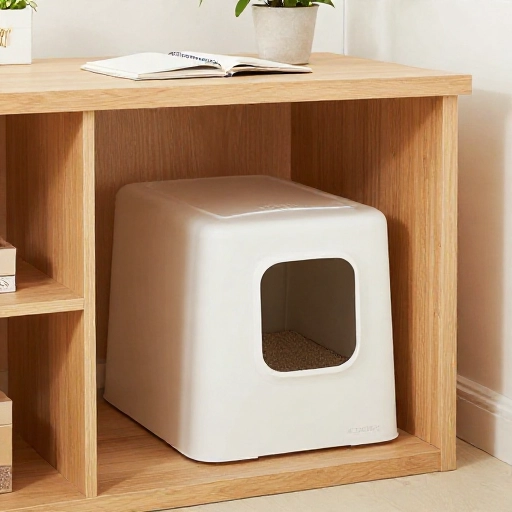
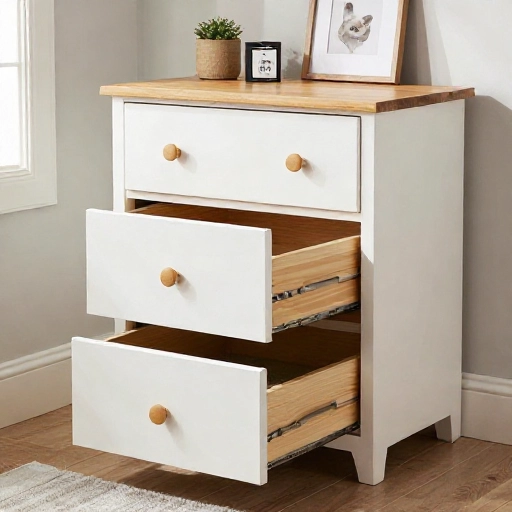
A broken dresser can get a second life as cat furniture. Remove the bottom one or two drawers, then cut an entry hole in the side. Reinforce the floor with a piece of plywood if needed.
Line the inside with waterproof contact paper. The remaining drawers are perfect for storing litter, scoop, and bags. It looks intentional and tidy.
I recommend anchoring the dresser to the wall, especially if your cat likes to launch out of the box at top speed.
11. Closet Nook with a Curtain or Bifold Door
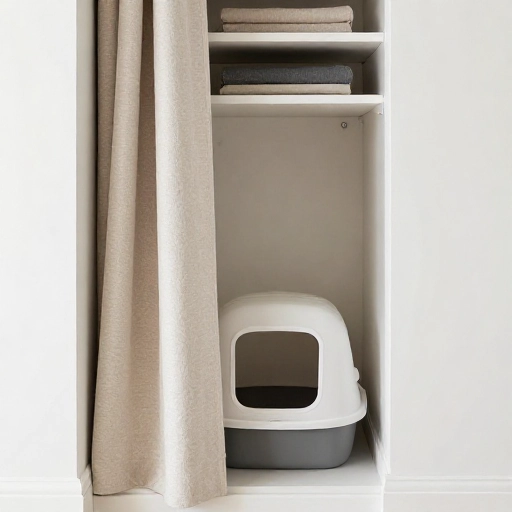
Got a small closet or alcove you’re not using? Turn it into a litter box station. Add a litter mat, place the box inside, and hang a washable curtain or adjust a bifold door so it stays slightly open.
I added a small shelf above for supplies and a clip-on fan for airflow. A simple curtain hides everything and looks surprisingly polished.
This is my favorite option for multi-cat homes because you can fit a larger box or even two boxes side by side. Just scoop daily and air it out.
Final Thoughts
You don’t need a custom-built cat bathroom to make your home feel cleaner and calmer. A simple DIY litter box hideaway can turn an eyesore into a piece of furniture you actually like. Start with the easiest idea that fits your space, then upgrade later if you want.
My biggest tip: prioritize ventilation and quick access for scooping. If it’s hard to clean, you won’t clean it as often. Your cat will notice, and so will your guests.
FAQ
Q: Do DIY litter box hideaways really control odor?
A: They can help, but they’re not magic. Use good litter, scoop daily, and add ventilation. A hideaway hides the box, not the smell.
Q: How do I get my cat to use a new hideaway?
A: Put the old litter box inside the new hideaway first. Leave the door open or the curtain pulled back for a few days. Add a little used litter so it smells familiar.
Q: What size hole should I cut for my cat?
A: Make it wide enough for your cat to walk through without crouching too much. A good rule is about 7 to 9 inches wide and 8 to 10 inches tall for most adult cats.
Q: How often should I clean inside a hidden litter box?
A: Scoop at least once a day. Do a full litter change and wipe down the inside weekly or every other week, depending on how many cats you have.
Q: Can I use a covered litter box inside a hideaway?
A: You can, but I usually skip the cover. A covered box inside a hidden cabinet can trap too much odor. An open pan with good airflow is often the better choice.