11 Wide DIY Dog Gates Indoor Projects That Actually Look Good
If you have a big dog (or a couple of rambunctious pups), you know the struggle. Store-bought gates are either too narrow, too flimsy, or they look like they belong in a daycare center, not your living room. I’ve been there—tripping over flimsy pressure gates that my Labrador just nudges right over.
The good news? Building your own wide DIY dog gate is easier than you think. You get to customize the exact width, match your home’s decor, and save a ton of money. Plus, there’s something so satisfying about creating something functional that doesn’t scream “dog zone.”
Whether you need to block off a wide hallway, a grand staircase, or an open-concept kitchen, these 11 projects are perfect for wide openings. Let’s get building!
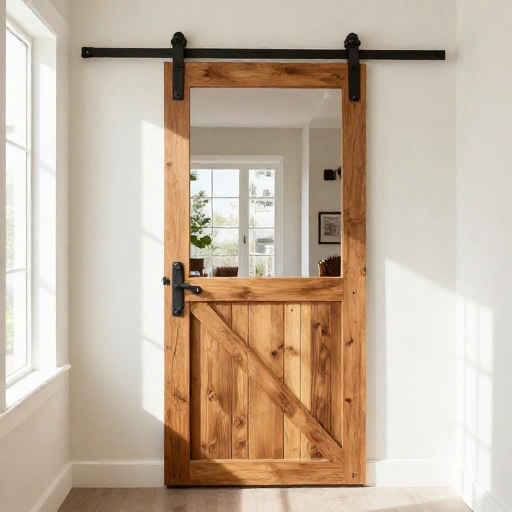
1. The Classic Barn Door Slider
This is my absolute favorite for wide openings. Instead of a swinging gate that takes up floor space, you mount a wooden door on a sliding barn door track above the frame. It glides sideways when you need it open and locks securely when closed.
You can use a solid pine door or build a custom frame with horizontal planks. For a wide opening, this is ideal because the track can span any length. Just make sure your wall has solid studs to support the weight.
Add a small latch at the bottom to keep it from sliding when you don’t want it to. It looks rustic, modern, or farmhouse—depending on the wood stain you choose.
2. The Tension-Mounted Mesh Barrier
If you’re renting or want something completely removable, this is your project. You don’t need any screws or permanent hardware. Just a tension rod system and a heavy-duty mesh screen that attaches with strong hooks.
Measure the exact width of your opening, then cut a custom mesh panel from hardware cloth or even a sturdy pet screen. Attach it to adjustable tension poles that press against your door frame.
This is perfect for wide, temporary spaces like a doorway between a living room and dining room. It’s lightweight, easy to roll up, and you can take it down in seconds.
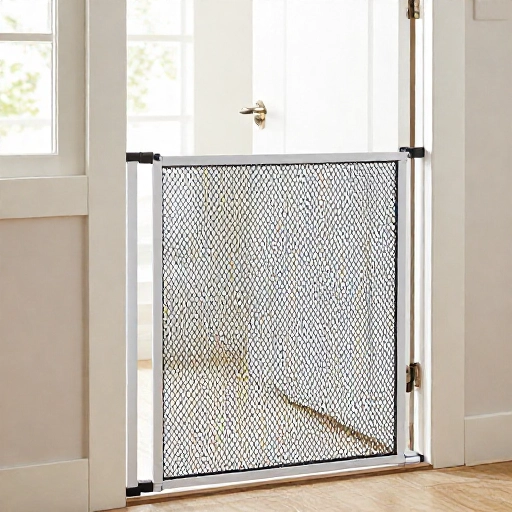
3. The Folding Accordion Gate
This one is brilliant for extra-wide gaps. Instead of one solid panel, you build a series of hinged wooden frames that fold like an accordion. When open, it stacks neatly to one side; when closed, it stretches across your entire opening.
Use thin plywood or MDF for the panels, and connect them with strong piano hinges. Add a locking mechanism at the far end, and maybe a handle in the middle for easy opening.
You can paint it to match your trim or leave it natural with a clear coat. It’s a smart solution for openings that are six feet wide or more.
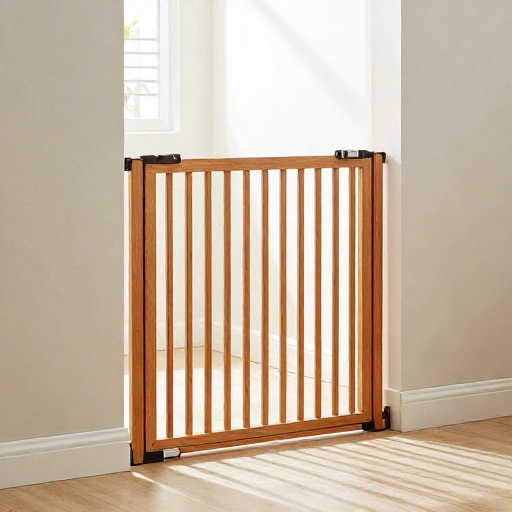
4. The Half-Wall Extension Gate
Do you have a half-wall or pony wall that just doesn’t quite block the whole opening? This project extends it. Build a wooden frame that sits on top of your existing half-wall and extends upward to the ceiling or to a height of 4-5 feet.
This is super stable because it’s anchored to the existing wall structure. You can make it look like a built-in banister or add vertical slats for a modern feel.
It keeps dogs contained without blocking your sightlines. Plus, it adds architectural interest to your home.
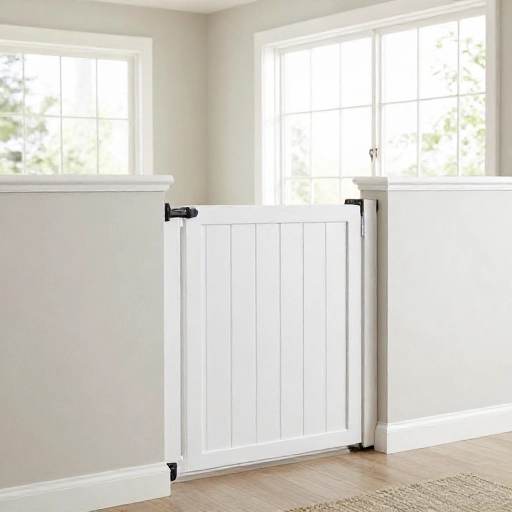
5. The Hidden Pocket Gate
This is the ultimate space-saver for wide openings. You build a pocket in your wall (or attach a box to the outside) where the gate slides into when not in use. When closed, it looks like a regular wall or furniture piece.
It’s a bit more advanced, but the payoff is huge. You’ll need to frame out a cavity and install a sliding track system, just like a pocket door but with a shorter panel.
Once it’s in, you’ll forget it’s even there until you need it. This is perfect for keeping your home looking sleek and open.
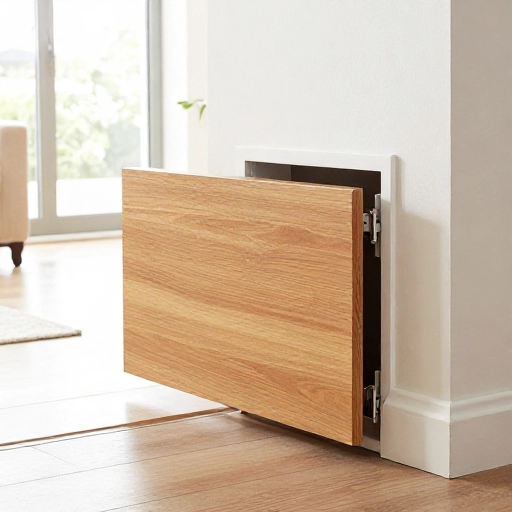
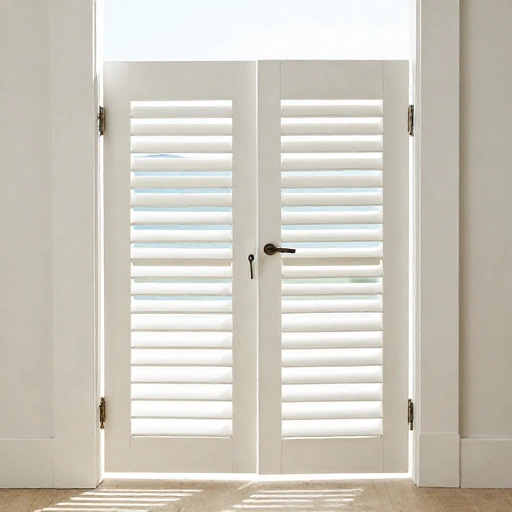
6. The Repurposed Window Shutter Gate
Check your local thrift store or salvage yard for old wooden louvered shutters. They’re usually cheap, sturdy, and already the perfect height. You can hinge two or three together to cover a wide opening.
Attach them to your door frame with heavy hinges, and add a simple hook-and-eye latch. The louvers let air flow through while keeping your pup safely contained.
Give them a fresh coat of paint or stain to match your home. This is a budget-friendly and eco-conscious DIY that looks like it was always meant to be there.
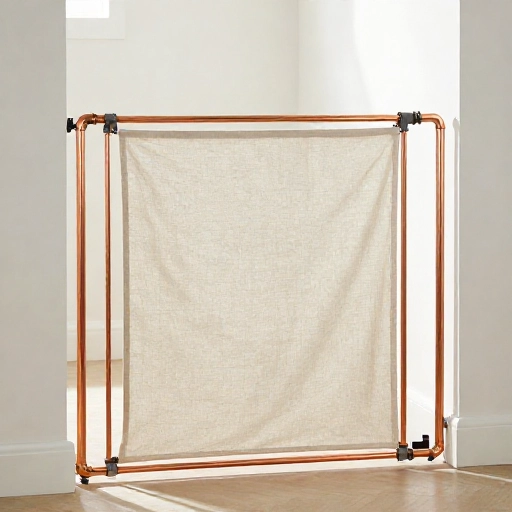
7. The Copper Pipe and Fabric Gate
For a modern, industrial look, this one’s a winner. Build a frame using copper pipes and fittings, then stretch a heavy-duty fabric (like canvas or upholstery fabric) across the middle. It’s lightweight, stylish, and surprisingly strong.
Cut the pipe to size with a pipe cutter, assemble with elbow joints, and secure the fabric with grommets and zip ties. You can make it as wide as you need by adding more vertical supports.
The copper adds a warm metallic tone that pairs beautifully with neutral decor. And if you ever need to remove it, just unscrew the fittings.
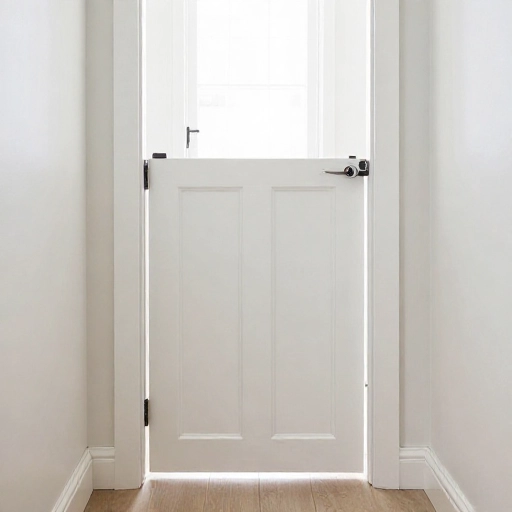
8. The Hollow Core Door Hack
This is the fastest way to get a sturdy, wide gate. Purchase an inexpensive hollow-core interior door from a home improvement store. Cut it down to your desired height and width, then mount it on hinges.
To make it look intentional, add horizontal trim pieces to mimic a custom barn door or add a large square frame in the center. You can even paint it with chalkboard paint for a fun touch.
It’s solid, heavy, and won’t flex like cheap pet gates. Just be sure to use heavy-duty hinges and a strong wall anchor.
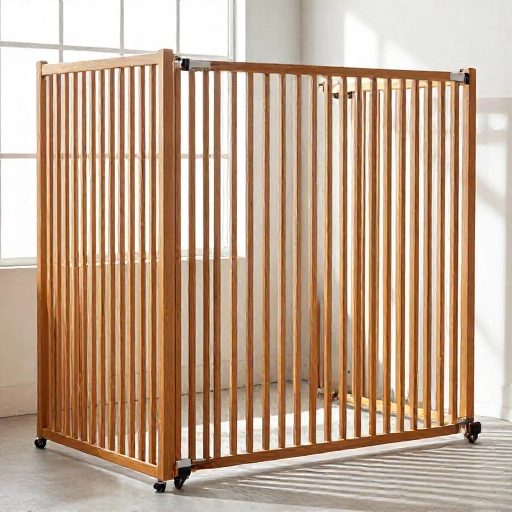
9. The Vertical Slat Room Divider
This one doubles as a room divider and a dog gate. Build a frame and fill it with vertical wooden slats spaced about 3 inches apart. The slats allow light and air to pass through while creating a visual (and physical) barrier.
This is excellent for wide, open-concept spaces where you don’t want to block natural light. You can make it as tall or short as you like.
Use cedar or pine for a natural look, or paint the slats a fun color to add a pop to your room.
10. The PVC and Netting Gate
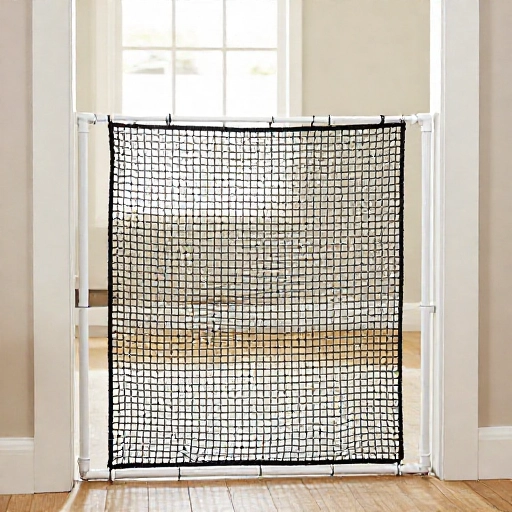
If you’re on a tight budget, this is your go-to. PVC pipe is cheap, easy to cut, and won’t rot. Build a rectangular frame with PVC connectors, then attach a roll of plastic netting or deer fencing around the perimeter.
You can make this gate as wide as you want by simply adding more pipe and connectors. It’s light enough to move around but sturdy enough for most dogs.
Wrap the netting tightly and secure it with zip ties. You can even spray-paint the PVC to match your decor.
11. The Crate-Style Picket Gate
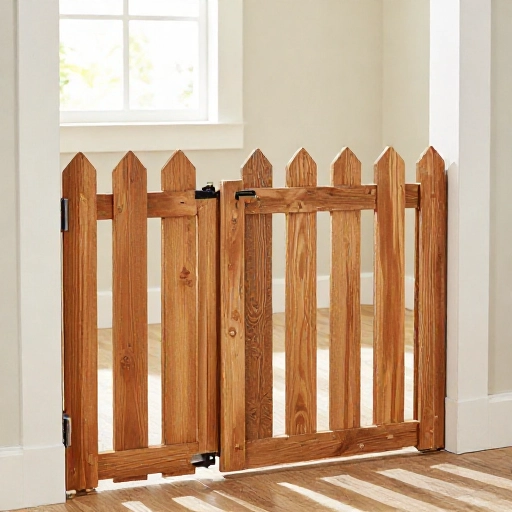
This design gives a classic, cottage feel. Build a frame using 1×3 boards and fill it with small picket slats, just like a mini fence. It’s charming, sturdy, and perfect for a wide kitchen or hallway opening.
Make two separate panels that meet in the middle with a latch, so you can open just one side if needed. This is also great for wide doorways.
Paint it white for a crisp look, or stain it to match your hardwood floors. It adds a touch of farmhouse charm while keeping your dog safe.
Final Thoughts on Wide DIY Dog Gates
Building your own dog gate for wide openings is a game changer. Not only do you save money, but you get something that actually fits your space and your style. Start with a simple project like the mesh barrier or the PVC gate, then work your way up to the barn door slider if you’re feeling adventurous.
Always double-check your measurements and make sure your hardware is strong enough for your dog’s size and energy level. A gate that’s too flimsy is just a jumping obstacle for a determined pup.
Have fun with it! Your dog might not appreciate the craftsmanship, but you will every single time you walk past it.
Frequently Asked Questions
What is the best material for a wide DIY dog gate?
Solid wood, like pine or oak, is the most durable and looks the best. For a budget option, PVC and heavy fabric work well for smaller dogs. Always choose materials that won’t splinter easily.
How do I secure a gate without drilling holes in my walls?
Use tension-mounted rods or pressure-mounted systems that press between your door frame. You can also use heavy-duty Command hooks for lightweight gates, but for wide or heavy gates, drilling is always safer.
How tall should my DIY dog gate be?
For most medium to large dogs, 36 inches is the minimum. If you have a jumper, aim for 48 inches or taller. Measure your dog’s height at the shoulders and add at least 6-8 inches.
Can I build a wide dog gate if I’m a beginner?
Absolutely! Start with simpler designs like the mesh barrier or the PVC gate. They only require basic cutting and assembly. As you gain confidence, try the wooden folding or barn door designs.
How do I make sure my dog can’t push the gate open?
Use a strong locking mechanism on both the top and bottom of the gate. A simple slide bolt or a spring latch works well. For extra security, add a second latch on the opposite side of the opening.