15 Dog Toy Storage Solutions for Tidier Pet Spaces
Let’s be honest—dog toys have a way of multiplying overnight. One day you have a single squeaky ball, and the next, your living room looks like a plush toy exploded. I’ve been there, stepping on a tiny rubber bone at 2 a.m. and questioning all my life choices.
But here’s the good news: you don’t need a massive renovation or a Pinterest-perfect mudroom to get things under control. You just need a few clever systems that work with your space, your dog’s habits, and your own sanity. I’ve rounded up fifteen of my favorite dog toy storage ideas—some are buy-it-now, some are DIY, and all of them make tidying up feel almost effortless.
Whether you have a 10-pound fluffball or a 90-pound chewer, there’s a solution here that’ll keep toys visible, accessible, and off the floor. Let’s dive in.
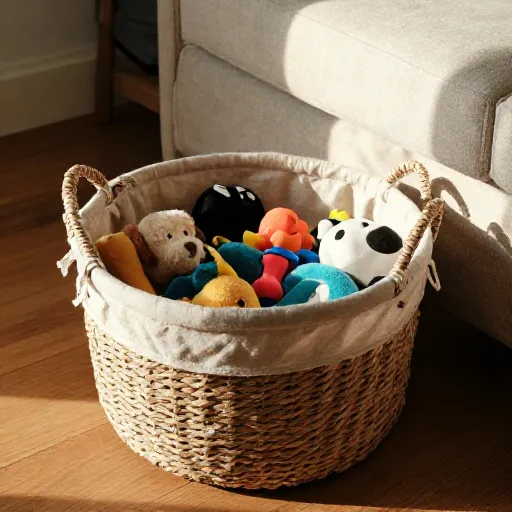
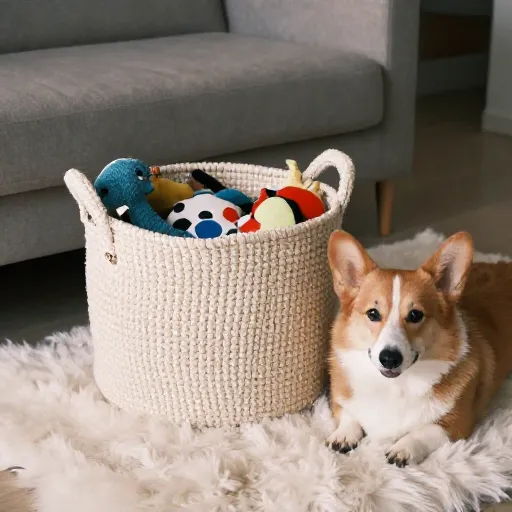
1. The Classic Woven Basket with a Liner
A sturdy woven basket is the simplest, most timeless way to store dog toys. It hides clutter while adding a warm, natural texture to your room. The trick is choosing one that’s wide and low, so your dog can easily grab a toy without tipping the whole thing over.
Line the inside with a washable fabric liner or a small blanket. This catches dirt and slobber, and you can just toss the liner in the wash when things get gross. No more scrubbing dried drool off the basket weave.
Place it near your dog’s favorite lounging spot. If it’s within paw’s reach, your pup will actually use it—and you’ll spend way less time retrieving toys from under the couch.
2. Over-the-Door Shoe Organizer Turned Toy Holder
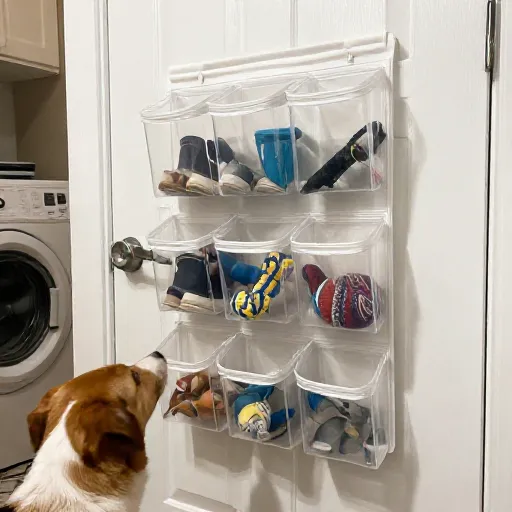
This one is a game-changer for small spaces. Hang a clear, over-the-door shoe organizer on the back of a closet door, pantry door, or even a hallway door. Each pocket becomes a designated spot for a different type of toy—balls in one, ropes in another, plush toys up top.
The clear pockets are key. You can see everything at a glance, which means no more digging through a bottomless bin to find the one toy your dog is obsessed with. Plus, it keeps toys off the floor and out of the way of little feet.
Bonus: it’s super easy to clean. Just wipe down the pockets with a damp cloth or spray them with a pet-safe cleaner. If a toy gets too gross, you can toss it without having to empty an entire bin.
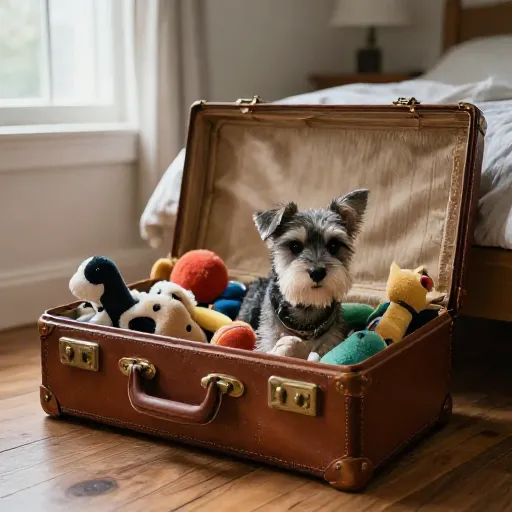
3. A Repurposed Vintage Suitcase as a Toy Trunk
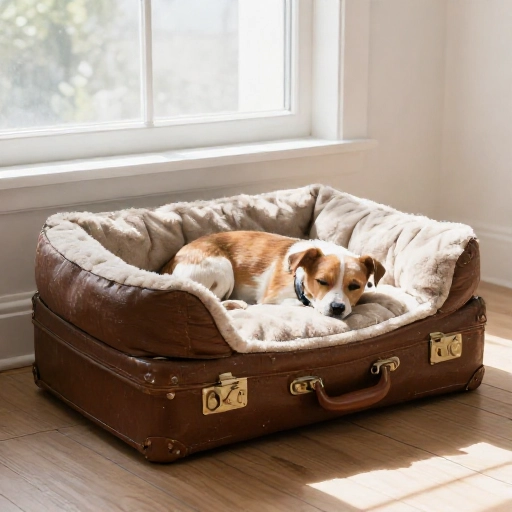
If you love a little character in your home decor, this one’s for you. An old, sturdy suitcase can become a charming toy trunk that doubles as a side table or end table. The hard shell keeps toys contained, and the latch keeps curious noses out when you need a break.
Stack two suitcases for extra storage, or use one large one on the floor. It adds a nostalgic, travel-inspired vibe to your space while hiding a mountain of squeaky chaos.
Just make sure the suitcase is clean and free of any musty smells before you add toys. A quick wipe with vinegar water and a day in the sun usually does the trick.
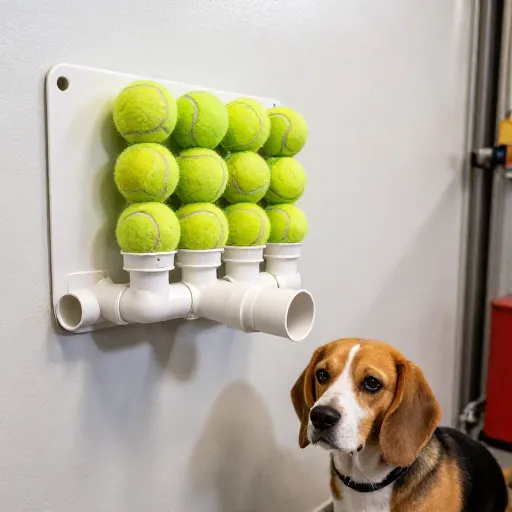
4. DIY PVC Pipe Ball Dispenser
Got a dog who loves balls more than life itself? This is the project for you. Take a few wide PVC pipes, cut them to different heights, and mount them vertically on a wooden board. The balls stack inside, and your dog can pull one out from the bottom whenever they want.
This is a fun weekend project that looks surprisingly sleek. Paint the PVC pipes to match your room, or leave them natural for a more industrial look. It’s also a great way to keep balls from rolling under furniture.
The best part? It’s virtually indestructible. No more shredded fabric baskets or chewed-up plastic bins. Just clean, simple, and dog-approved.
5. A Chunky Knit Storage Basket
There’s something about a chunky knit basket that just feels cozy. They’re soft, stylish, and perfect for storing plush toys without damaging them. The open weave makes it easy for your dog to see what’s inside, which encourages them to grab a toy and play.
These baskets are surprisingly sturdy, but they’re not for aggressive chewers. If your dog likes to shred fabric, keep this one up high. For gentle pups, it’s a dream—it won’t scratch floors or bang into furniture.
When it gets dusty, give it a gentle vacuum or a spot clean. It’ll look fresh and inviting for years.
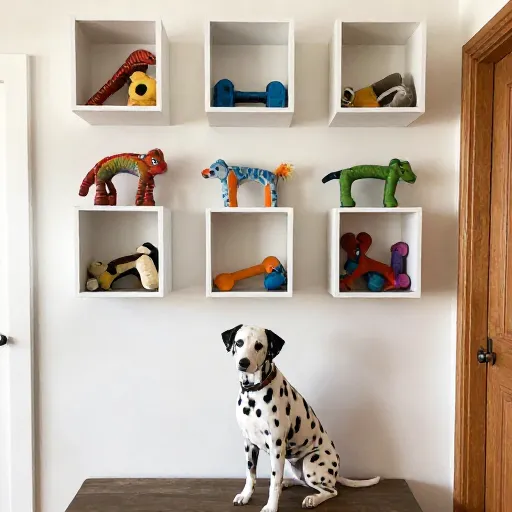
6. Wall-Mounted Cube Shelves
Take toys off the floor entirely with a set of wall-mounted cube shelves. Each cube can hold a different category of toy, or you can dedicate one cube to toys and use the others for books, plants, or decor. It’s a flexible system that grows with your needs.
Choose a cube size that’s deep enough to hold toys without them spilling out. I like the ones with a slight lip at the front, so toys don’t roll off when your dog pulls one out.
This works especially well in small apartments or rooms where floor space is precious. Plus, it’s a great way to turn dog stuff into a design feature rather than an eyesore.
7. A Repurposed Tool Caddy or Tote
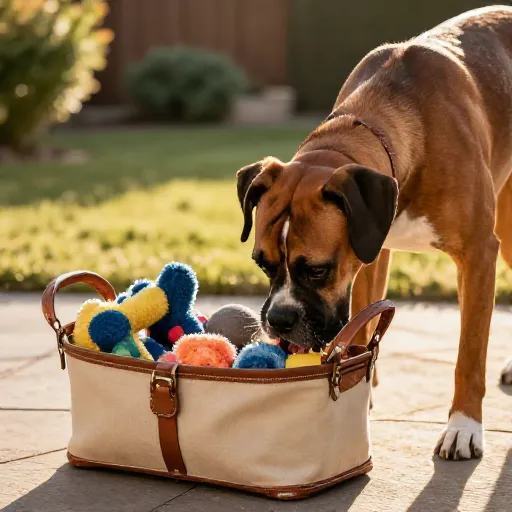
A heavy-duty canvas tool tote or a plastic tool caddy is perfect for dog toy storage. They’re built to be lugged around, so they can handle the weight of a dozen toys. The open top makes it easy for dogs to grab what they want, and the handles make it simple for you to carry toys from room to room.
Use one for indoor toys and another for outdoor toys. That way, your living room doesn’t end up covered in muddy tennis balls after a rainy walk.
These totes are also super easy to clean. Just hose them down or wipe them out, and they’re ready to go again.
8. Use a Laundry Hamper with Holes
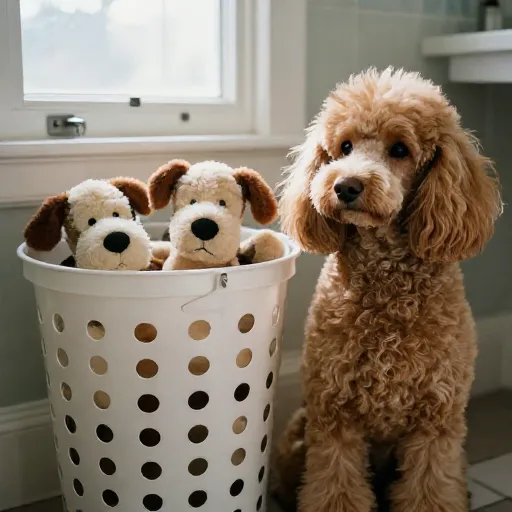
This is the easiest hack you’ll ever try. A standard plastic laundry hamper with holes is basically a giant, breathable toy bin. The holes let air circulate, so damp toys dry faster and don’t get musty.
Choose one with a lid if you want to hide the mess entirely, or go without a lid for easy access. The handles on most hampers make it easy to drag from room to room—and your dog will probably love riding in it.
It’s not the prettiest option, but it’s incredibly practical. You can also spray-paint it to match your decor if you’re feeling crafty.
9. A Toy Hammock Hung Under a Table
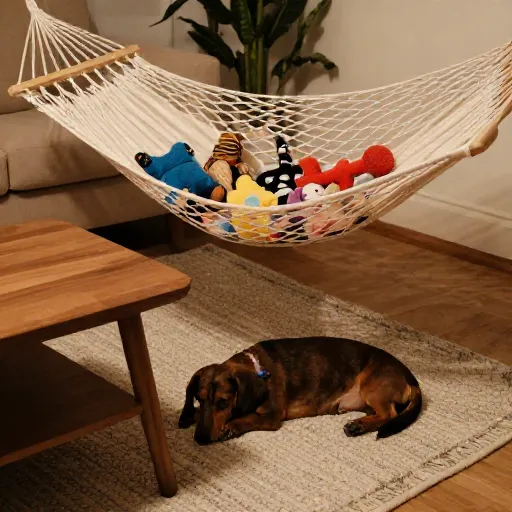
This is one of those ideas that feels a little genius. Attach a piece of sturdy fabric—like a canvas drop cloth or an old sheet—to the underside of a coffee table or side table. The fabric sags slightly, creating a hammock that holds toys neatly off the floor.
It’s invisible at first glance, but it adds a ton of hidden storage. Your dog can still see and grab toys through the gap, and you don’t have to look at a cluttered bin all day.
If you have a low table, this is a perfect use of dead space. Just make sure the fabric is secured well, so it doesn’t sag too much under the weight of heavy toys.
10. A Tall, Narrow Lidded Bin for Large Dogs
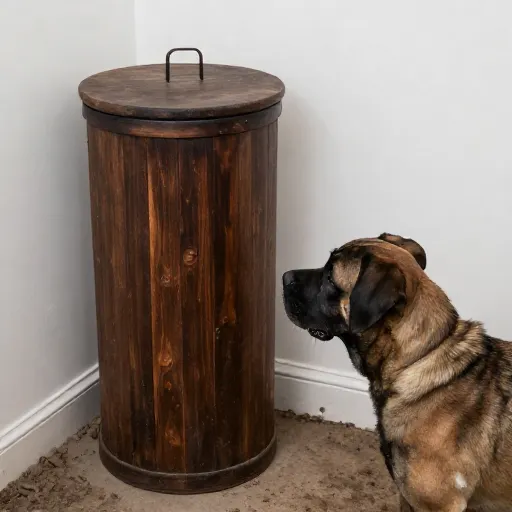
Big dogs come with big toys, and big toys need big storage. A tall, narrow bin with a lid is perfect for storing large ropes, frisbees, and giant plush animals. The lid keeps everything contained, and the slim profile fits neatly in a corner or next to a couch.
Look for one with a step-on lid or a foot pedal, so you can open it hands-free. That’s a lifesaver when you’re carrying a slobbery toy with one hand and a coffee in the other.
This works great for dogs who like to “help” by pulling things out—the lid makes it a bit harder for them to create a mess.
11. A Repurposed Wine Crate or Milk Crate
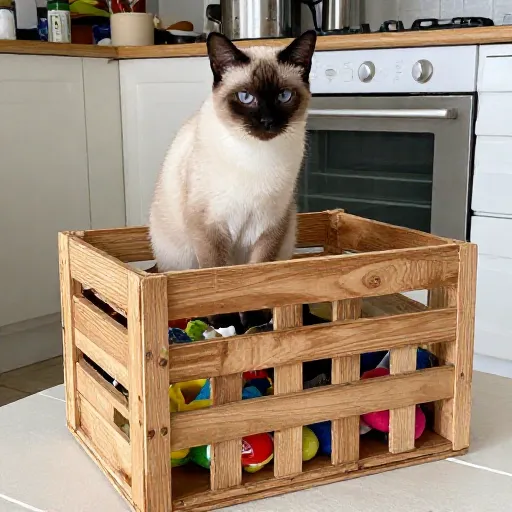
There’s something about the rustic charm of a wooden wine crate or a plastic milk crate. They’re sturdy, stackable, and endlessly versatile. You can leave them as-is, paint them, or attach casters to make them mobile.
Use one crate for toys and another for leashes, collars, and grooming supplies. Label them with a chalkboard tag or a piece of washi tape, and you’ve got a tidy, organized corner.
If you choose a milk crate, the holes are great for drying wet toys. Just make sure to sand down any rough edges if you’re using a wooden crate.
12. A Built-In Window Seat with Toy Storage Below
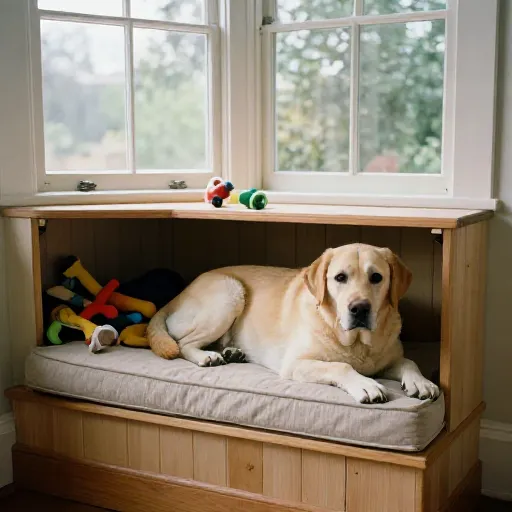
If you’re planning a remodel or just love a good DIY project, consider building a window seat with storage underneath. The bench flips up to reveal a deep, hidden compartment that can hold an impressive amount of toys.
Your dog will probably spend half the day lounging on the seat, and you’ll love having a clutter-free room. It’s the perfect blend of form and function.
If a full build feels like too much, a simple storage ottoman with a flat top can serve the same purpose. It gives you a place to sit, a spot for your feet, and a hidden toy box all at once.
13. A Hanging Fabric Toy Organizer
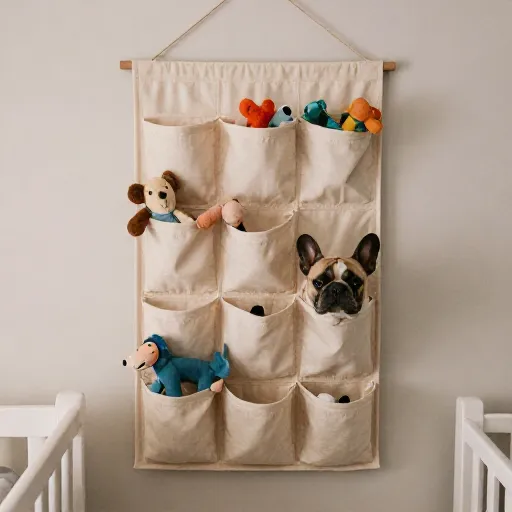
You know those hanging fabric organizers with multiple pockets that people use for shoes or scarves? They work wonders for dog toys too. Hang one on the back of a door or inside a closet, and fill each pocket with a different toy.
This is perfect for keeping small toys like balls, squeakers, and treat-dispensing puzzles organized. It also keeps them at a height that’s out of reach for dogs who like to “redecorate” their toy storage.
It’s lightweight, easy to install, and washes well in the machine. You can also label each pocket with a fabric marker to keep things extra organized.
14. A Corner Shelf Tower for Vertical Storage
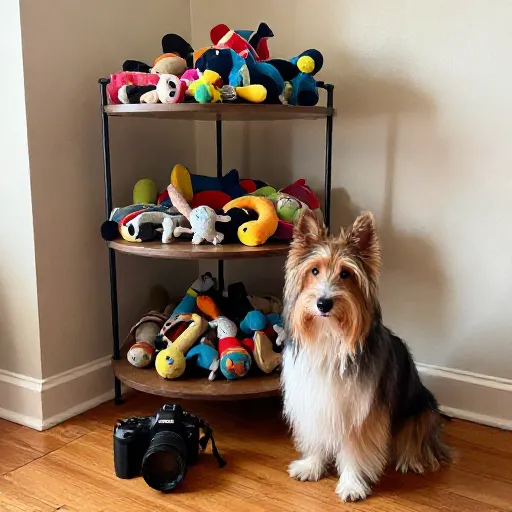
Corners are often wasted space, but they’re perfect for a slim, tiered shelf tower. Each shelf can hold a few toys, and the vertical design takes up minimal floor space. It’s a great option for apartments or rooms with a lot of furniture.
Choose a shelf with raised edges so toys don’t roll off. You can also mix in a few decorative items—like a small plant or a framed photo—to make it look intentional rather than purely functional.
This is one of those solutions that makes your space feel bigger and more organized without much effort.
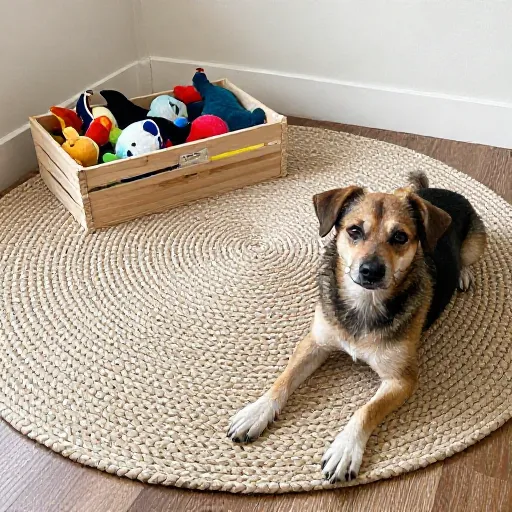
15. A Simple, Dedicated “Toy Corner” with a Rug
Sometimes, the best solution isn’t a fancy bin—it’s a designated space. Pick a corner of your living room, lay down a washable rug, and place a low, wide basket or tray there. That becomes the official toy zone.
Teach your dog that toys belong in that corner by consistently returning toys there when playtime is over. Over time, they’ll start bringing toys back on their own (or at least, they’ll learn where to find them).
This approach is all about consistency and simplicity. It’s not about hiding toys—it’s about giving them a home. And honestly, that’s the most practical thing you can do.
Wrapping It Up
Getting your dog’s toys under control doesn’t have to mean a huge overhaul of your home. It just takes a little creativity and a system that fits your lifestyle. From vintage suitcases to over-the-door organizers, there’s a solution for every space and every dog.
Start with one or two ideas that feel doable this weekend. Once you see how nice it feels to walk into a tidy room, you’ll be motivated to tackle the rest. Your floors will thank you, and your dog won’t even notice—they’ll just be happy their toys are easy to find.
Frequently Asked Questions
How do I keep my dog from destroying the toy storage bin?
Choose a bin made of durable materials like thick plastic, metal, or tightly woven seagrass. Avoid soft fabric bins for aggressive chewers. You can also spray the bin with a bitter apple deterrent to discourage chewing.
How often should I wash my dog’s toys?
It depends on how much your dog plays with them. A good rule of thumb is to give plush toys a wash every 1-2 weeks and wipe down hard toys weekly. If a toy gets visibly dirty or slobbery, clean it sooner.
What’s the best way to store wet or muddy outdoor toys?
Keep a separate bin near the back door for outdoor toys. A plastic crate with holes or a mesh bag works great because it allows air to circulate. Let toys dry completely before putting them away to prevent mold.
How many toys should my dog have at one time?
Quality over quantity is best. Rotate toys every week or two to keep your dog interested. Having 5-7 toys available at a time is usually plenty—too many can be overwhelming and lead to more clutter.
My dog pulls all the toys out of the bin. What do I do?
This is normal behavior—it’s like they’re shopping! Try a bin with a lid or a closed container that’s harder to empty. You can also make getting a toy more of a game by hiding a few toys around the house and letting your dog “find” them.