Build These 15 Wooden Cat Houses – Small Space Plans
If you live in a small apartment or cozy house, you know the struggle of finding room for your cat’s things. My own cat, Milo, used to claim my laundry basket as his castle. That’s when I started building him furniture that fits into tiny corners without looking like an eyesore.
These 15 wooden cat houses are designed for small spaces. They work as shelves, side tables, and wall art while giving your cat a private spot to nap. Most projects use basic tools and plywood. You don’t need a full workshop or a lot of space to build them.
Let me walk you through my favorite space-saving cat house designs. Each one solves a different problem, from corner nooks to under-desk hideouts.
1. The Window Perch Shelf Box
This is a simple wooden box that mounts under a window. It gives your cat a sunny spot without taking up floor space. Build it with a hinged lid so you can store cat toys inside.
I made mine from a single 2×4 foot plywood sheet. The front has a round cutout for easy entry. Add a soft cushion on top and your cat will forget about your couch entirely.
Key tip: measure your window sill height first. The box should sit flush with the sill so your cat can step right in.
2. The Staircase Bookshelf Hybrid
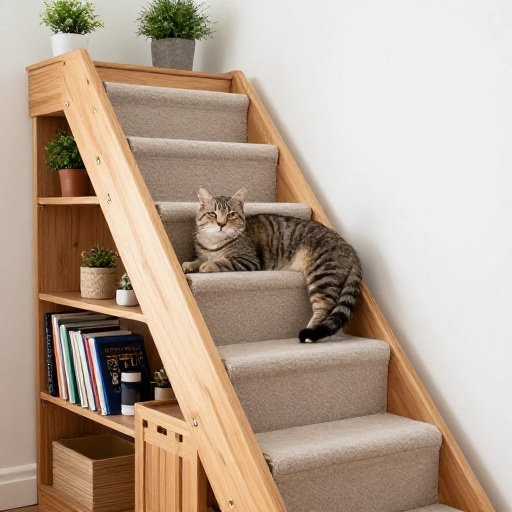
Turn an unused corner into a cat staircase that doubles as storage. Build three or four staggered shelves that climb up the wall. Each shelf holds books or plants on one side, and a cat bed on the other.
The shelves get wider as they go down. The bottom one should be big enough for a cat bed. The top one can be just a small perch.
Paint it the same color as your wall to make it blend in. Your cat gets vertical space and you get extra storage.
3. The Under-Desk Hideout
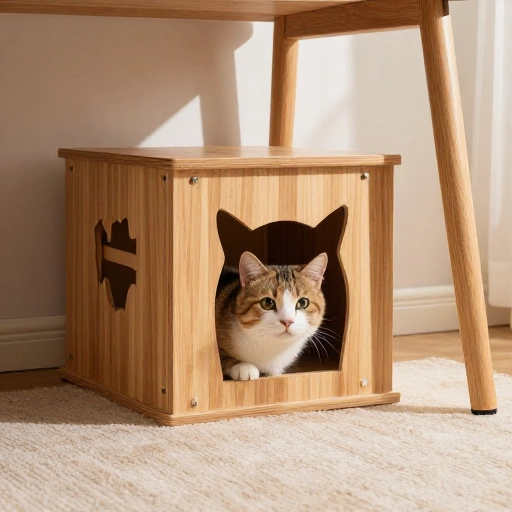
Most desks have wasted space underneath. Build a low wooden box that slides right under your desk. Cut a paw-shaped door on one side and leave the top open for easy cleaning.
This house stays out of sight while you work. Your cat can nap right by your feet without tripping you. Add a washable cushion inside for comfort.
Make sure the box is short enough to fit under your desk. Measure the clearance before you cut any wood.
4. The Corner Triangle Condo
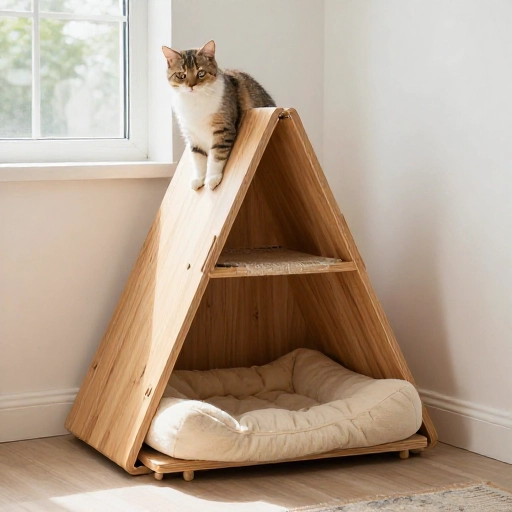
Corners are often empty. Build a triangular cat house that fits snugly into any 90-degree corner. Two walls of the triangle are your actual room walls, so you only need to build the front and sides.
I used thin plywood and cut a large circle door in the front panel. The inside is roomy enough for two cats to cuddle. Paint it white to match baseboards and it almost disappears.
You can add a small shelf on top for plants or a lamp.
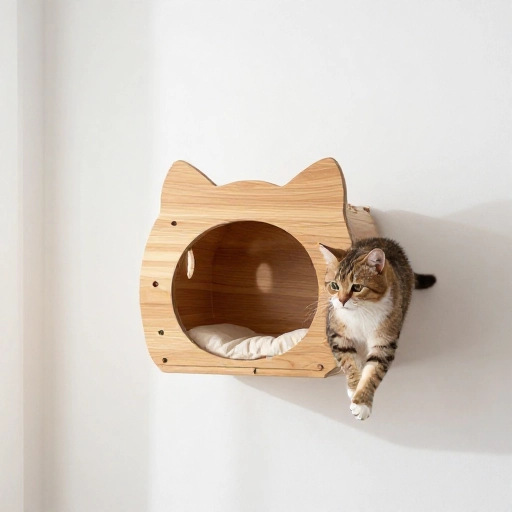
5. The Floating Cat Cubby
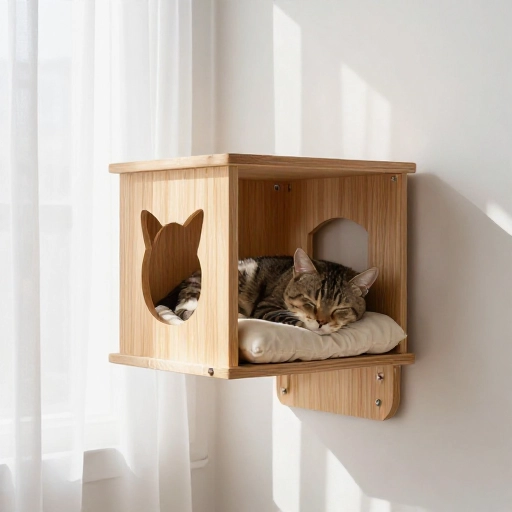
Mount a simple wooden cube directly on your wall. No legs, no floor contact. Just a box with a round hole that floats at cat height.
Build it from 1×6 boards. Make the cube about 16 inches on each side. Sand all edges smooth so your cat doesn’t get splinters.
Hang it near your sofa or bed so your cat can watch you from above. It’s like a treehouse for indoor cats.
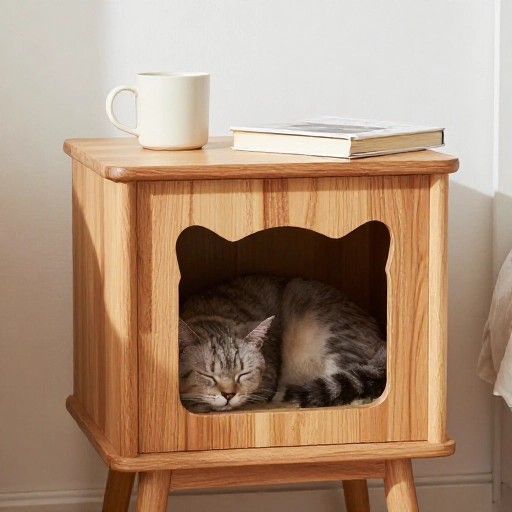
6. The End Table Cat Cave
Replace your boring end table with a cat house. Build a wooden cube that looks like a normal table but has a hidden cat door on one side.
The top is solid wood where you can place drinks and remotes. The front has a decorative cutout that serves as the entrance. I used a circle cutout with a modern geometric pattern.
Your cat gets a dark, cozy cave. You get a functional side table. Win-win.
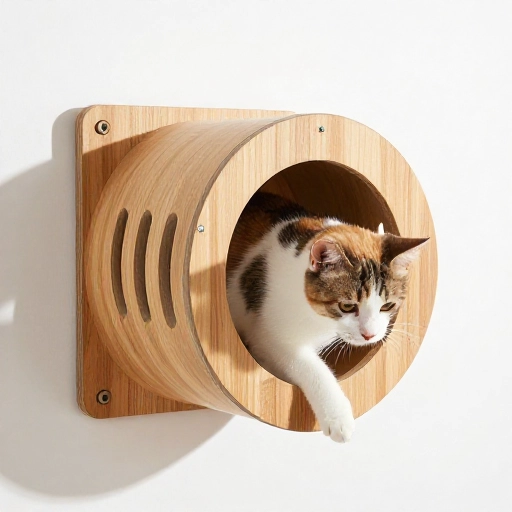
7. The Wall-Mounted Tunnel
Take a long wooden box and mount it high on your wall. This creates a catwalk that connects two rooms or just circles your living room.
Build it in 2-foot sections. Each section has a clear plexiglass window on top so you can watch your cat crawl through. Leave one end open as an entrance.
This uses zero floor space and gives your cat an elevated pathway. My cat loves sprinting through his tunnel when he gets the zoomies.
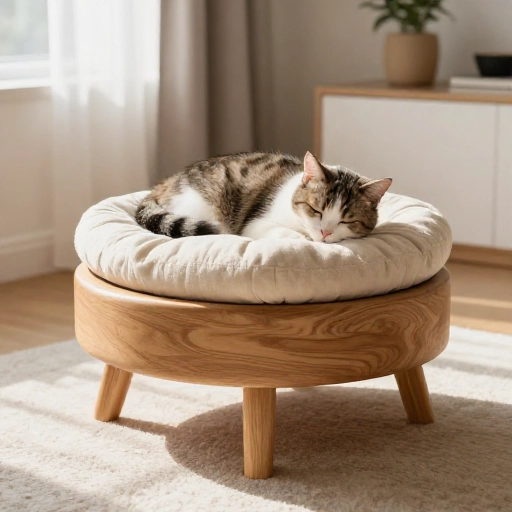
8. The Ottoman Cat Bed
Build a wooden ottoman frame with a hollow center. The top is a hinged lid with a cushion. The inside is a cozy cat cave with a small side entrance.
Use 2×2 lumber for the frame and plywood for the panels. Cut a 6-inch round hole on one side for the cat door. Add a soft cushion inside and a decorative cushion on top.
You get a footrest. Your cat gets a secret hideout. Nobody else has to know it’s a cat house.
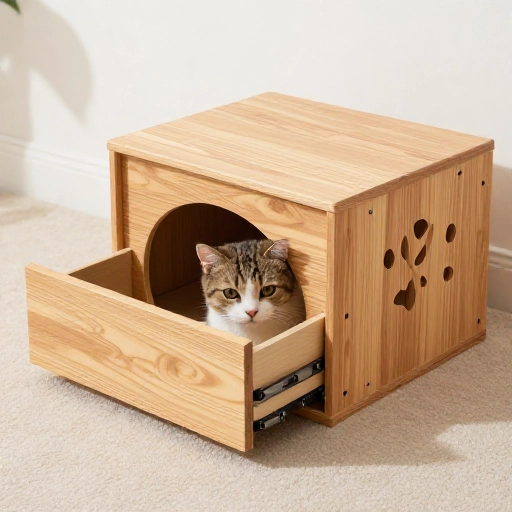
9. The Under-Bed Drawer House
If your bed has space underneath, build a shallow wooden drawer that slides out. This is basically a cat bed on wheels.
Build a box with a low front wall and a soft bottom. Add casters so it rolls smoothly. Cut a small arched opening in the front wall.
During the day, push it under the bed. At night, pull it out so your cat can sleep near you. It’s hidden storage for your cat.
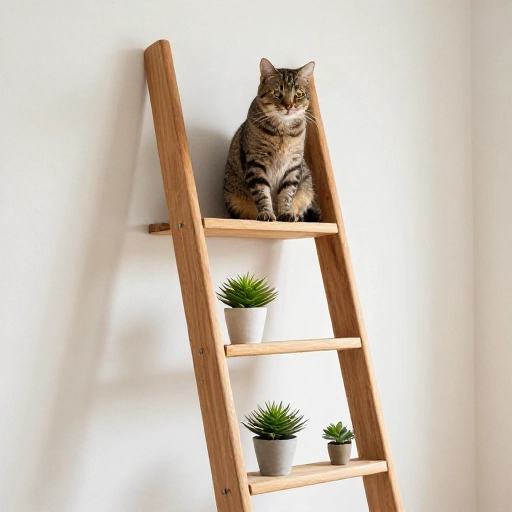
10. The Ladder Shelf Perch
Build a simple A-frame ladder that leans against your wall. Each rung is a shelf where your cat can sit or sleep. The bottom rung is wide enough for a full cat bed.
Use 1×3 boards for the sides and 1×6 boards for the rungs. Space the rungs about 10 inches apart. Sand everything well and add a non-slip pad at the bottom.
This takes up very little floor space but gives your cat multiple levels to explore.
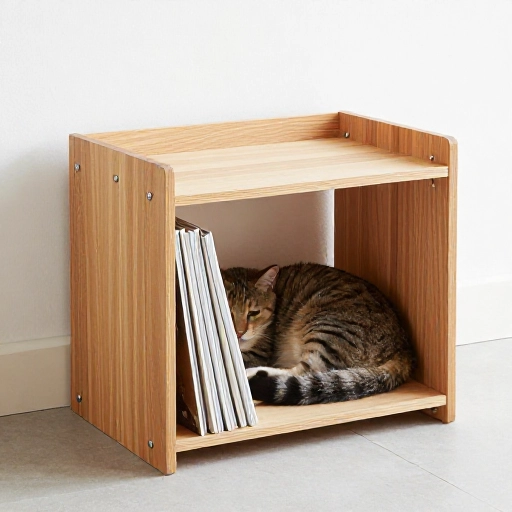
11. The Magazine Rack Cat Cubby
Turn a wall-mounted magazine rack into a cat house. Build a narrow wooden box that hangs on the wall. The front has two or three compartments like a magazine holder.
Your cat can curl up in one compartment. Use the others to store mail, books, or small plants. I made mine with birch plywood and left it natural.
It’s only 6 inches deep, so it works even in tight hallways.
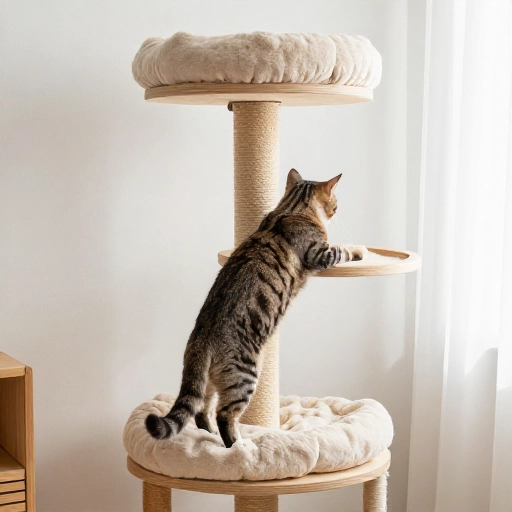
12. The Side Table Cat Tower
Build a tall, narrow tower that serves as both a side table and a cat tree. It has three levels: a bottom cave, a middle perch, and a top table surface.
Use 1×12 boards for the shelves. The bottom level has walls on three sides with a front opening. The middle level is an open perch. The top is a solid wood surface for your lamp.
This replaces a bulky cat tree and a side table with one piece of furniture.
13. The Window Box Extension
If your windows have deep sills, extend them with a wooden box that sits outside the window frame. This gives your cat an outdoor view without leaving the house.
Build a box that attaches to the window frame with brackets. Add a clear plexiglass top so rain doesn’t get in. Cut a cat door in the window screen so your cat can access it.
Make sure the box is securely fastened. Use heavy-duty brackets rated for at least 20 pounds.
14. The Plant Stand Cat House
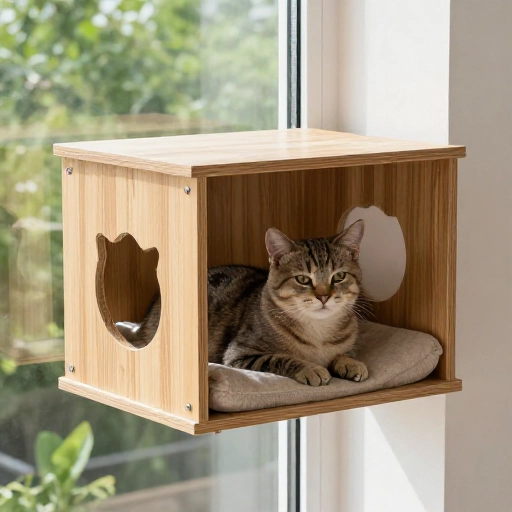
Combine a cat hideout with a plant stand. Build a two-tier wooden stand. The bottom tier is an enclosed box with a cat door. The top tier has slats for potted plants.
I used cedar for its natural scent. The bottom box is 18 inches wide and 12 inches tall. The top shelf has 2-inch gaps between slats so water drains from plants.
Your cat gets a shaded spot under the plants. You get a stylish plant stand.
15. The Entryway Bench Cat House
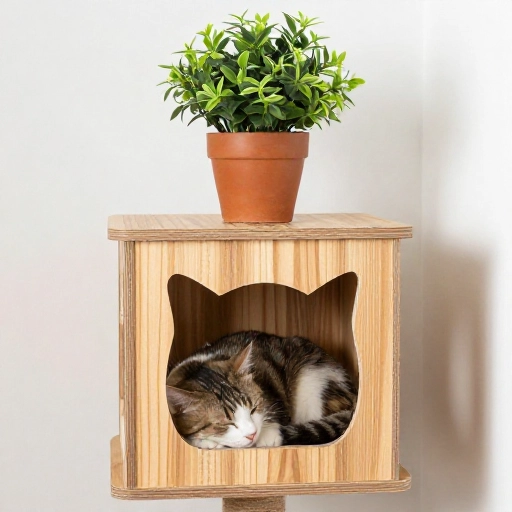
Build a wooden bench for your entryway with a hidden cat house inside. The bench seat lifts up to reveal a cozy space for your cat.
Use 2×4 lumber for a sturdy frame. The sides are solid panels with a small cat door on one end. The seat is a hinged lid with a cushion on top.
You sit down to put on shoes. Your cat sneaks inside for a nap. It’s the perfect multi-purpose piece for small homes.
Conclusion
Building cat furniture for small spaces is all about thinking vertically and multifunctionally. Every piece of wood can serve both you and your cat. I’ve built most of these designs myself, and my cat uses every single one.
Start with one project that fits your biggest need. Maybe it’s the under-desk hideout if your cat bothers you while you work. Or the end table cat cave if you need more surface space.
The best part? Your cat won’t care if the edges aren’t perfect. They just want a cozy spot that smells like you. So grab some plywood, measure twice, and build something your cat will love.
Frequently Asked Questions
What type of wood should I use for cat houses?
Plywood is the most practical choice. It’s affordable, easy to cut, and smooth. Birch plywood looks nice and doesn’t splinter. Avoid pressure-treated wood because the chemicals can be harmful to cats.
Do I need special tools to build these?
Most projects only need a circular saw, drill, and sander. A jigsaw helps with curved cuts like cat doors. If you don’t have power tools, many hardware stores will cut wood to size for free.
How do I make the cat house easy to clean?
Add a removable bottom panel or a hinged top. Use washable cushions and vacuum the inside regularly. A coat of water-based polyurethane makes the wood easy to wipe down.
Can I paint these cat houses?
Yes, but use non-toxic, water-based paint. Let it cure for at least a week before letting your cat inside. Cats love to lick surfaces, so avoid oil-based paints or stains.
How do I get my cat to use the new house?
Place a blanket that smells like your cat inside. Add some treats or catnip. Don’t force them. Most cats will explore on their own within a few days. Be patient and let them discover it at their own pace.