How to Train a Labrador Retriever: Easy Tips for Beginners

Training a Labrador Retriever is one of the most rewarding experiences because these dogs are naturally eager to learn, affectionate, and full of energy. When I first started training my Lab, I quickly realized how much structure and guidance he needed to stay focused. Without proper direction, Labs can become overly excited or develop unwanted habits simply because they are such enthusiastic learners.
Establishing a training routine early makes a world of difference. Labs thrive when they know what to expect each day, and consistency helps them feel secure. With a predictable schedule, your Labrador will learn faster and feel more confident during every training session. This also deepens your bond and helps avoid confusion or frustration.
The key is to stay patient and celebrate small wins. Labs love praise, and each step forward builds momentum for even better behavior.
Whenever I train a Labrador Retriever, I begin with the basic commands like sit, stay, come, and down. These commands are the foundation for everything that follows. Labs respond incredibly well to positive reinforcement, so I always reward with treats, praise, or even a short play session. This helps them stay motivated and excited during each session.
I’ve learned that short, fun training sessions work better than long, tiring ones. Keeping training sessions to 5–10 minutes helps your Lab stay focused without feeling overwhelmed. Repetition throughout the day is the secret to solid obedience. When your Labrador learns the basics well, more advanced training becomes much easier.
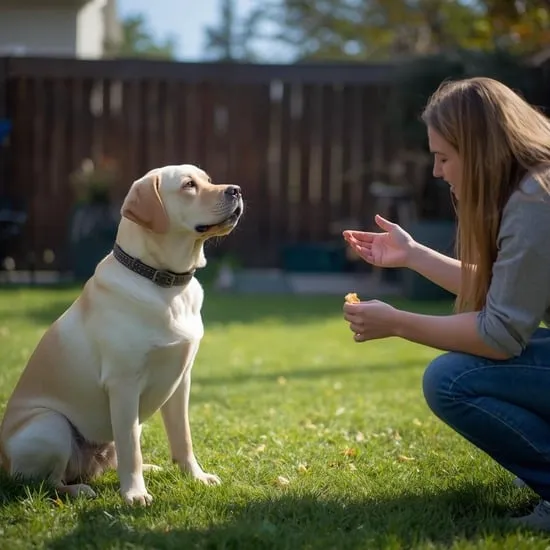
Labradors are sensitive and emotionally connected to their owners, which makes positive reinforcement the most effective training method. Every time my Lab succeeded—whether it was following a new command or simply staying calm—I made sure to reward him immediately. This clear connection between action and reward helped him learn faster and enjoy the process.
On the flip side, Labradors don’t respond well to yelling or punishment. These reactions can damage their trust and make training harder. Staying calm, patient, and upbeat encourages good behavior without fear. Labs truly want to please their owners, so your positive energy helps them do their best.

Training a Labrador Retriever is so much easier when they have enough physical and mental stimulation. When my Lab had too much bottled-up energy, training would become chaotic. But after a brisk walk, fetch session, or a quick run, he was more focused and eager to listen. Labs are working dogs, so they crave movement and activity every day.
Mental stimulation is just as important. Puzzle toys, treat-dispensing toys, and simple problem-solving games keep their minds sharp. This prevents boredom, one of the main causes of destructive behavior in Labs. A tired Lab—both mentally and physically—is a well-behaved Lab.
One of the biggest lessons I learned was the power of consistency. Labs learn quickly, but they also need repetition and routine to truly master a command. If your Lab gets mixed signals, training progress may slow down. Keeping commands, cues, and expectations the same ensures your dog knows exactly what you want.
Patience is just as important. Every Labrador learns at their own pace, and celebrating small steps prevents frustration. With time, consistency, and positive energy, your Lab will become a polite, confident, and well-trained companion you’ll be proud of.