12 Winter-Ready Dog House Designs That Keep Your Pup Toasty in Cold Climates
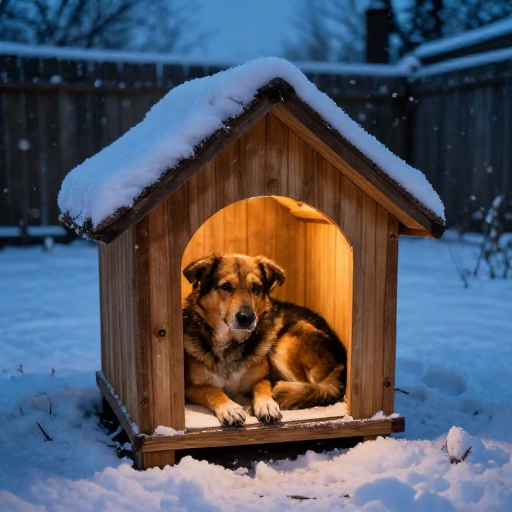
I still remember the first winter I watched my old dog shiver in a store-bought plastic house. It looked cute in the yard, but the wind cut straight through it. That week I started reading, sketching, and rebuilding — and I’ve been tinkering with winter dog houses ever since.
If you live somewhere the temperature drops below freezing for months at a time, a basic dog house won’t cut it. You need insulation, a raised floor, a wind-blocking entrance, and a roof that handles snow without caving in.
Below are 12 designs I’ve either built, helped a neighbor build, or copied shamelessly from a clever friend. Some are weekend projects. A few are fancy. All of them are cozy.
1. Raised Platform House With an Insulated Floor
Cold doesn’t just come from the air — it creeps up from the frozen ground. The single biggest upgrade I ever made was lifting my dog house about 6 inches off the soil on pressure-treated legs.
Then I laid a thick sheet of rigid foam board between the joists and covered it with plywood. That one change made the floor feel warm to the touch even on a January morning.
If you only copy one idea from this whole post, copy this one. Raise the house, insulate the floor, and your dog will notice immediately.
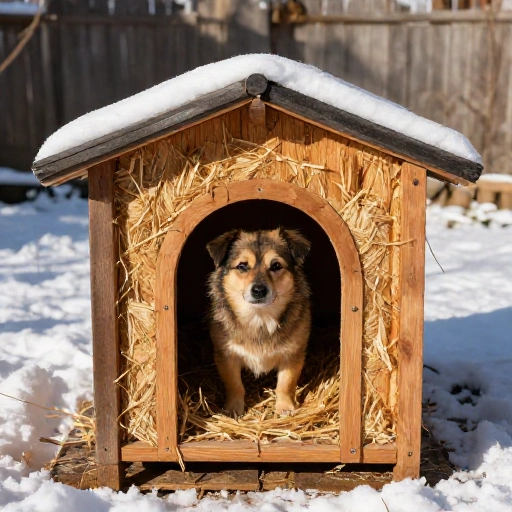
2. Double-Walled Box With Straw Insulation
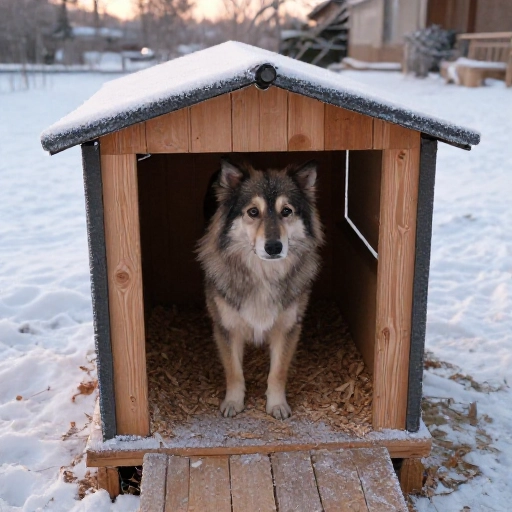
This is the classic “house inside a house” trick. You build your normal dog house, then wrap a second thin wall around it with a 2 to 3 inch gap in between.
I stuffed that gap with straw bales, which are cheap, natural, and surprisingly good at trapping heat. Some folks use foam board or fiberglass instead — just make sure your dog can’t chew into it.
The result is walls that feel almost warm when you touch them from inside. On really brutal nights, that dead air space is what keeps the temperature steady.
3. The Heated Pad Nook
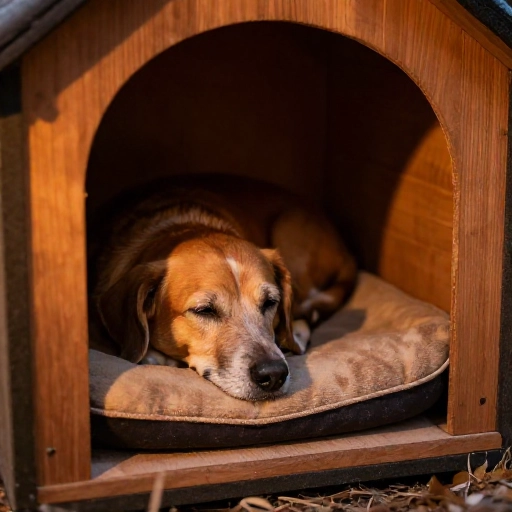
I’m cautious about anything electric near a dog, so I use a pet-safe, chew-resistant heated mat made specifically for outdoor kennels. It only warms when weight is on it, which saves power and lowers the risk.
I built a shallow recessed nook in the floor so the pad sits flush and can’t slide around. A lip around the edges keeps bedding from covering the whole thing.
Pair it with a thick layer of cedar shavings or a fleece blanket on top, and you’ve basically got a tiny heated bed in the yard.
4. Two-Dog Duplex With a Shared Warm Wall
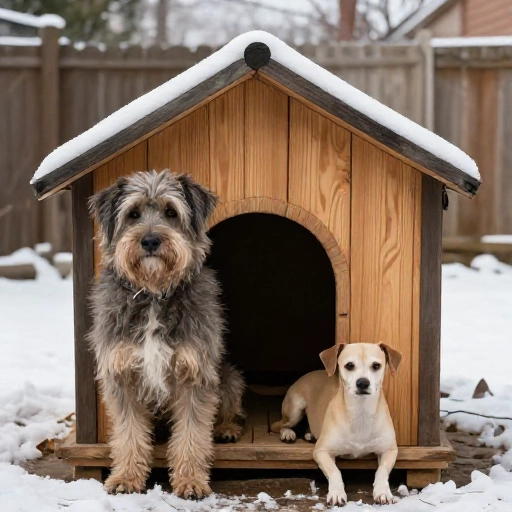
If you’ve got two dogs who like each other, a duplex is genius. Two separate sleeping chambers share one insulated middle wall, and that wall holds heat from both sides.
I built mine with two offset doorways so the wind can never blow straight through both entrances at the same time. Each side has its own bedding and its own little entry tunnel.
It costs a bit more in materials, but you’re basically getting two warm houses for the price of one and a half.
5. Igloo-Style Domed House
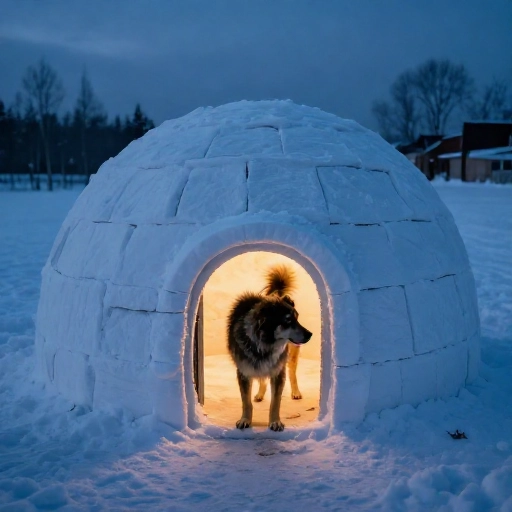
Round shapes shed wind better than square ones — ask any polar explorer. A dome or barrel-style house doesn’t give the wind a flat wall to push against.
I made mine from a large plastic barrel cut in half, sprayed with foam insulation, then wrapped in a wooden frame. Sounds odd, looks great, works beautifully.
Snow slides right off the top, and the curved interior holds warmth in a tight little pocket around your dog’s body.
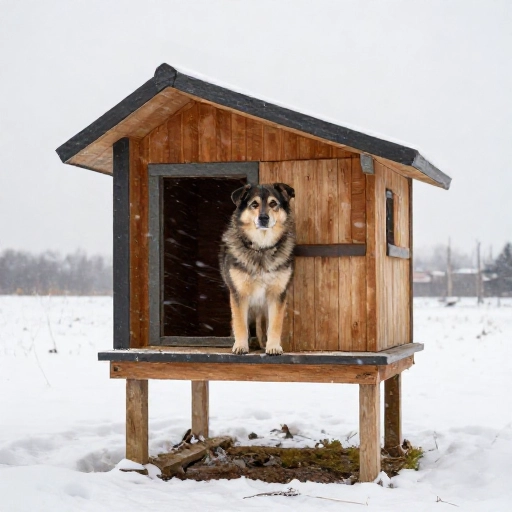
6. Off-Ground Cabin With a Windbreak Porch
This one is my favorite design for open, windy yards. The house sits on a raised deck, and a small covered porch juts out in front of the entrance.
That porch is the whole trick. It blocks direct wind, keeps rain and snow from blowing into the doorway, and gives your dog a dry spot to shake off before going inside.
I framed the porch with three solid sides and one open side facing away from the prevailing wind. It’s simple, and it works every single winter.
7. Insulated Entry Tunnel With a Door Flap
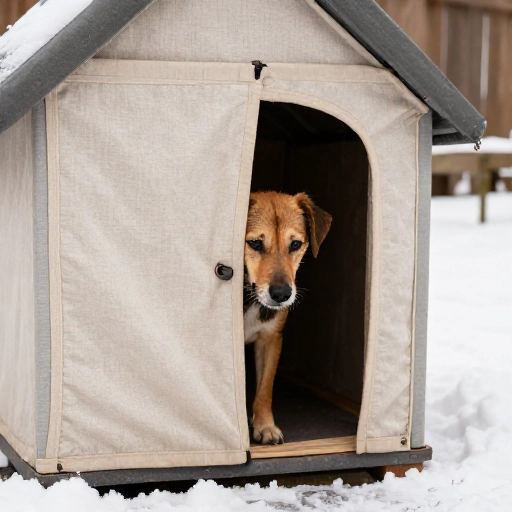
Heat escapes through doorways faster than anywhere else. So I built a short L-shaped tunnel entrance that forces cold air to turn a corner before it reaches the sleeping area.
At the end of the tunnel, I hung a heavy canvas or rubber flap. My dogs learned to push through it in about a day.
Combine the tunnel with a flap and you’ve dramatically cut down on drafts. I check the flap weekly for cracks — cold plastic gets brittle.
8. Solar-Powered Warm House
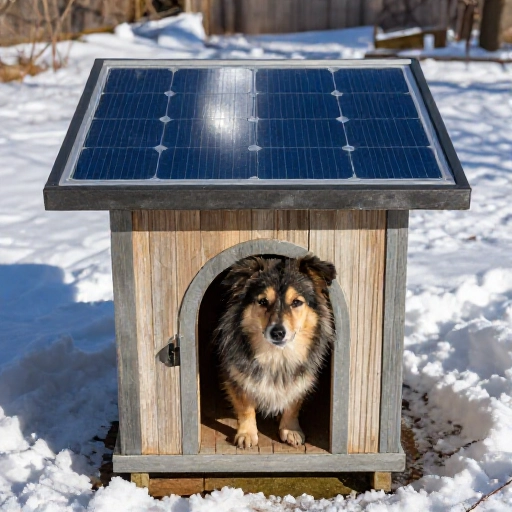
A small solar panel on the roof can run a low-wattage heating element or a tiny fan that circulates air. It’s a fun project if you like gadgets.
I mounted a 20-watt panel at an angle to catch winter sun, ran the wiring through the wall, and connected it to a small battery box outside the sleeping area.
Honestly, this one is more of a bonus than a necessity — insulation does most of the heavy lifting. But on sunny, freezing days, it adds a nice bit of extra warmth.
9. Cedar Log Cabin Style
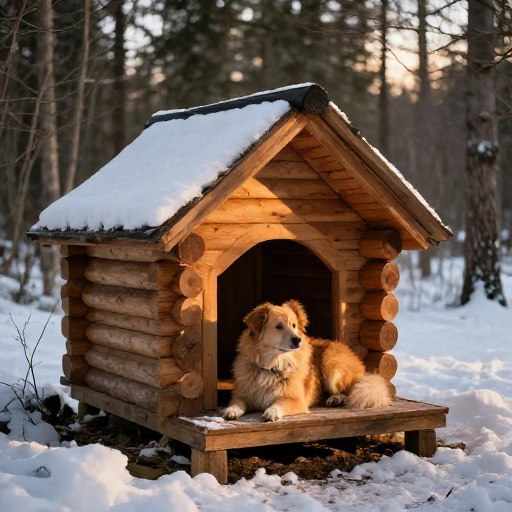
This is the design that makes neighbors stop and ask questions. I used cedar planks for the walls, which naturally resist moisture and insects.
Between the outer cedar and the inner plywood wall, I packed in insulation and sealed any gaps with caulk. Cedar also smells amazing, which helps with odor control.
Inside, I layer cedar shavings instead of blankets. They stay drier, they insulate well, and they’re easy to swap out mid-winter.
10. Sloped Roof With Deep Overhang
In snowy climates, roof shape matters as much as insulation. A steep slope sheds snow before it can pile up and crack the framing.
I always add a deep overhang — at least 6 inches on every side. It keeps rain off the walls and shades the doorway from blowing snow.
I also line the underside of the roof with a reflective barrier. It bounces your dog’s body heat right back down instead of letting it escape upward.
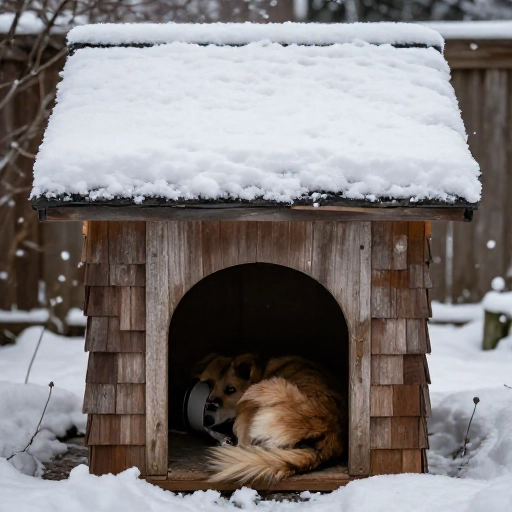
11. Garage-Adjacent Indoor-Outdoor Combo
If your dog house can sit against a heated garage or shed wall, you get free warmth. That shared wall stays noticeably warmer than the other three.
I put the entrance on the opposite side from the shared wall, so cold air has to travel across the whole interior before it reaches your dog.
You can take it further with a small pet door straight into the garage for the harshest nights. Just make sure the space is dog-safe and ventilated.
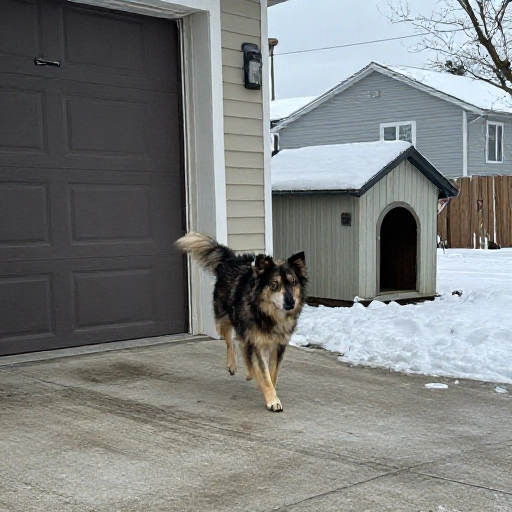
12. Pallet Palace With Recycled Insulation
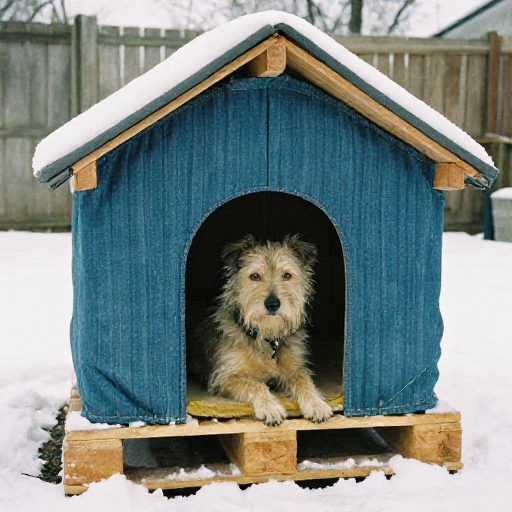
This is the budget-friendly hero of the list. I built a whole winter house from free pallets, a roll of secondhand insulation, and a few screws.
I stacked two pallets for the raised floor, framed the walls with pallet boards, and packed insulation between an inner and outer layer.
- Sand and stain the wood so it doesn’t splinter
- Seal every gap with caulk and spray foam
- Add a hinged roof for easy cleaning in spring
It cost me almost nothing and lasted three winters. Recycle, insulate, raise it up — that’s the formula.
A Few Final Tips Before You Build
Whatever design you choose, size matters. A house that’s too big stays cold because your dog can’t warm all that air. It should be just big enough for them to stand, turn around, and lie down comfortably.
Face the doorway away from the wind. Check for drafts with your hand on a cold day. And always use pet-safe materials — no loose fiberglass where a curious nose can reach it.
Most of all, remember that a winter dog house isn’t just shelter. It’s a warm little corner of the world that says “I’ve got you” every time the temperature drops.
Frequently Asked Questions
How cold is too cold for a dog to sleep outside?
It depends on the breed, coat, age, and health. Short-haired, young, old, or sick dogs shouldn’t be outside below freezing for long. Even with a great house, I bring my dogs inside when temps drop below about 20°F.
What’s the best insulation for a dog house?
Rigid foam board is my go-to because it’s moisture-resistant and easy to cut. Straw works well too and is cheap, but it needs replacing each season.
Should I put a heater in my dog’s house?
Only a pet-specific, chew-resistant one, and only if your dog is safe with it. Insulation and a raised floor do more for warmth than most heaters ever will.
How often should I change the bedding in winter?
Weekly at minimum. Damp bedding loses all its insulating power and can freeze. Cedar shavings or fleece that stays dry is the goal.
What size should a winter dog house be?
Just big enough for your dog to stand up, turn around, and stretch out. Extra space means extra cold air your dog has to heat with their own body.