14 DIY Large Dog Steps for Bed That Actually Look Good (And Save You Cash)
If you have a giant breed, you know the struggle. Your 80-pound lab thinks he’s a lapdog, and every night, he launches himself onto your mattress like a furry missile. Not only is that jarring for your sleep, but it’s terrible for their joints. Store-bought ramps are either flimsy, tiny, or cost more than your electric bill. That’s why I started building my own. It’s easier than you think, and honestly, it’s a fun weekend project.
I’ve rounded up 14 of the best DIY ideas for large dog steps. These aren’t just ugly boxes stacked together. We’re talking sturdy, carpeted, and even stylish options that blend right into your bedroom. Grab your drill and let’s get building—your pup’s hips will thank you.
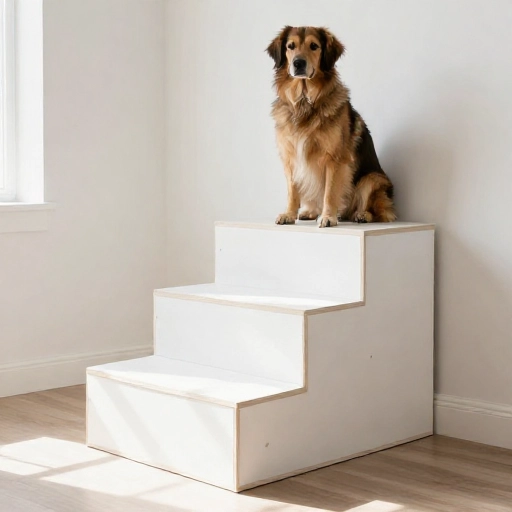
1. The Classic Plywood Box Stairs
This is the bread and butter of DIY dog stairs. You’re basically building a small staircase out of 3/4-inch plywood. It’s heavy, it’s solid, and it won’t slide when your dog jumps up. The key here is to make the treads deep—at least 12 inches—so their paws fit comfortably.
I built a set of three steps for my Great Dane mix, and it took me about two hours. You just need a circular saw, wood glue, and a nail gun. The best part? You can customize the height to match your bed frame exactly.
Once the frame is done, cover the top with low-pile carpet. It gives them traction and saves your wood floors from scratches. This is the “tried and true” method that never fails.
2. The Repurposed Nightstand Hack
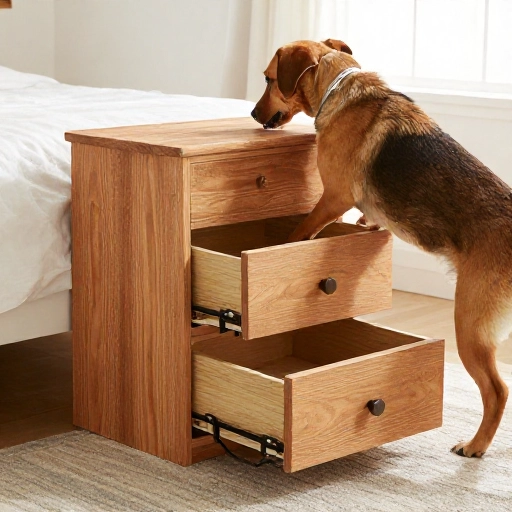
Hit up a thrift store or your local Facebook Marketplace. Find a sturdy, solid-wood nightstand or end table that’s roughly the height of your bed. This is the ultimate lazy DIY, and it’ssmart. You’re skipping all the cutting and measuring.
You just have to arrange the drawers. Remove the bottom drawer and leave the top one in, or vice versa, to create a staggered stepping effect. Screw the drawers back in place so they don’t slide out when your dog steps on them.
Add a non-slip rug runner on top of each surface. It looks intentional, like a piece of furniture, not pet gear. This is perfect if you want something that doesn’t scream “dog ramp” from across the room.
3. The Bookcase Conversion
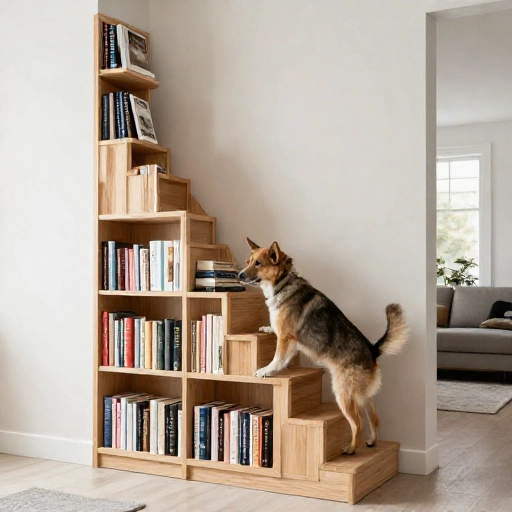
Similar to the nightstand hack, an old bookshelf can become a stunning set of stairs. Look for a tall, narrow bookcase. Lay it on its side (if it’s not too wide) or keep it upright and remove the shelves at different intervals.
If you keep it upright, you’re creating a spiral or ladder effect. Remove the middle shelves so your dog has a clear path, but leave others to create step platforms. It’s a bit of a puzzle, but the result is super unique.
You’ll definitely want to secure this to the wall with furniture straps. It’s taller than it is wide, so you need that extra safety measure. Throw some outdoor carpet on each shelf for grip.
4. The Cinder Block and Wood Plank Ramp
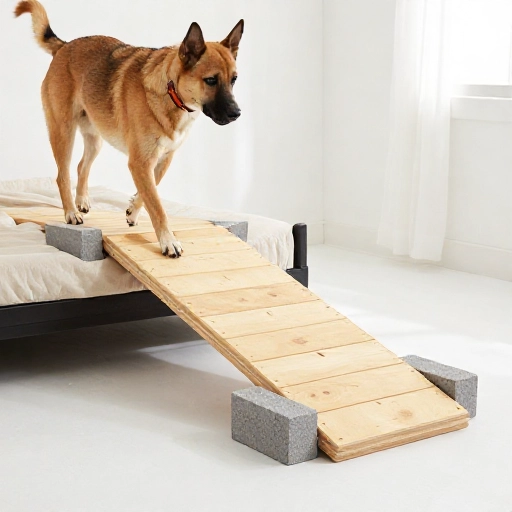
This is the budget king. If you want to spend under $30, this is your project. You need four to six cinder blocks and two thick, solid wood planks. It’s not the prettiest, but it is incredibly functional and stable.
Stack the cinder blocks to create two platforms at different heights. Place one plank leaning against the bed, and the other connecting the platforms. Make sure the planks are sanded smooth to avoid splinters.
To make it look better, paint the cinder blocks to match your room and cover the planks with a grippy runner. It’s rustic, but it works perfectly for heavy dogs that need a wide base to walk on.
5. The Foam and Fabric Steps
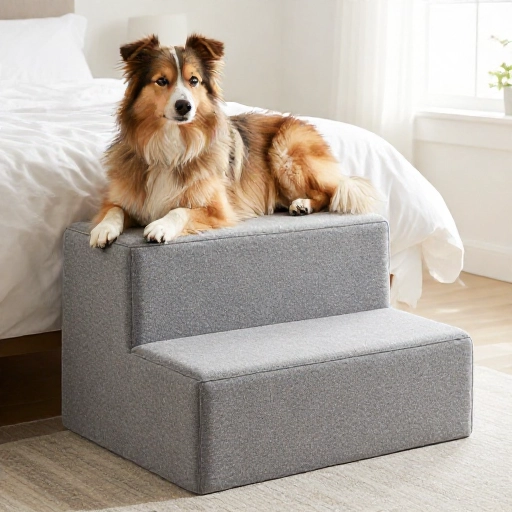
Are you a sewing person? This one is for you. You’ll need high-density upholstery foam. These are the same blocks used for dog beds. You’ll cut them into a staircase shape using an electric carving knife (yes, really).
Then, you’ll sew a custom cover out of durable fabric like canvas or denim. The cover zips off for washing, which is a huge win if you have a messy dog. The foam is stiff enough to hold weight, but soft on their joints.
This is a great option if you have a senior dog with arthritis who needs a softer landing. It’s also super lightweight, so you can move it from the bedroom to the living room easily.
6. The Pallet Wood Staircase
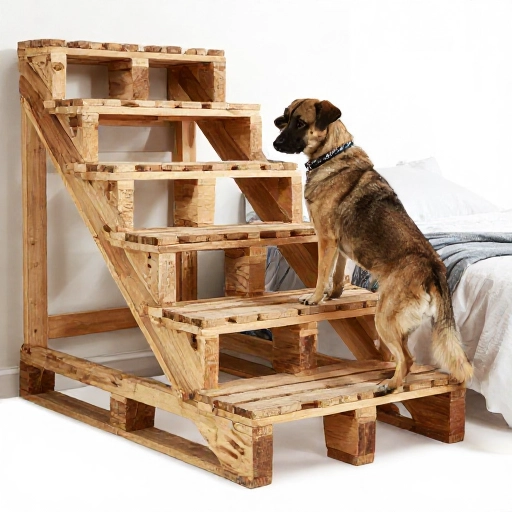
If you love that farmhouse aesthetic, get your hands on some heat-treated pallets. Disassemble them carefully to get long, sturdy boards. You’ll build a frame similar to the plywood version, but with a more rustic look.
Leave the wood natural or stain it a warm walnut color. The gaps between the pallet boards are actually great for drainage if your dog comes in from the rain. They won’t slip on wet wood like they would on carpet.
Just make sure you sand everything down really well. Pallets can be rough. You want a smooth surface for their paws, especially on the edges where they step.
7. The Rolling Cart Stairs
This is a clever hack for small spaces. Find a sturdy metal or wood utility cart with three shelves. You know, those ones they sell for kitchen storage? They are already the perfect height and width for steps.
You don’t have to build a thing. Just reinforce the corners with zip ties or small screws to prevent wobbling. Then, add carpet squares to the top of each shelf.
The wheels are actually a feature! You can lock them when in use, but unlock them to roll the stairs out of the way when you’re making the bed or vacuuming. It’s mobile and functional.
8. The Treadmill Staircase
Okay, this one is for the upcyclers. If you have an old, broken treadmill (or can find one for free on Craigslist), the deck is perfect. The walking belt is already non-slip and durable. You can cut the frame down.
Take the base of the treadmill and cut it into sections. You can use the incline mechanism to create a natural ramp. Wrap the sides with wood to make it look intentional.
This is a heavy-duty option that will last forever. The belt material is designed for friction, so your dog will have amazing grip even when they are jumping up excitedly.
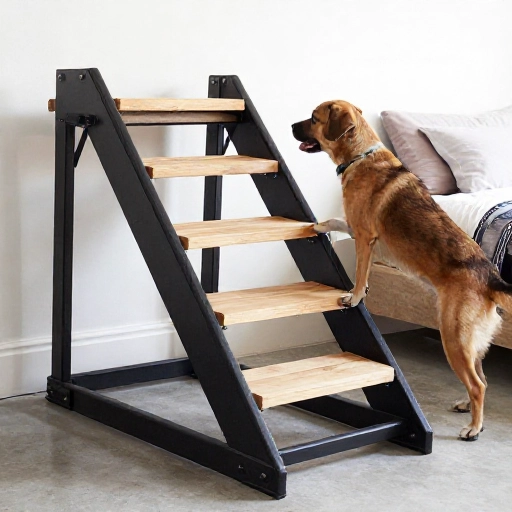
9. The Storage Stairs (With Drawers)
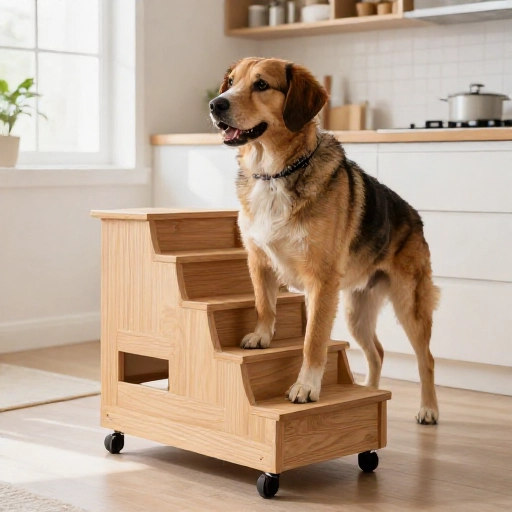
Why waste all that space under the steps? This DIY is basically building a small cabinet with a stepped top. You build a rectangular frame, and then add drawer sliders inside. The top is cut into steps.
This is an advanced woodworking project, but the payoff is huge. You can store your dog’s toys, leashes, and treats right in the stairs. It’s the ultimate space-saving hack for apartments.
If drawers are too tricky, just make the front panels hinged doors that open up. That gives you hidden storage without the hardware hassle. It’s functional and tidy.
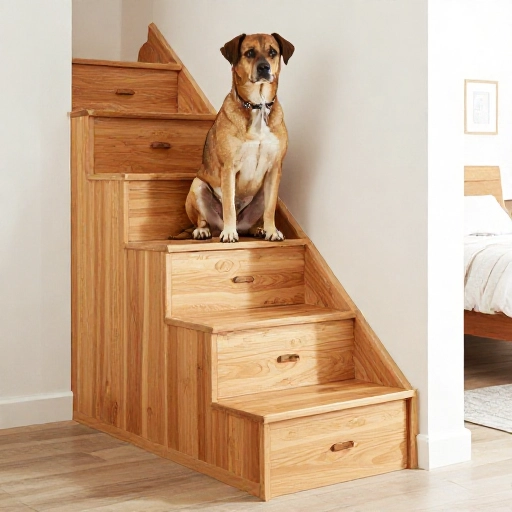
10. The Two-Tier Step Box
This is the simplest design on the list. It’s just two boxes. One big box on the bottom, and a smaller box on top, offset to the side. That’s it. It’s a two-step climb that works great for lower beds.
You can build these out of plywood or even thick MDF boards. The bottom box is around 10 inches tall, and the top is 8 inches. This creates a gradual climb instead of a single leap.
This is a great starter project for a new woodworker. It uses minimal materials and is very forgiving. Cover it in a fun patterned fabric to match your bedding.
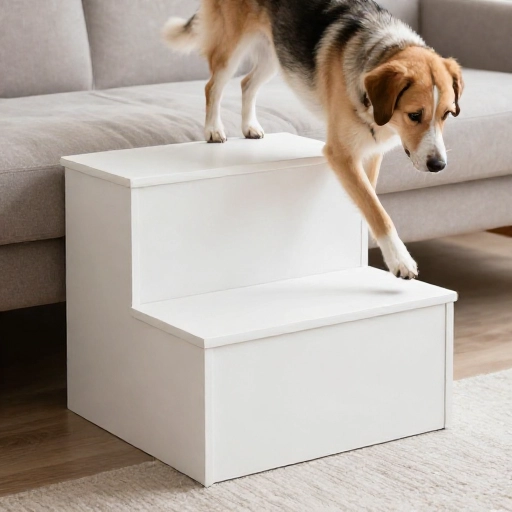
11. The Rope-Wrapped Ramp
Some dogs prefer a ramp to stairs. This is a solid plywood board that leans against the bed at a gentle angle. Instead of carpet, you wrap the board tightly with thick sisal rope.
The rope provides incredible traction and looks super chic. It’s like a cat scratching post but for the floor. You just glue the rope down row by row using a hot glue gun. It’s time-consuming but very therapeutic.
Make sure the board is wide enough—at least 20 inches—so they feel confident walking up. Add small side rails to prevent them from stepping off the edge.
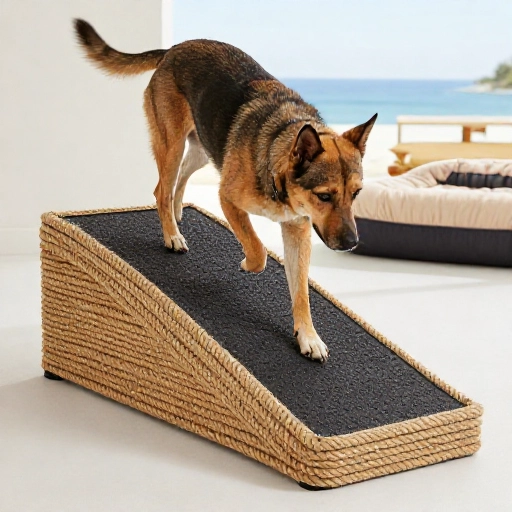
12. The Foldable Wooden Steps
Do you travel with your dog? These are the perfect solution. You build a set of steps that are hinged in the middle. When you’re not using them, they fold flat like a book and slide under the bed.
You’ll need heavy-duty piano hinges to hold the weight. The design is basically two boxes that are connected. When open, they sit flush against the bed frame.
This is a bit more complex to build, but it’s amazing for RVs or guest rooms. You can use a latch to keep them closed when folded. It’s a space-saver that doesn’t compromise on strength.
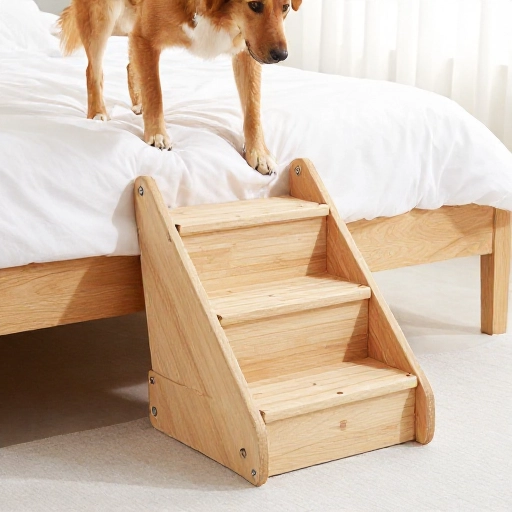
13. The Concrete Block and Foam Hybrid
This is the “best of both worlds” option. You get the stability of concrete blocks but the softness of foam. You place concrete blocks on the floor to create the base structure. Then, you place thick foam pads on top of each block.
This raises the height without making it rock hard. The blocks are heavy, so there is zero sliding. The foam gives a little cushion for their paws.
You can wrap the foam with a piece of fabric or just leave it as is if you buy the foam in a nice color. It’s unconventional, but it’s super sturdy and affordable.
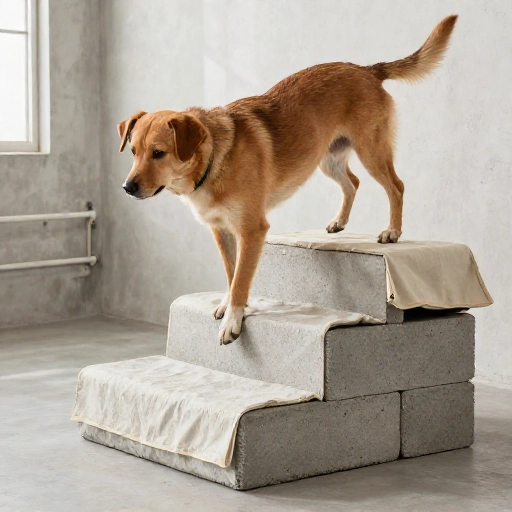
14. The Repurposed Suitcase Stairs
This is a quirky, vintage-inspired idea. Find three or four old suitcases at a thrift store. They need to be sturdy, not the flimsy soft-sided ones. Hard-shell luggage is best.
Stack them from largest to smallest. The largest goes on the bottom, the smallest on top. Screw them together through the sides so they don’t slide apart. Leave them open or closed depending on the height you need.
This adds a ton of character to a room. It looks like a decorative stack of luggage, but it’s actually functional steps. Very “travel influencer” vibe for your bedroom.
Final Thoughts: Build It Right, Build It Once
Building your own dog steps isn’t just about saving money—though that’s a great bonus. It’s about customizing the solution to your dog’s specific size, your bed height, and your home’s décor. A store-bought step might be too narrow, but a DIY one is built exactly to your measurements.
Don’t skip the traction. Whether you choose carpet, rope, or rubber mats, grip is non-negotiable for large dogs. You also want to make sure the structure is wider than their body so they feel secure. Have fun with it, and remember—your dog just wants to be close to you. Making that climb easier is a small act of love with huge benefits for their health.
Frequently Asked Questions
How tall should DIY dog steps be for a bed? They should be about 25% shorter than your bed height. You want them to step up, not jump. Measure from the floor to the top of your mattress, then divide that into 2–3 increments for the steps.
What is the best material for dog steps? Solid wood (plywood or pine) is the best for stability. It doesn’t flex under heavy weight. You can cover it with carpet for traction. Avoid plastic or particleboard, as they can bow over time.
Are stairs or ramps better for large dogs? It depends on the dog. Ramps are better for seniors with hip dysplasia because they don’t have to lift their paws high. Stairs are better for younger dogs who might try to jump over a ramp. Stairs also take up less floor space.
How do I stop the steps from sliding on hardwood floors? You need a non-slip base. Screw rubber furniture pads or a piece of rubber shelf liner to the bottom of the steps. This creates friction and keeps the whole structure from skating when they jump down.
Can I use an old mattress topper for the steps? Yes! A firm memory foam topper can be cut and stacked to create a soft staircase. It’s not as stable as wood, but it works great for older, lighter dogs who need a plush surface.