15 Best Dog Food Storage Ideas for Homes
If you’re like me, you’ve probably stood over a half-open bag of kibble, wondering if it’s still fresh or if tiny pantry moths have claimed it. Dog food storage is one of those things I never thought much about until I realized how quickly the food lost its crunch and smell. Keeping your pup’s meals fresh isn’t just about neatness—it’s about preserving nutrition and avoiding waste.
Over the years, I’ve tried bins, bags, and even old ice cream tubs (don’t judge me). Some worked great, others were a mess. So I rounded up 15 of the best dog food storage ideas that actually work for real homes. Whether you have a tiny apartment or a full mudroom, there’s something here for you.
Let’s dive into storage solutions that keep kibble fresh, pests out, and your space looking good.
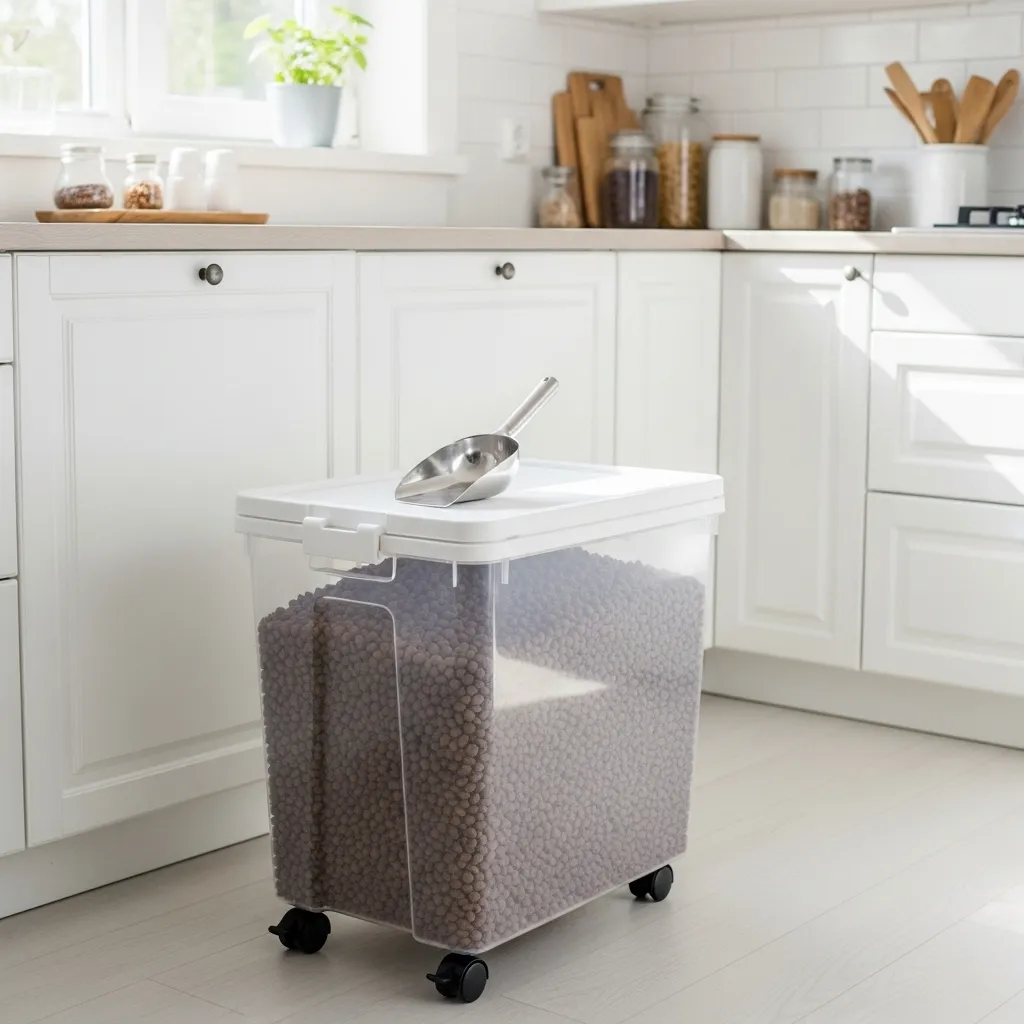
1. Airtight Plastic Bins with Wheels
These are probably the most popular option for a reason. A sturdy, BPA-free plastic bin with a tight seal keeps air and moisture out. The wheels make it easy to move even when full, which is a lifesaver on cleaning day.
I like to keep the original bag inside the bin for the barcode and feeding instructions. Just fold the bag down and pour the kibble over it. It’s quick, clean, and keeps the bin from getting greasy.
Look for bins with a snap-lock lid rather than a flimsy flip top. Trust me on this one.
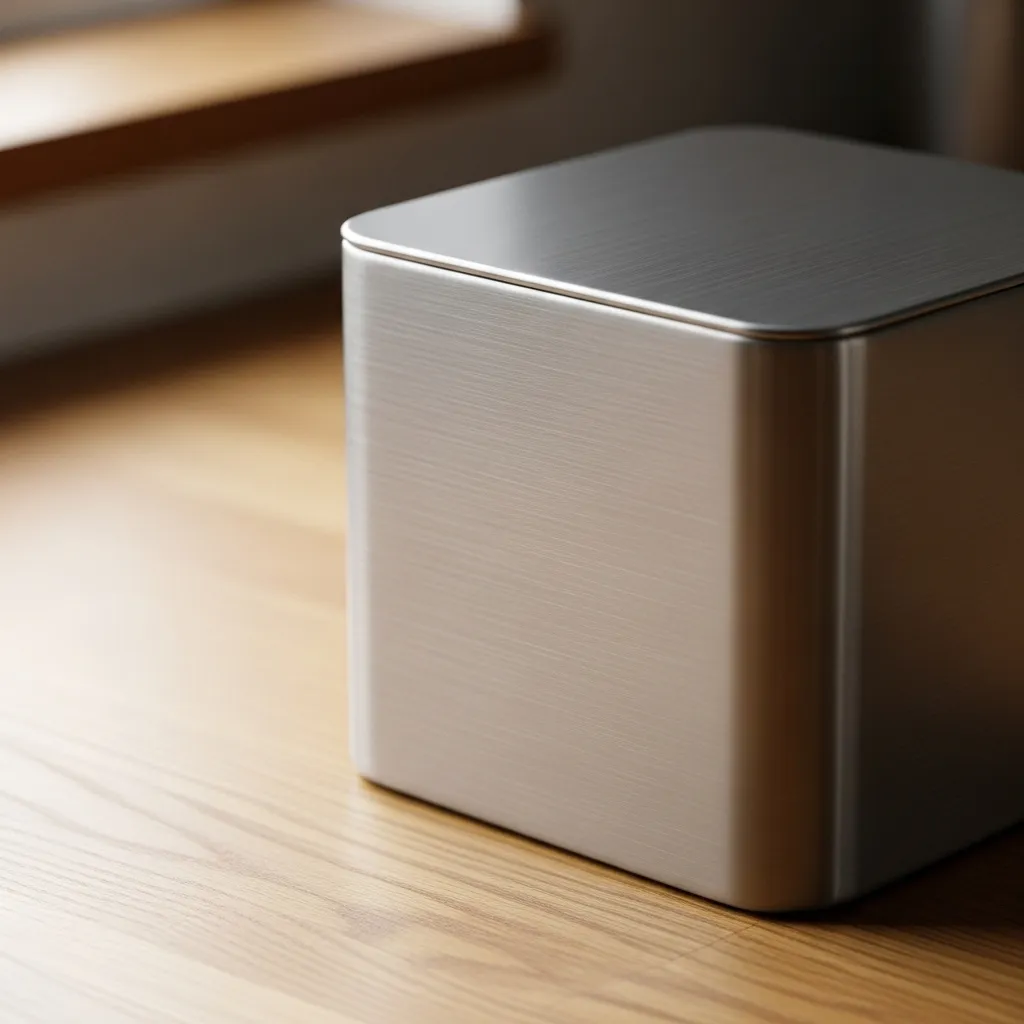
2. Stainless Steel Pet Food Containers
If you want something that won’t hold odors or stains, stainless steel is your best friend. It’s non-porous, so no lingering fishy smells. Plus, it’s heavy enough that a determined dog can’t knock it over.
The downside? You can’t see inside without opening it. But many come with a clear window strip or a scoop holder on the side. They look sleek in a kitchen corner too.
Just wipe the outside now and then to keep it shiny. No special cleaning tricks needed.
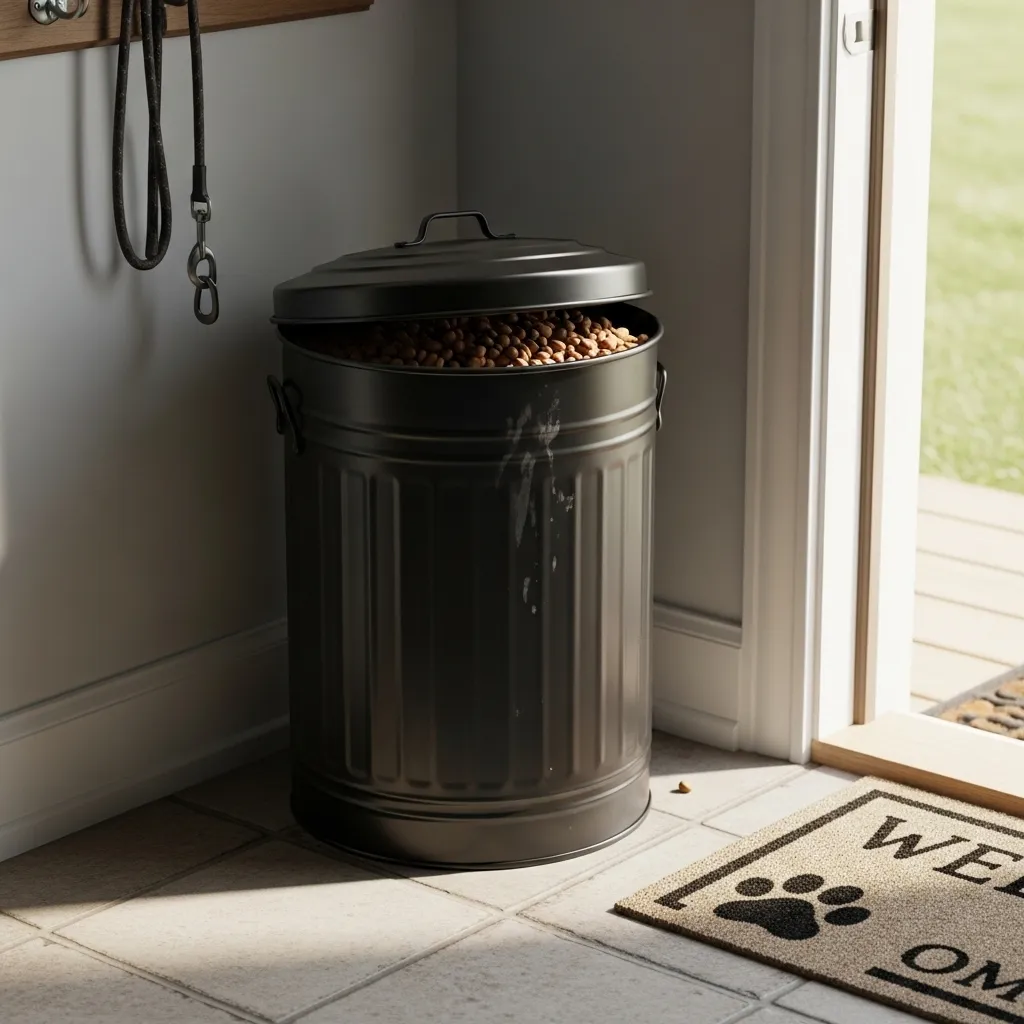
3. Repurposed Metal Trash Cans with Lids
I know, it sounds weird. But a clean, unused metal trash can with a tight lid is basically a giant food container. They’re often cheaper than pet-specific bins and come in fun colors.
Make sure it’s new or thoroughly cleaned. You don’t want any residual smells confusing your dog. Line it with a food-safe bag if you want to make cleanup easier.
This is a great budget-friendly hack that looks surprisingly cute in a laundry room.
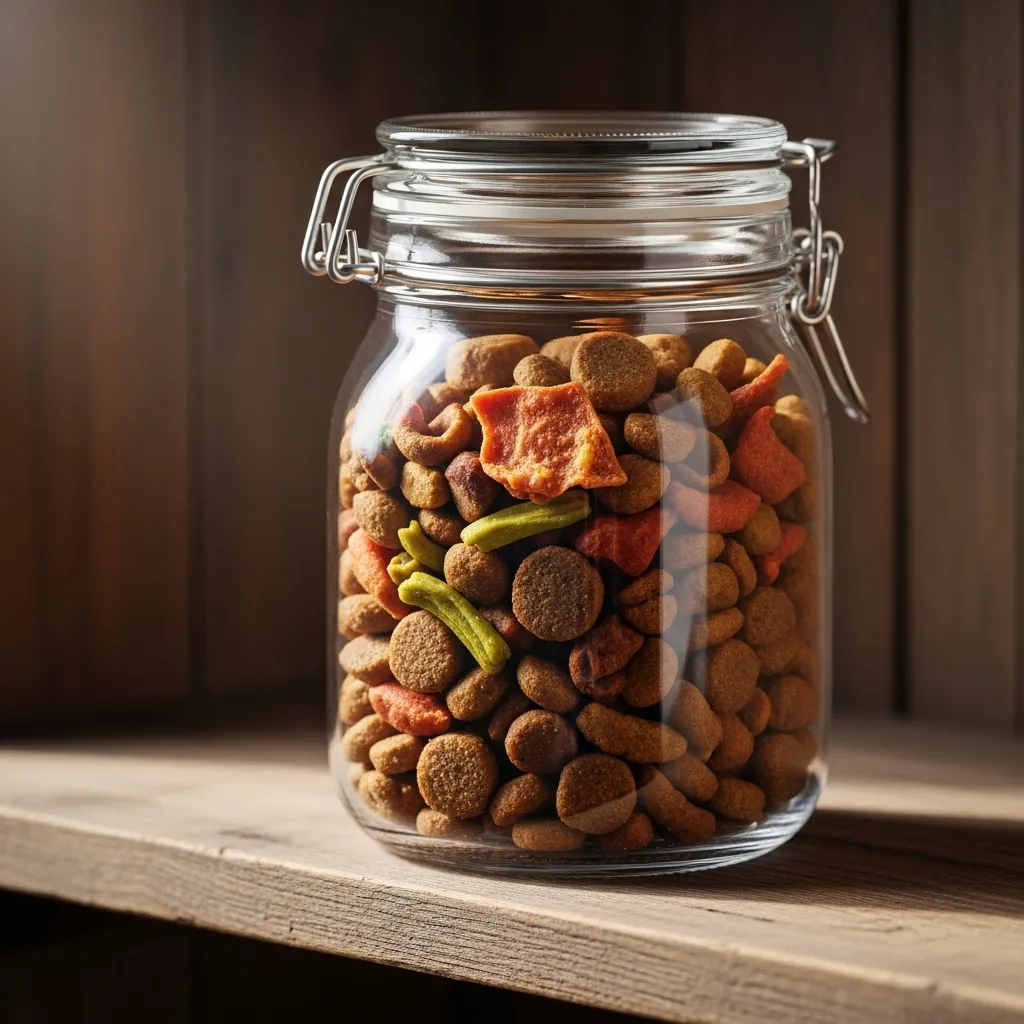
4. Glass Jars with Clamp Lids
For smaller amounts of food, like treats or a few days’ worth of kibble, glass jars are lovely. The clamp lid with a rubber gasket creates an airtight seal. You can see exactly how much is left without opening it.
I use one on my counter for daily feeding. It keeps the food fresh and looks nice enough to leave out. Just don’t fill it to the brim if you live in a humid area—moisture can still sneak in over time.
These are perfect for smaller dogs or as a secondary container for the current day’s portions.
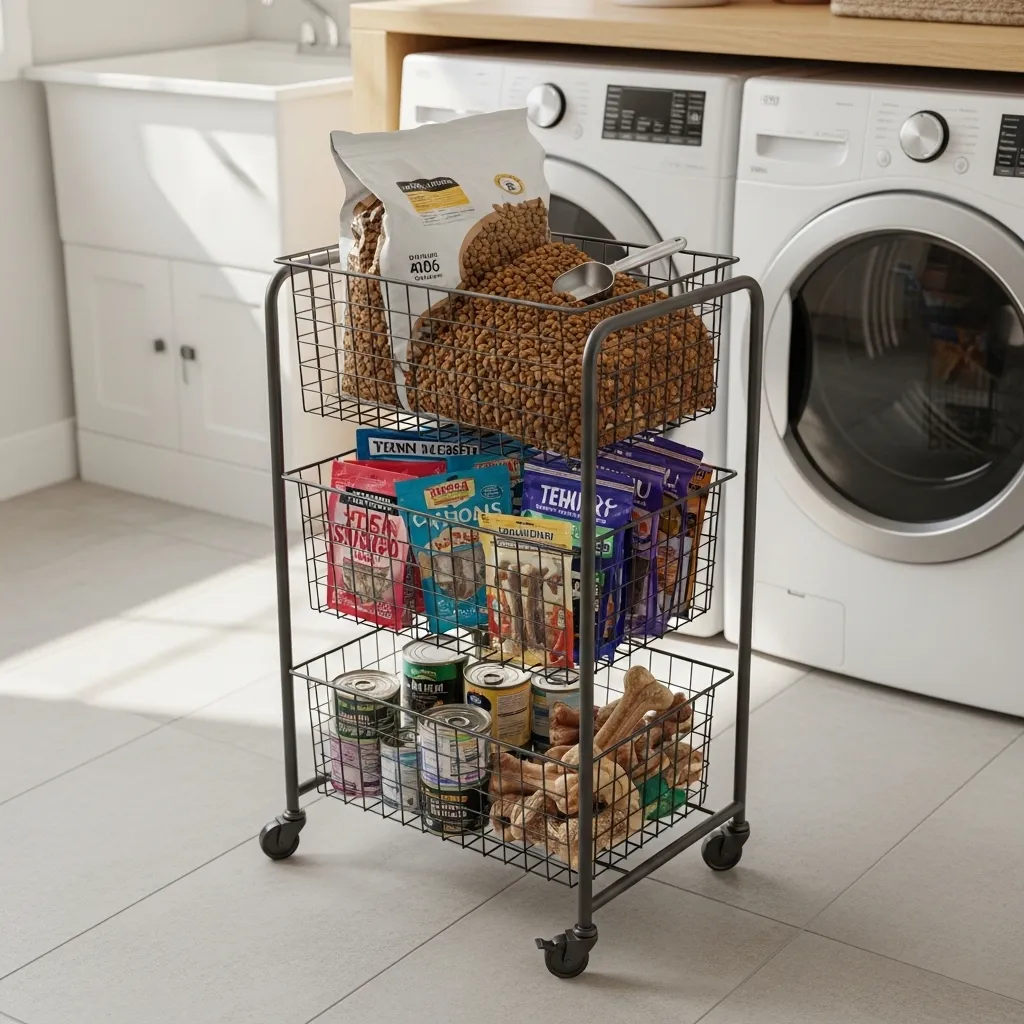
5. Rolling Cart with Bins
This is my personal favorite for small spaces. A simple three-tier rolling cart with two larger bins on the bottom and treats or bowls on top. It’s mobile, so you can tuck it into a closet or roll it out for feeding time.
Use fabric bins or small plastic tubs on the shelves. They keep the bags hidden but easy to access. The best part? It’s cheap and you can find carts at any home store.
Make sure the cart is sturdy enough to handle a full bag of food. Test it before loading up.
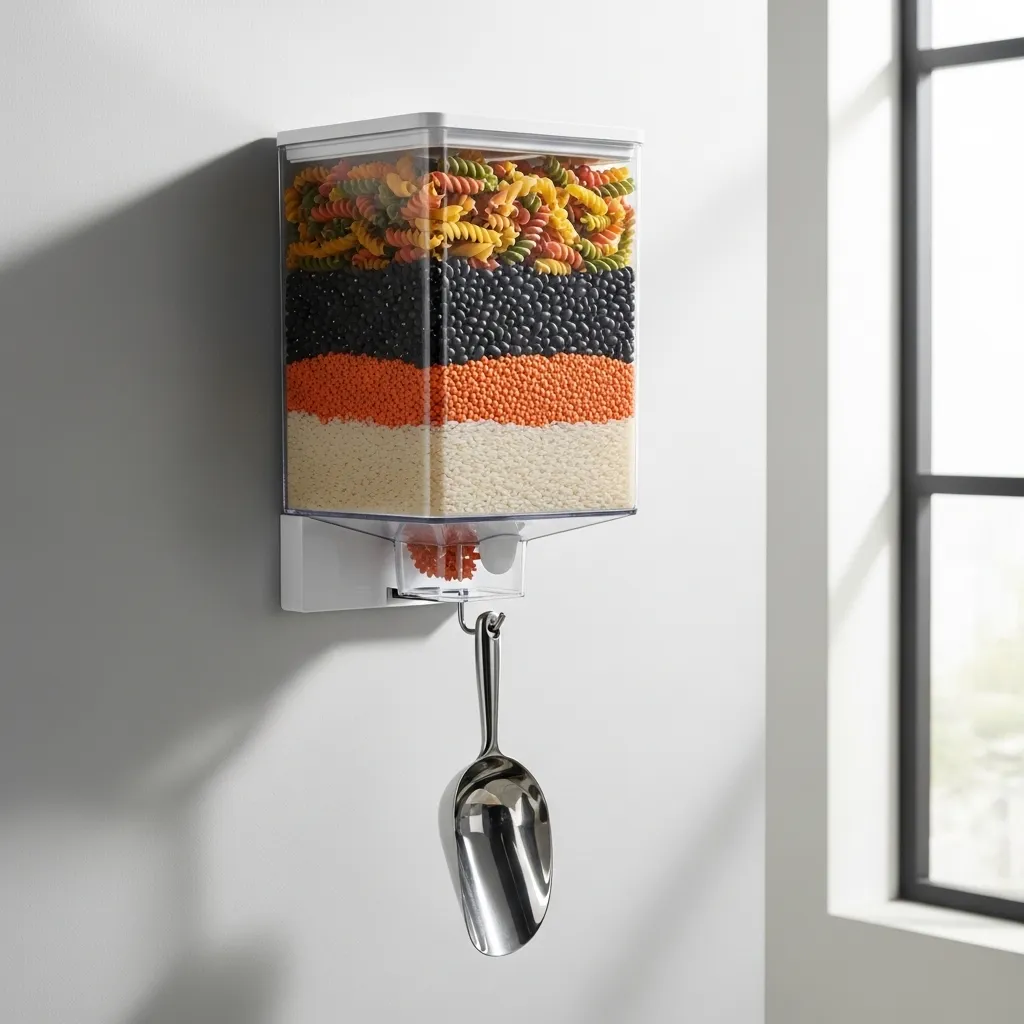
6. Wall-Mounted Scoop and Container System
If floor space is tight, go vertical. A wall-mounted container with a built-in scoop holder saves counter space and keeps everything within reach. You mount it at a comfortable height and just scoop when you need.
These are usually made of plastic or metal and come with a small container for a few pounds of food. They’re not for bulk storage, but perfect for daily use.
Install it near your dog’s feeding station for maximum convenience. Just make sure the screws can handle the weight.
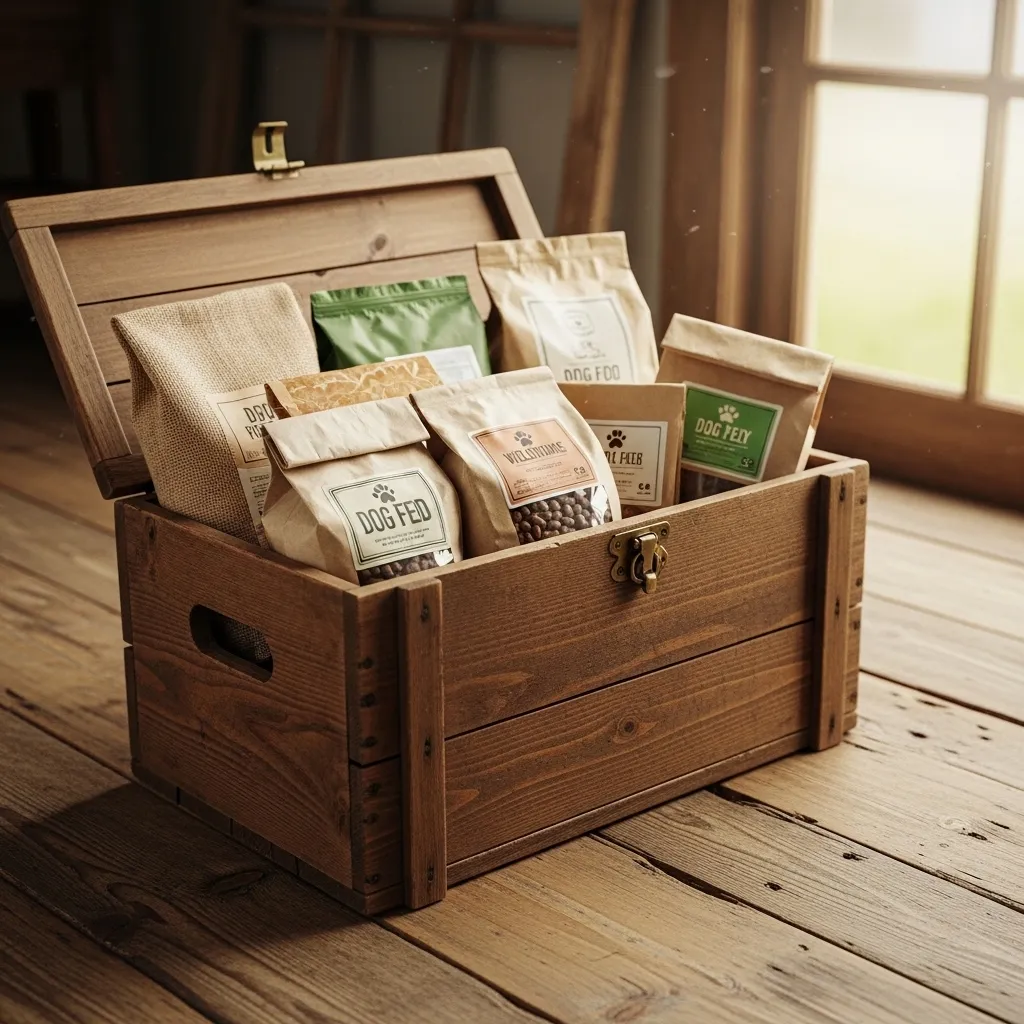
7. Vintage Wooden Crates with Lids
For a rustic look that blends into farmhouse decor, use a wooden crate with a hinged lid. You can find these at thrift stores or make your own. Line the inside with a food-safe plastic liner or keep the bag inside.
The wood breathes a bit, so it’s not completely airtight. But for short-term storage, it’s charming and functional. I use one for my dog’s treats and smaller bags.
Add a coat of food-safe sealant if you want to protect the wood from spills.
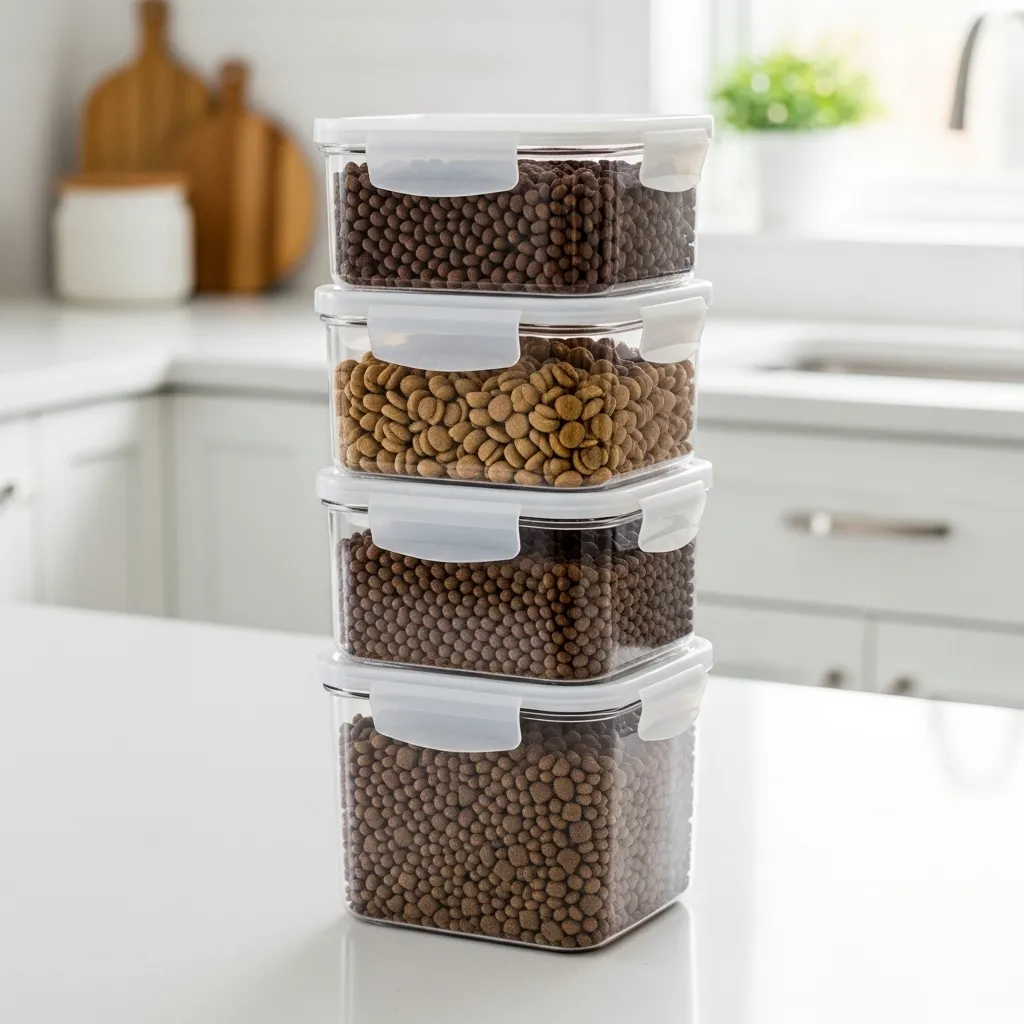
8. Stackable Plastic Canisters
These are like building blocks for your pantry. Clear, stackable canisters with airtight lids let you store different food types or sizes. They’re modular, so you can add more as needed.
I use a set of three: one for kibble, one for treats, and one for supplements. They stack neatly on a shelf or in a cabinet. The clear sides let me see when I’m running low.
Just make sure the lids snap on securely. Some cheaper ones pop off too easily.
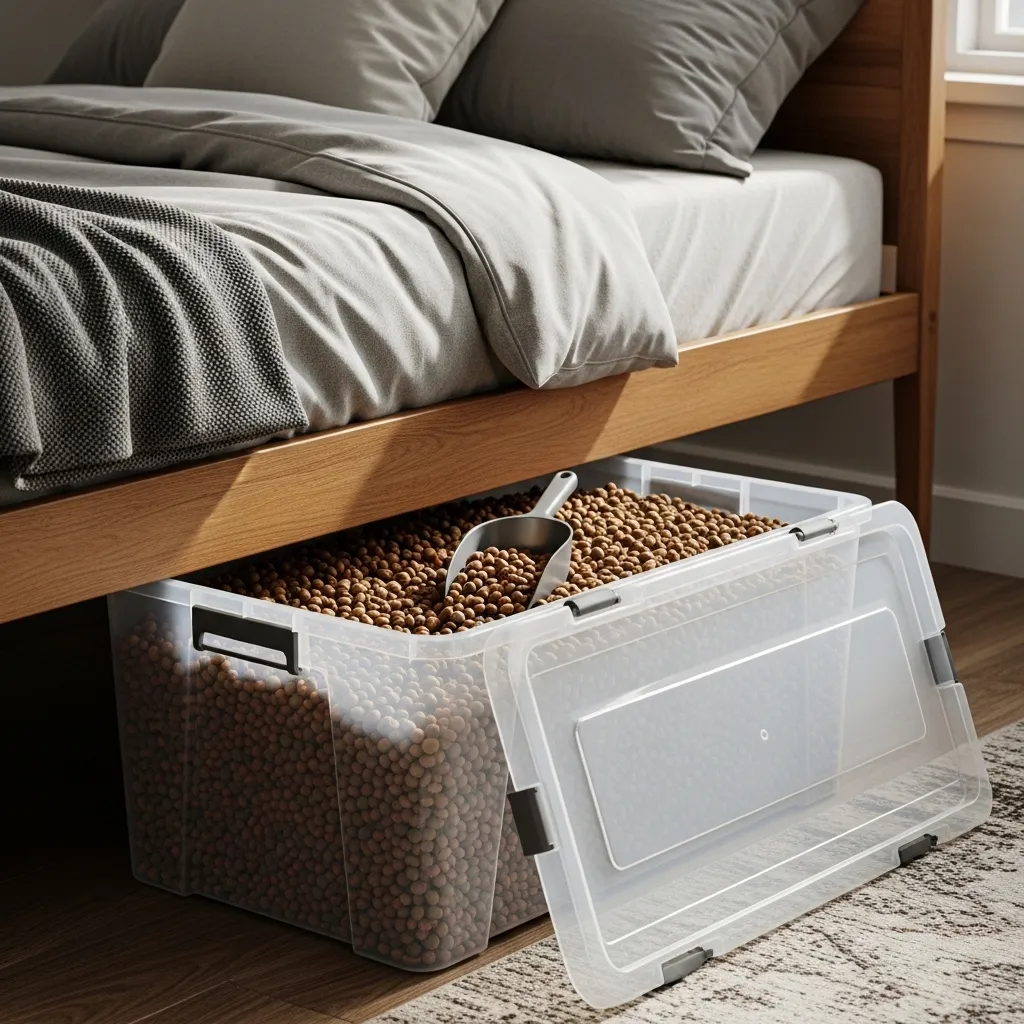
9. Under-Bed Storage Totes
If your dog eats a lot of food and you have limited storage, use flat under-bed totes with locking lids. They slide right under the bed or a low shelf. They’re not pretty, but they’re practical.
Choose a tote that’s wide and shallow so you can scoop easily. Keep the food in its original bag inside the tote for freshness. These are great for bulk buying without cluttering your kitchen.
Just remember not to store them in a damp basement. Moisture is the enemy of kibble.
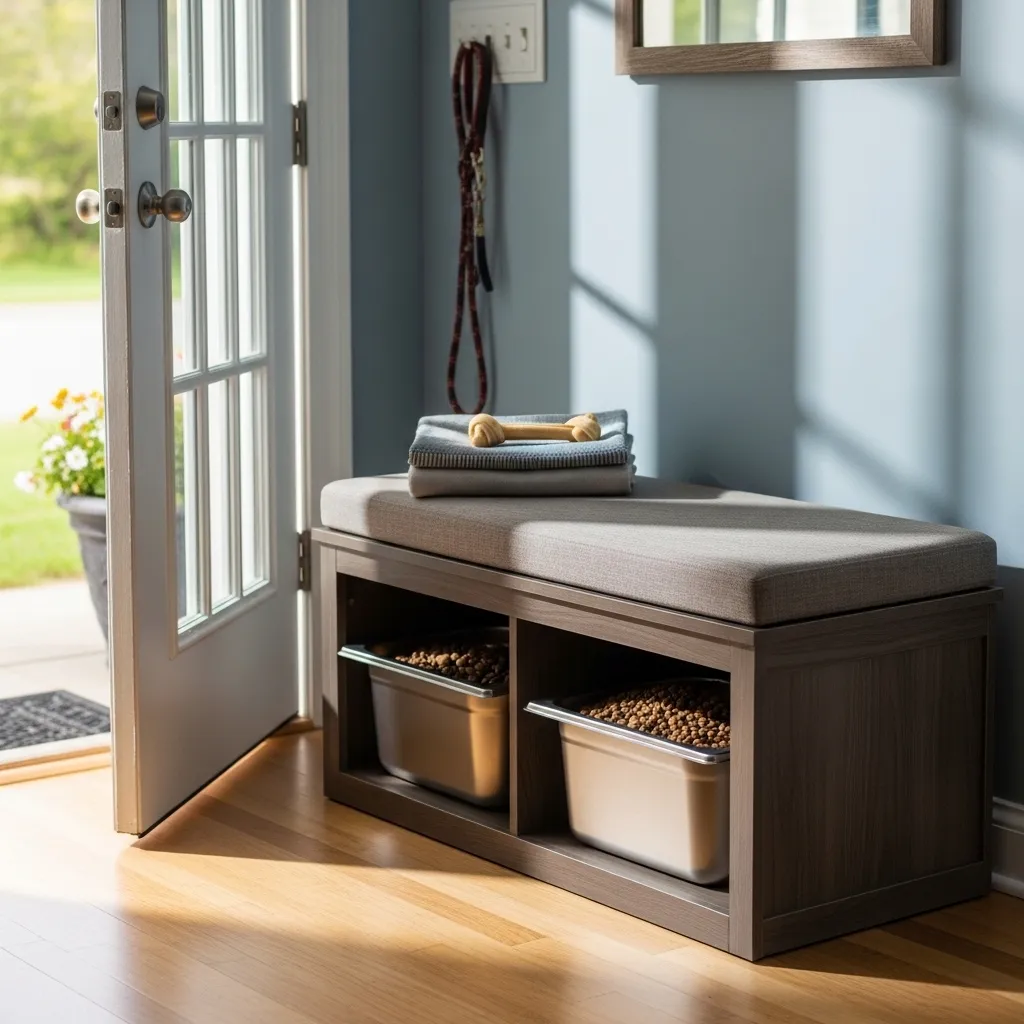
10. Pet Food Storage Bench
A storage bench that doubles as seating is genius for entryways or mudrooms. You lift the seat to access a large compartment perfect for a bag of food. Some even have a built-in bowl holder on the side.
It keeps the food hidden and gives you a place to sit while putting on shoes. I’ve seen them in wicker, wood, and even upholstered styles. Just make sure the interior is easy to clean.
Line it with a mat or plastic liner to catch any crumbs or dust.
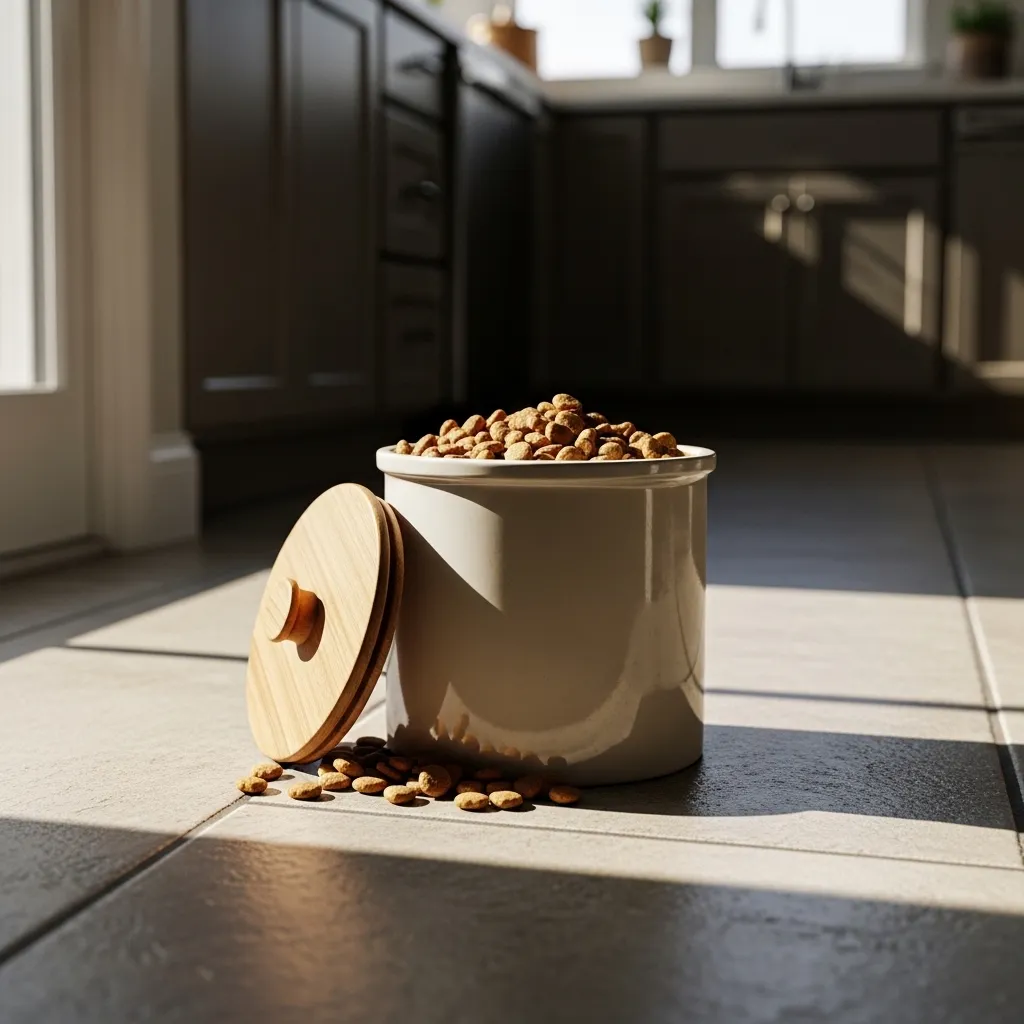
11. Ceramic Crocks with Lids
These are heavy, beautiful, and keep food cool. A ceramic crock with a tight-fitting lid is naturally insulating, which helps preserve freshness. They come in all kinds of colors and patterns.
The weight means they won’t tip over, even with a big dog bumping into them. I use one for my pup’s daily kibble and it stays put. Just don’t drop the lid—it can chip.
Wipe the inside dry between refills to prevent any musty smells.
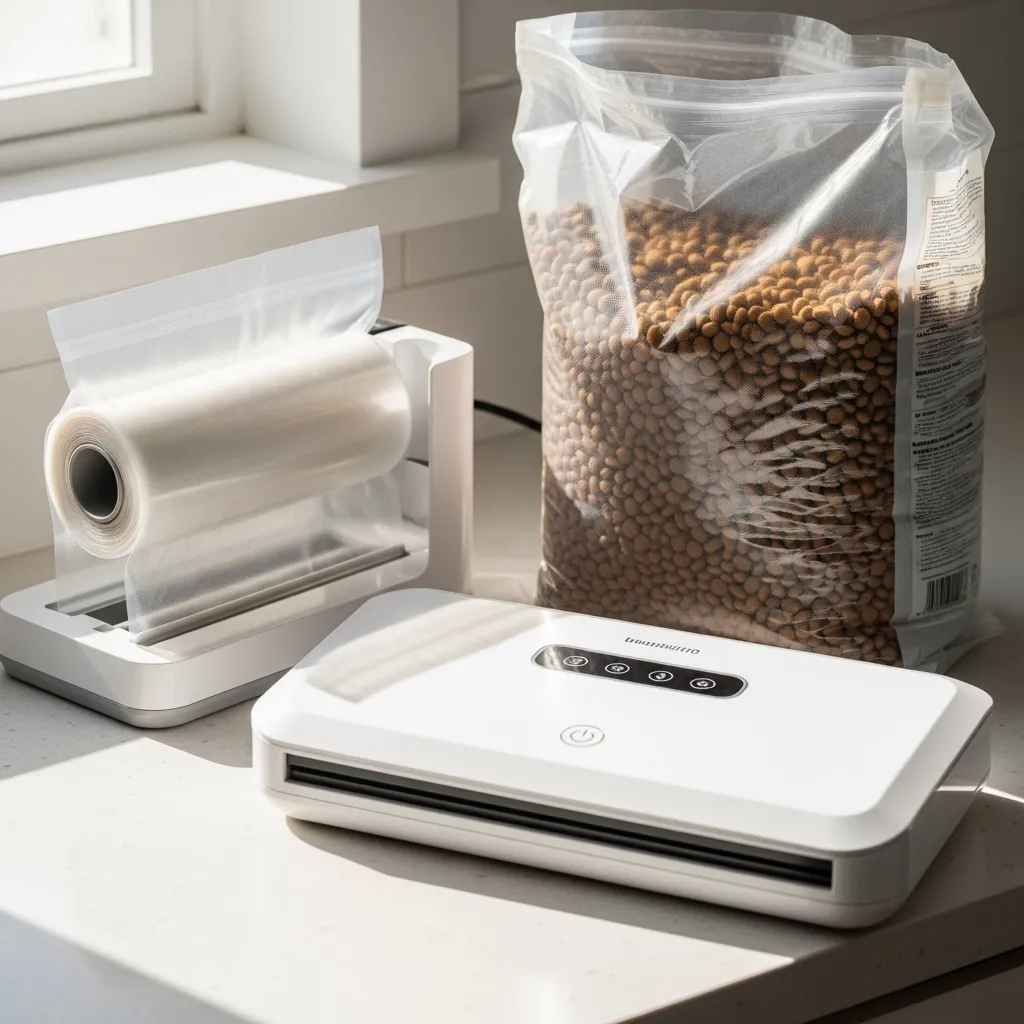
12. Vacuum-Sealed Bag System
For long-term storage, nothing beats vacuum sealing. You portion out the food into vacuum bags and seal them. This removes all the air, keeping the kibble fresh for months.
I do this when I buy a giant bag on sale. I portion it into weekly bags and stack them in a drawer. It takes some effort upfront but saves money and waste.
Just make sure the bags are food-safe and labeled with the date. Your dog will thank you.
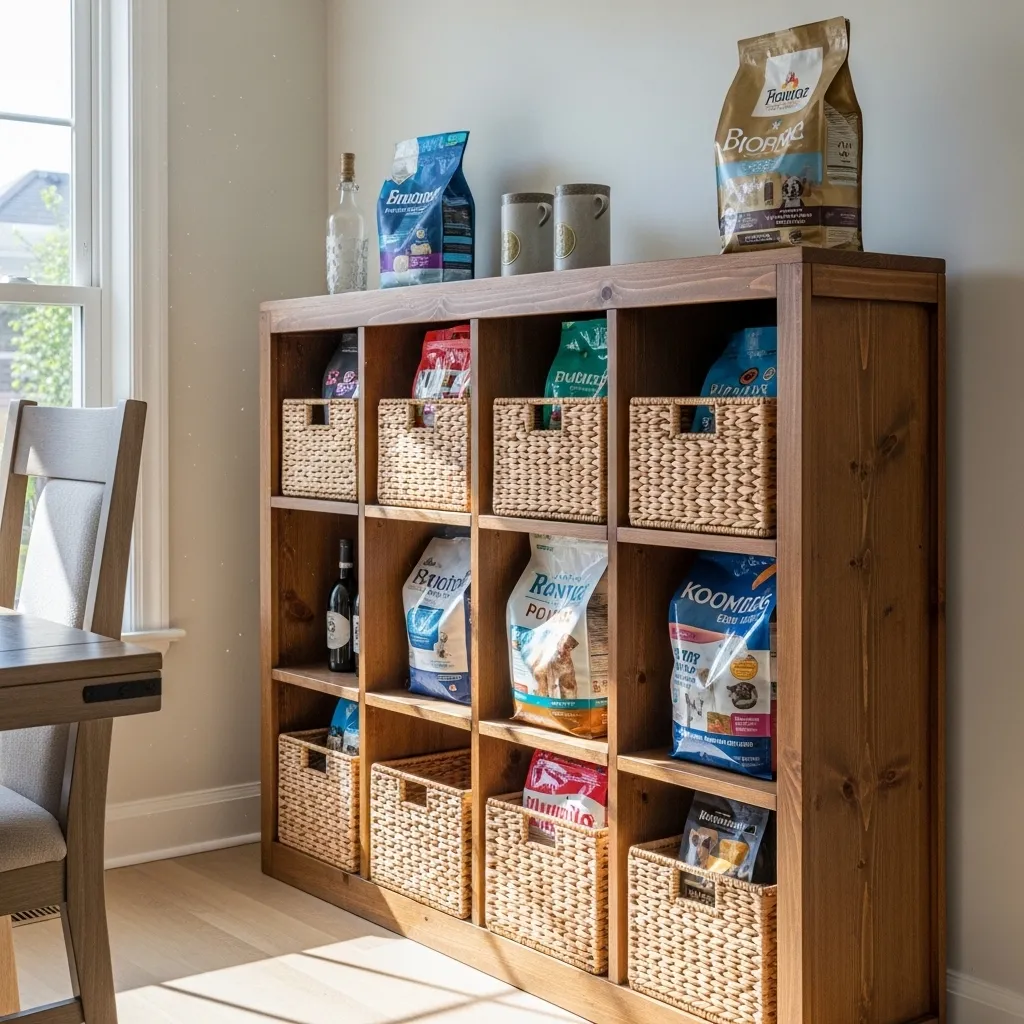
13. Repurposed Wine Rack with Baskets
If you have an old wine rack or cube shelf, add some sturdy baskets. Each basket can hold a bag of food or treats. It’s an open storage solution that keeps everything visible and easy to grab.
This works best for smaller bags or if you rotate through different food types. It’s not airtight, but for short-term use it’s super convenient. I use one for my dog’s variety pack of treats.
Just keep it in a cool, dark spot away from direct sunlight.
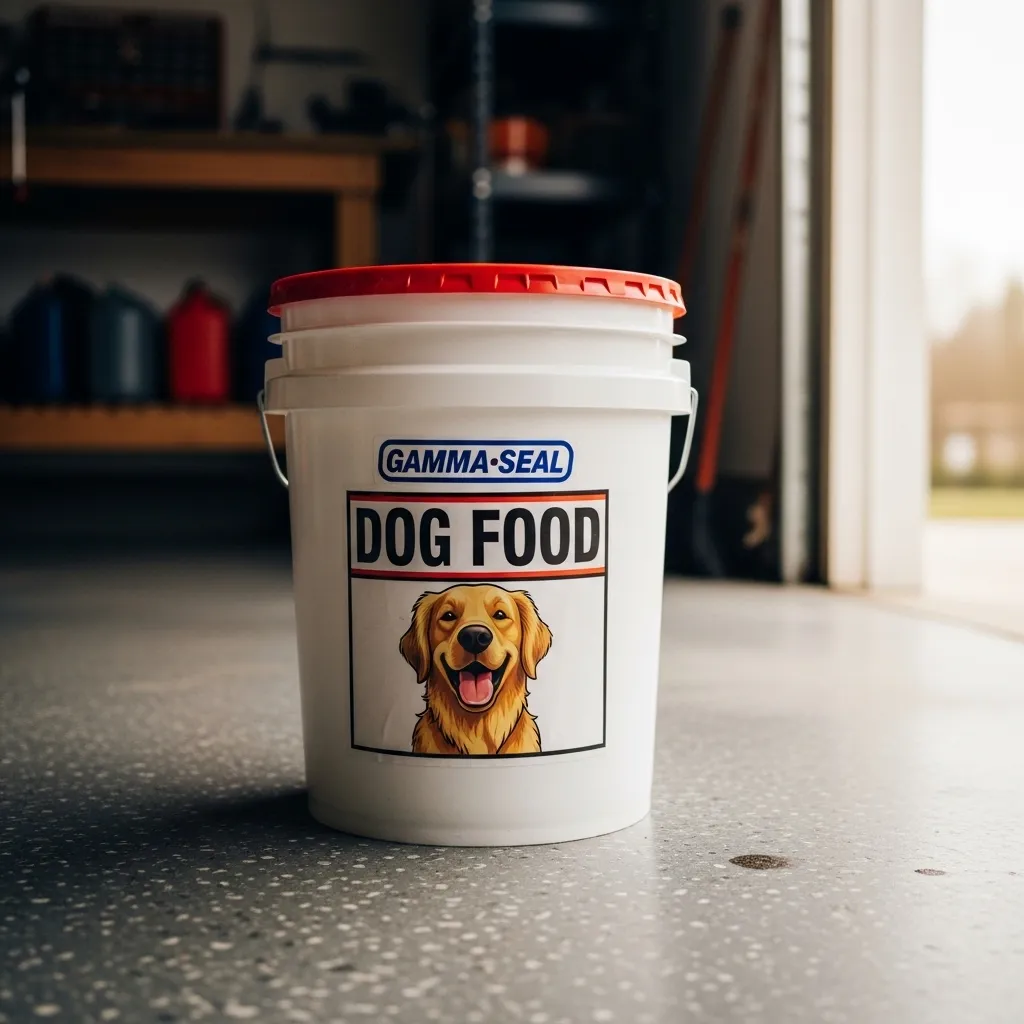
14. Heavy-Duty Bucket with Gamma Seal Lid
If you’re serious about keeping pests out, get a food-grade bucket with a Gamma Seal lid. These lids screw on and off easily but create an airtight, bug-proof seal. They’re used by campers and preppers for a reason.
You can fit a full 30-pound bag in a 5-gallon bucket. The lid twists open with a handle, so no prying or struggling. I keep one in the garage for backup food.
Just make sure the bucket is BPA-free and thoroughly washed before first use.
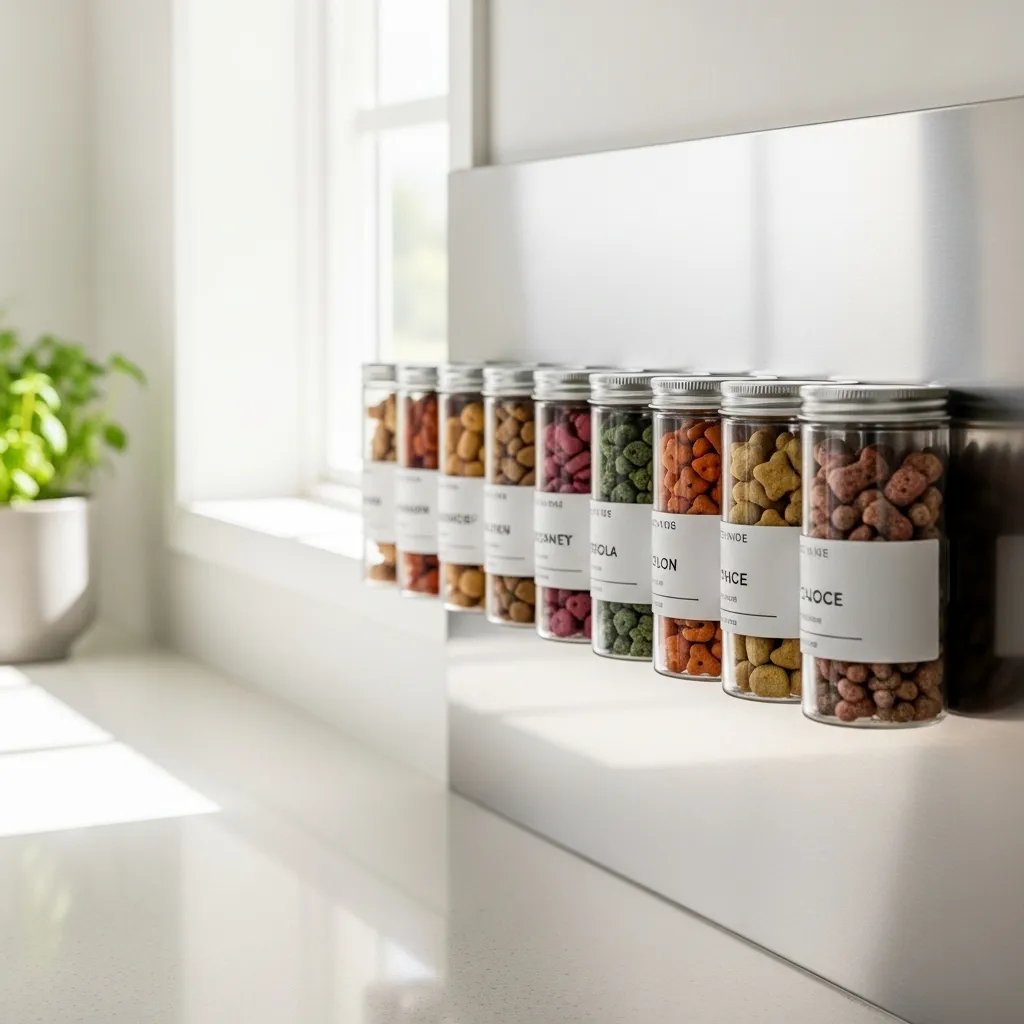
15. Magnetic Spice Jars for Treats
Okay, this one is for the tiny details. Use small magnetic jars with clear lids to store treats on the fridge or a metal surface. They keep treats fresh and within easy reach for training.
I have a row of them on the side of my fridge with different treats. It’s cute, space-saving, and my dog knows exactly where they are. Just make sure the magnets are strong enough to hold the weight.
These are not for bulk storage, but they make daily training so much easier.
Conclusion
Finding the right dog food storage is about balancing freshness, convenience, and your home’s style. Whether you go for a classic bin, a hidden bench, or a clever wall system, the key is keeping the food sealed and cool. Your pup deserves food that tastes and smells as good as the day you bought it.
Start with one solution that fits your space and see how it feels. You can always mix and match as you go. The best system is the one you actually use every day.
Frequently Asked Questions
How long does dry dog food stay fresh in a sealed container?
In a properly sealed, airtight container stored in a cool, dry place, dry dog food can stay fresh for about 6 to 8 weeks. Always check the expiration date on the bag and try to use it within a month of opening for best quality.
Can I store dog food in the original bag inside a bin?
Yes, I recommend it. The bag is designed to protect the food and has important info like the lot number and feeding guidelines. Just fold the top down and place the whole bag inside your storage container.
Is it safe to store dog food in a garage?
Only if the garage stays cool and dry. Temperature swings and humidity can spoil kibble fast. If your garage gets hot in summer or damp in winter, it’s better to store food inside your home.
What’s the best material for a dog food container?
Stainless steel or food-grade plastic are both great. Stainless steel is odor-resistant and durable, while plastic is lighter and often cheaper. Avoid containers not labeled food-safe, as they can leach chemicals.
How do I clean my dog food storage container?
Empty it completely and wash with warm soapy water every time you refill. Rinse well and dry thoroughly before adding new food. For plastic bins, a vinegar rinse can help remove lingering smells.