How to Teach Your Dog to Smile: A Step-by-Step Guide

We all love those adorable photos of dogs with big, toothy grins. But did you know that a dog “smile” is often a learned behavior? It’s not the same as a human smile of happiness, but with a little patience, you can teach your pup to flash those pearly whites on cue. It’s a fun trick that’s sure to impress and deepen your bond.
Before we start, it’s crucial to understand your dog’s natural expressions. Some dogs naturally lift their lips when relaxed or happy, while others might do it when they smell something interesting. We’re going to capture and shape that natural movement into a reliable trick. Always keep training positive, short, and full of rewards. If your dog seems stressed or confused, take a break and try again later.
Grab some high-value treats, your clicker (if you use one), and let’s turn that goofy grin into a party trick!
1. Find Their Natural Smile
Start by simply observing your dog. Watch them closely during calm, happy moments—like when you come home, during a gentle petting session, or after a fun playtime. Some dogs will naturally curl their lips up, especially when you scratch a favorite spot behind the ears or under the chin.
Your first job is to identify what triggers that tiny lip lift. When you see it, immediately mark the behavior with a click or a clear “Yes!” and give a treat. You’re not asking for anything yet; you’re just telling them, “That thing you just did with your face? I love that!”

2. Capture & Reward the Moment
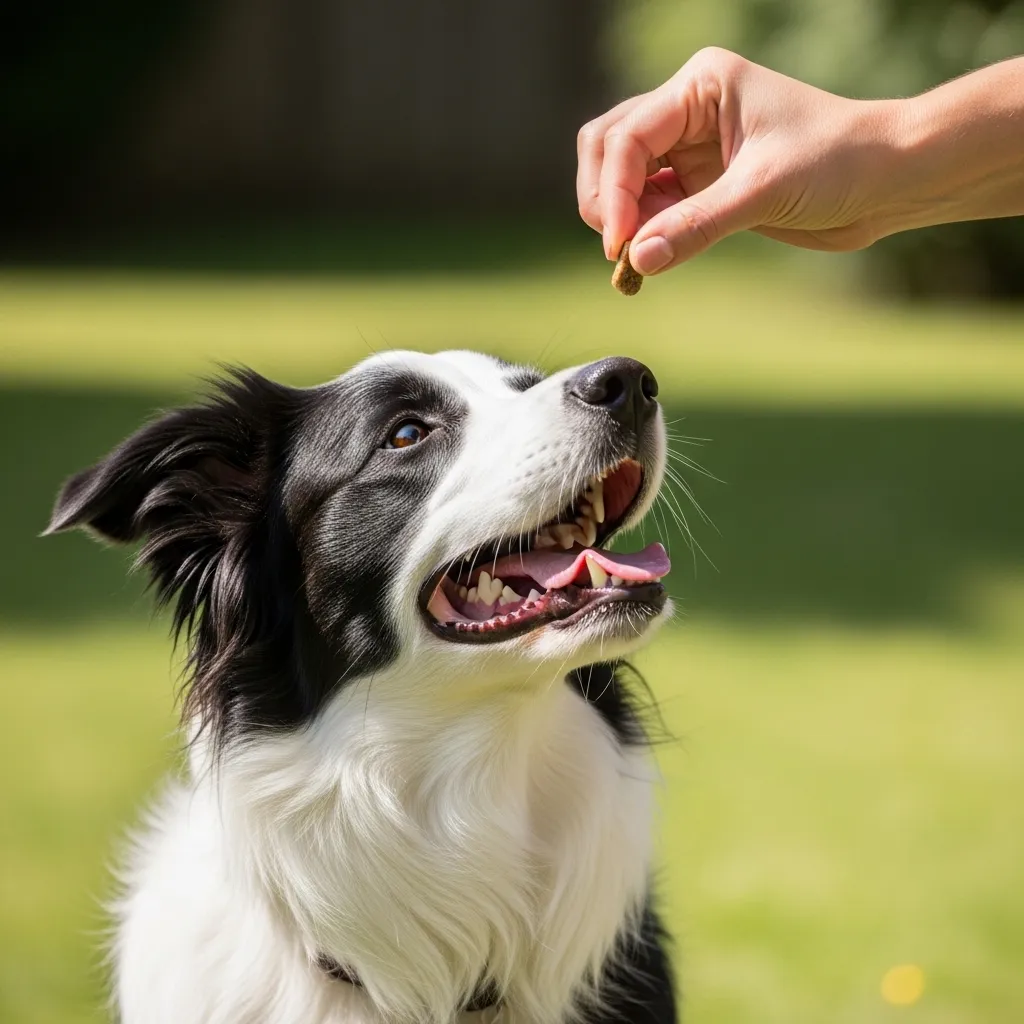
Now that you know when it happens, be ready. Have treats in your pocket and be quick on the draw. The instant you see even the slightest lip movement, mark and reward. Timing is everything here. You want your dog to connect the action of lifting their lip with getting a fantastic treat.
Repeat this over several short sessions. Don’t try to force it or manipulate their lips. We’re building this trick on a foundation of positive association, so patience is your best friend. Celebrate the tiniest effort!
3. Introduce a Verbal Cue
Once your dog is offering the lip lift more frequently, it’s time to add a word. I use “smile!” but you can choose any short, unique word like “cheese!” or “grin!” Say your cue word just as you see them start to move their lips. Then, mark and reward.
After many repetitions, your dog will start to associate the sound of the word with the action and the reward. You’re helping them understand that the cue predicts the opportunity to earn a treat by making that specific face.
4. Add a Hand Signal
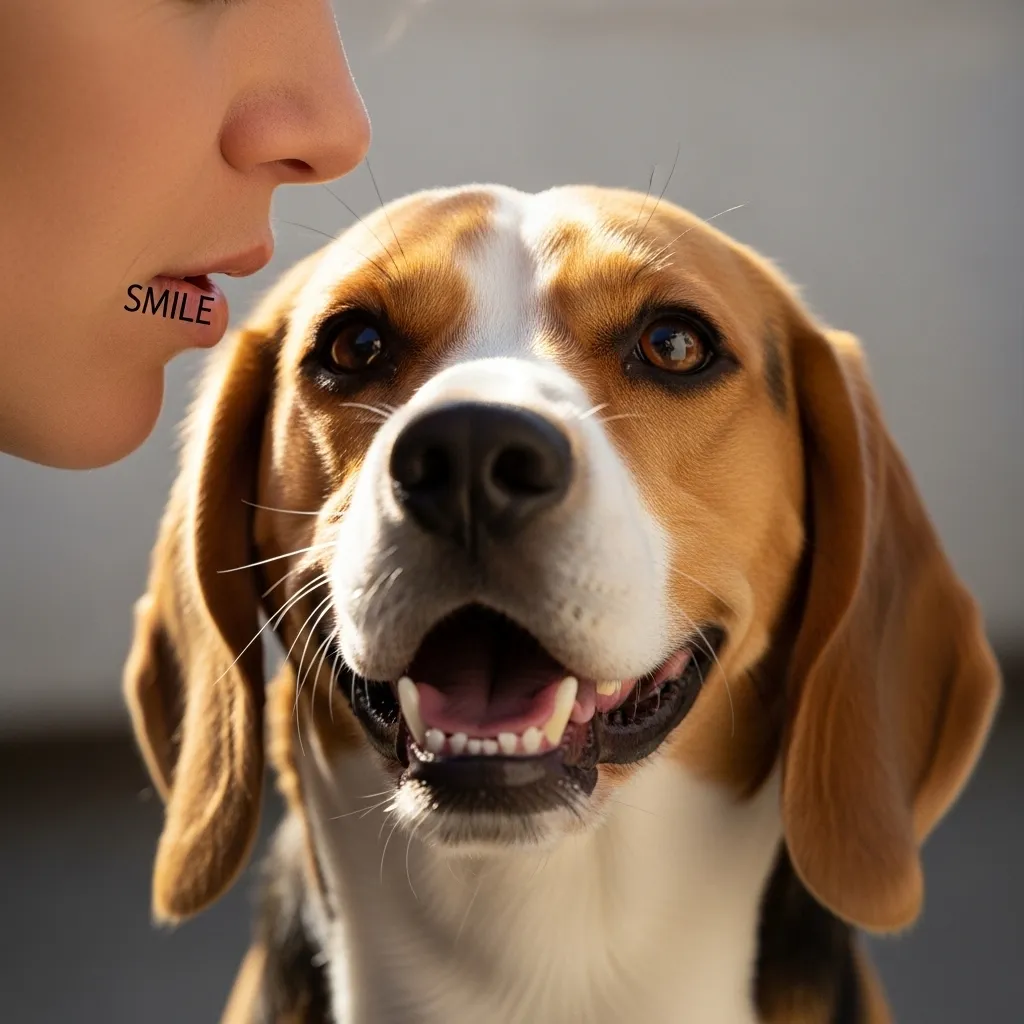
Dogs are great at reading body language. Pairing a hand signal with your verbal cue can make the trick even clearer. A common signal is pointing to your own teeth with a smile. Or, you can gently lift your own lips with your fingers while saying the cue.
Be consistent. Use the same gesture every single time. Eventually, you’ll be able to use just the hand signal, which is perfect for quiet moments or for photos when you don’t want to speak.
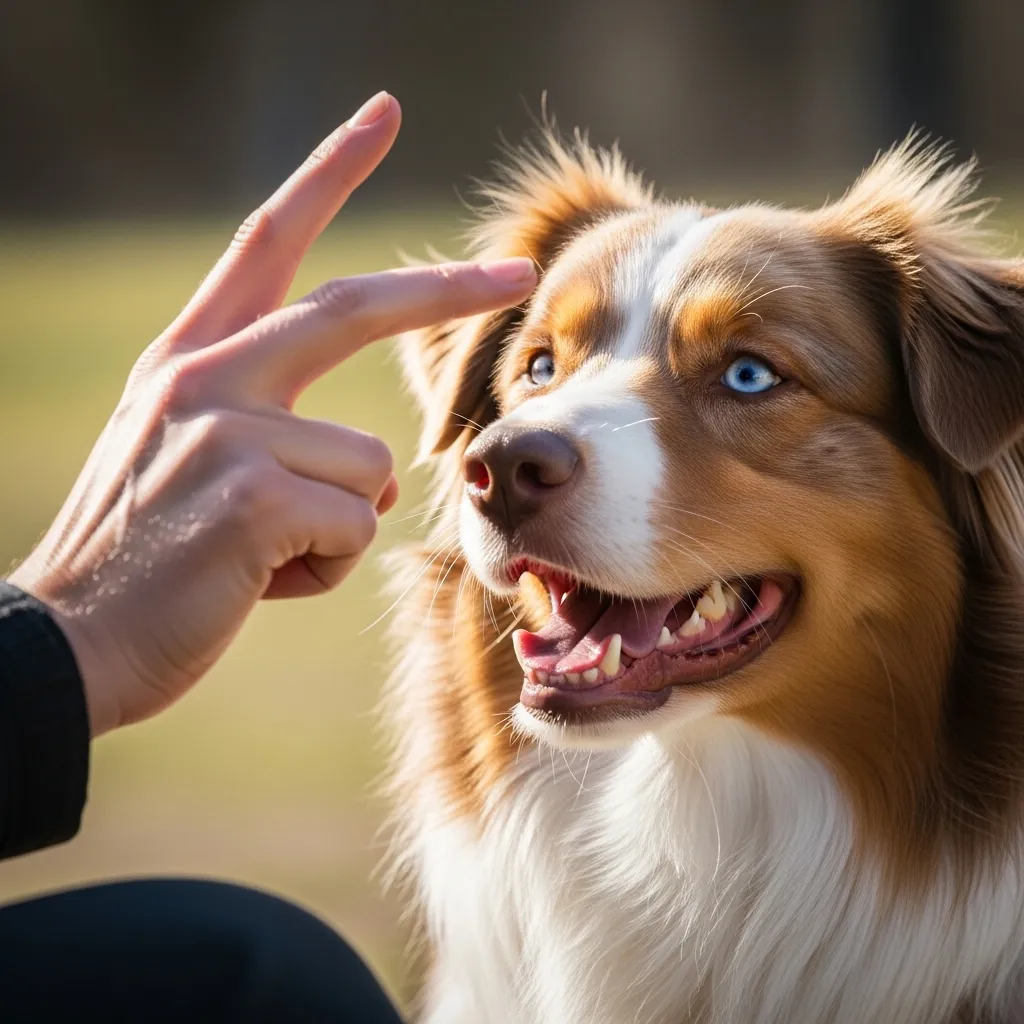
5. Shape the Smile Gradually
At first, any lip twitch counts. But to get that classic, photogenic grin, you’ll need to “shape” the behavior. Start waiting a half-second longer before rewarding, only clicking for a slightly bigger or longer lip lift.
- Step 1: Reward any lip movement.
- Step 2: Reward only a clear upward curl.
- Step 3: Reward for holding it for a second.
Take it slow. If you raise the criteria too fast, your dog might get frustrated. Break it down into tiny, successful steps.

6. Practice in Short, Fun Sessions
Dog training is most effective in bite-sized chunks. Aim for 3-5 minute sessions, 2-3 times a day. Always end on a high note—after a successful smile—so your dog is excited for the next session.
Keep the mood light and playful. If you’re having fun, your dog will be too. Mix the “smile” practice in with other tricks they know to keep their brain engaged and the session dynamic.
7. Phase Out Treats Slowly
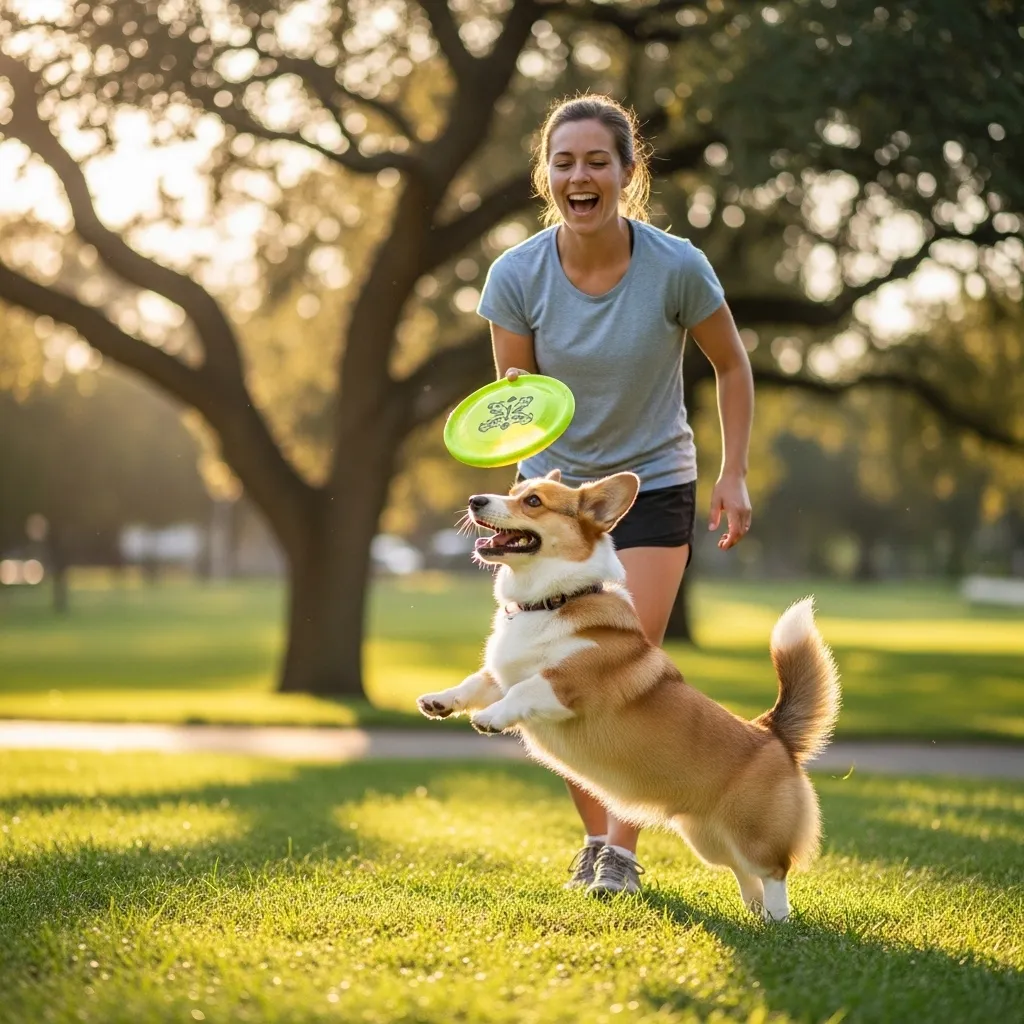
You don’t want your dog to only smile when they see a treat. Once the behavior is reliable with the cue, start giving the treat randomly. Sometimes give one, sometimes give two, sometimes just offer enthusiastic praise and pets.
This “variable reward schedule” actually makes the behavior stronger. Your dog will think, “The treat might come anytime, so I’d better keep doing it!” The smile itself becomes part of the fun game you play together.
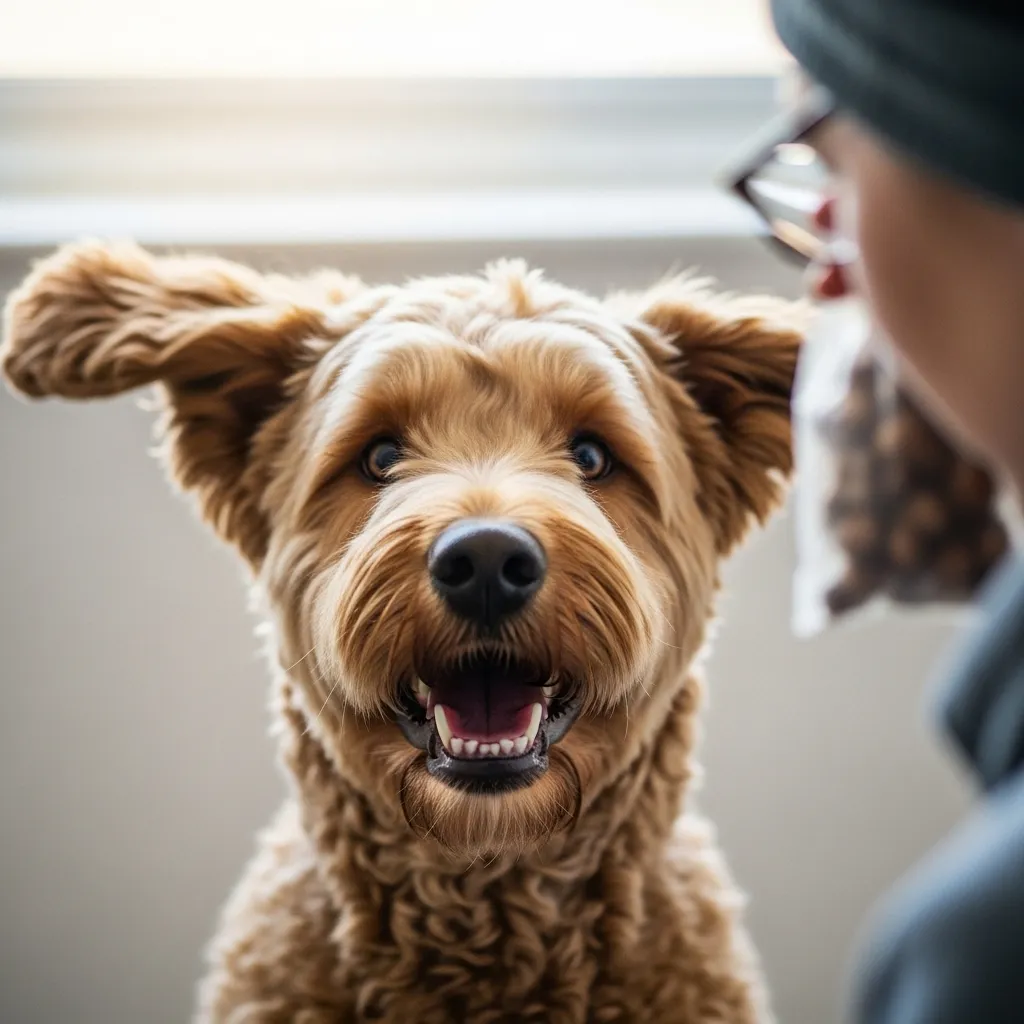
8. Generalize the Trick
Dogs don’t automatically understand that “smile” means the same thing in the kitchen, the park, or at a friend’s house. Practice in different locations and with mild distractions. Start easy (a quiet room), then gradually make it harder (the backyard, then on a walk).
This teaches your dog that the cue is relevant everywhere. Be patient and generous with rewards in new environments—it’s like they’re learning the trick all over again.
9. Capture the Perfect Photo
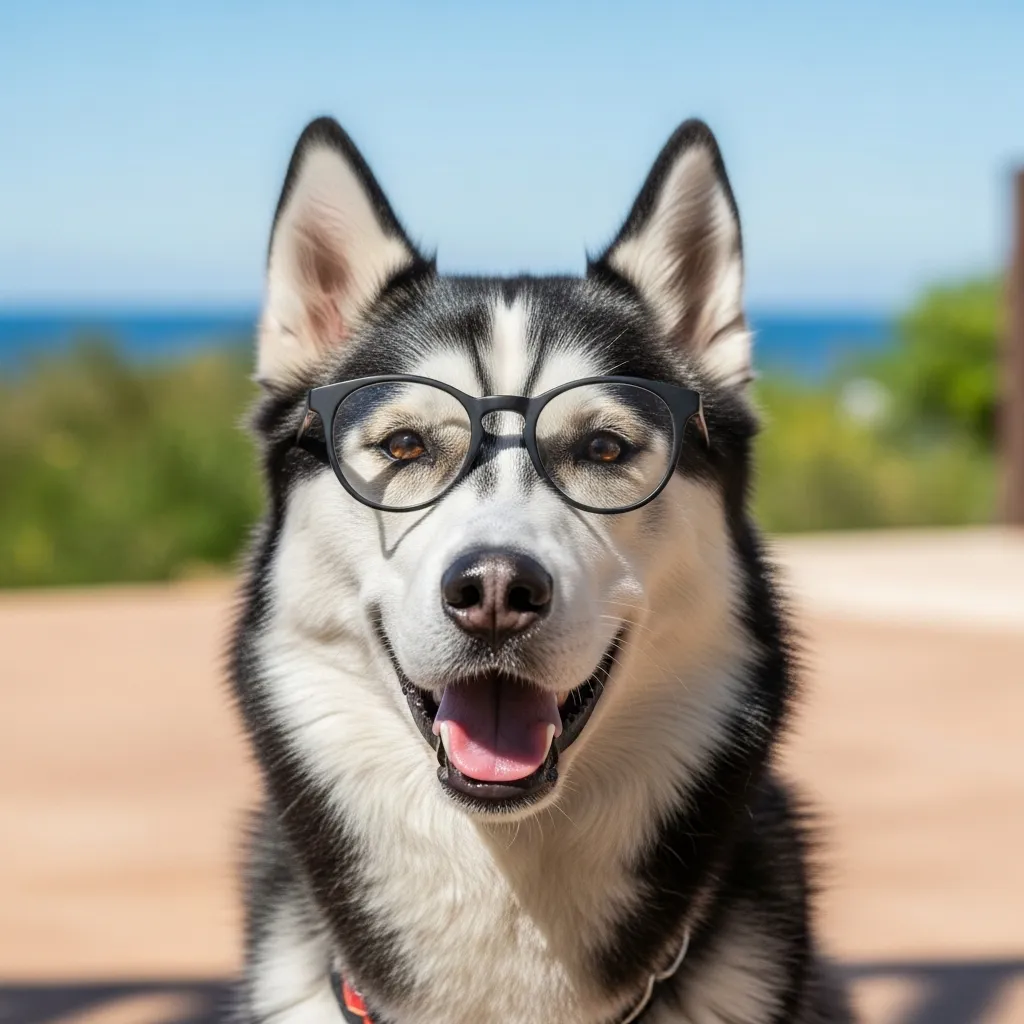
You’ve trained for this moment! For photos, use your hand signal to get the smile without having to look away from the camera. Have your treats ready just out of frame. Get on your dog’s level for the best angle.
Take lots of shots quickly. Say the cue, snap several photos in burst mode, then reward. The key is to keep it a positive experience so your dog associates camera time with good things.

10. Know When to Stop
Not every dog will be comfortable with this trick, and that’s perfectly okay. If your dog shows any signs of stress—like lip licking, yawning, turning away, or growling—stop immediately. Respect their boundaries.
For some dogs, showing teeth is a very vulnerable feeling. The goal is a happy, willing participant. If “smile” isn’t their thing, there are a hundred other amazing tricks you can teach instead. Your relationship is more important than any single trick.

Conclusion
Teaching your dog to smile is a journey of patience, observation, and celebration. It’s less about commanding a behavior and more about collaborating with your best friend to create something joyful. When you see that goofy, toothy grin on cue, you’ll know it was worth every treat. Remember, the real reward is the strengthened bond and the fun you have learning together. Now go capture that million-dollar smile!
FAQ
Q: Is my dog actually happy when he “smiles”?
A: Not necessarily in the human sense. A trained smile is a behavior we’ve shaped. However, if taught with positive methods, your dog is happy to perform it because it leads to rewards and your attention.
Q: What if my dog just licks his nose instead?
A> That’s a common start! Reward that. Often, a nose lick involves a slight lip movement. You can gradually shape that into a more distinct lip lift by rewarding only the movements that look more like a smile.
Q: Can older dogs learn this trick?
A> Absolutely! Older dogs can learn new tricks. You might just need a little more patience and higher-value treats. Keep sessions even shorter and more positive.
Q: My dog growls when I try. What should I do?
A> Stop immediately. Growling is a clear communication of discomfort. Forcing it can be dangerous. This trick may not be suitable for your dog. Consult a professional positive-reinforcement trainer if you’re concerned about their body language.
Q: How long will it take to teach this?
A> It varies wildly by dog. A naturally “smiley” dog might learn in a few weeks. For others, it could take a couple of months of consistent, short practice. Enjoy the process, not just the result!