Create 7 Amazing Cat Trees Using Basic Materials (DIY Ideas Your Cat Will Love)
I used to think a good cat tree had to cost a fortune. Then I watched my cat ignore a fancy store-bought tower and nap in a cardboard box instead. That’s when I started building my own cat trees using basic materials I already had or could grab at a hardware store.
These DIY cat tree ideas use simple things like cardboard, wood scraps, PVC pipes, crates, branches, shelves, and baskets. You don’t need a full workshop or perfect carpentry skills. You just need a little patience and a cat who loves to climb.
Before you start, keep safety in mind: use pet-safe materials, sand rough edges, avoid loose strings, and anchor tall cat trees to the wall. Now let’s build something your cat will actually use.
1. The Cardboard Castle Cat Tree
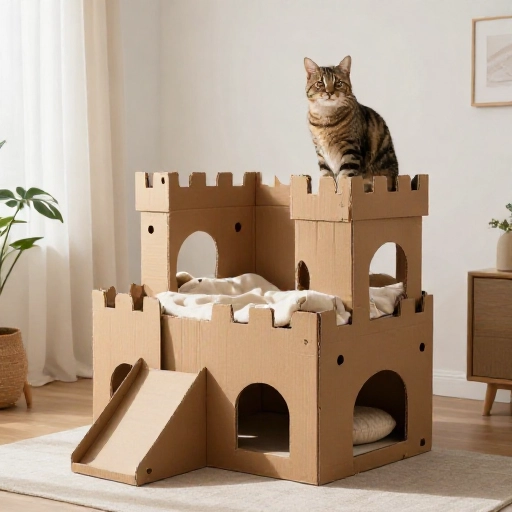
Cardboard is my favorite starter material because it’s cheap, light, and easy to cut. I stack strong moving boxes into a castle shape, then cut doorways and windows with a craft knife. It’s messy, but it’s a fun weekend project.
For platforms, I layer two or three sheets of cardboard and glue them together. A hot glue gun works, but pet-safe white glue is safer if your cat likes to chew. I also wrap the posts in sisal rope so they have a scratching spot.
This one won’t last forever, but it’s perfect for renters or anyone testing out a cat tree layout. Add a soft blanket on top, and your cat will claim the highest tower immediately.
2. The Wooden Shelf & Sisal Post Tower
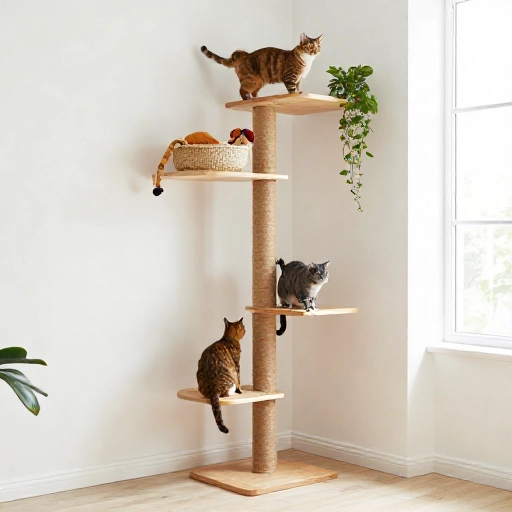
For a sturdier build, I use plain pine boards and a thick sisal rope. You can ask a hardware store to cut shelves to size, which saves so much time and makes the project feel less intimidating.
I screw three or four shelves onto a tall 4×4 post, spacing them like stairs. Then I wrap the post in sisal rope from top to bottom so it doubles as a scratching area. A wide base keeps it from wobbling.
Add L-brackets to the wall if the tower is taller than your cat. Sand rough edges and seal the wood with a pet-safe finish. This is the DIY cat tree I recommend for big cats or multiple cats.
3. PVC Pipe Jungle Gym
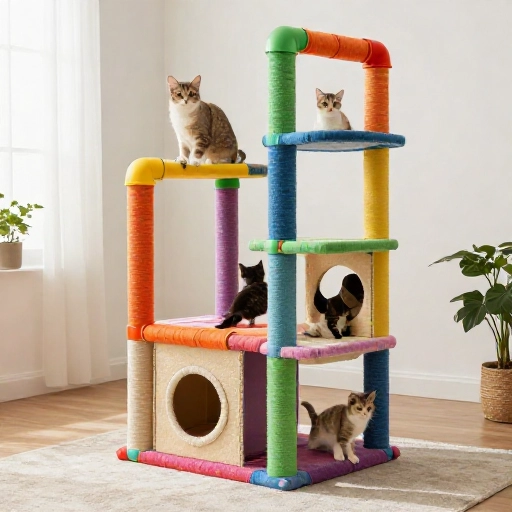
PVC pipes are strong, easy to clean, and fun to paint. I build a frame with T-joints and elbows, then cover the platform sections with carpet squares. It looks a little industrial, but cats love the tunnels and high perches.
The trick is to keep the base wide enough that it doesn’t tip. I use a heavy plywood base and fill the bottom pipes with sand for extra weight. That makes a huge difference if your cat launches off the top.
Check the joints often if your cat is a jumper. Avoid sharp edges, and don’t use glue that stays toxic after drying. A PVC jungle gym is especially great for playful kittens.
4. Crate & Carpet Condo
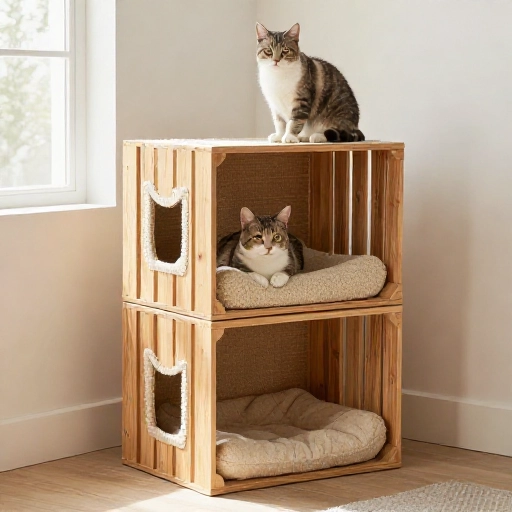
Wooden crates from a craft store or marketplace make charming cat condos. I stack two or three, remove one side, and connect them with zip ties or screws. It looks like a piece of furniture instead of a cat tower.
Carpet squares or a rug remnant soften the floors and hide imperfections. I cut a round hole between levels so my cat can climb inside. Then I add a cushion on top for a cozy lookout.
This design works well in a living room because it blends in. Put a dangling toy near the entrance, and your cat will bounce between levels for hours.
5. Branch & Basket Natural Tree
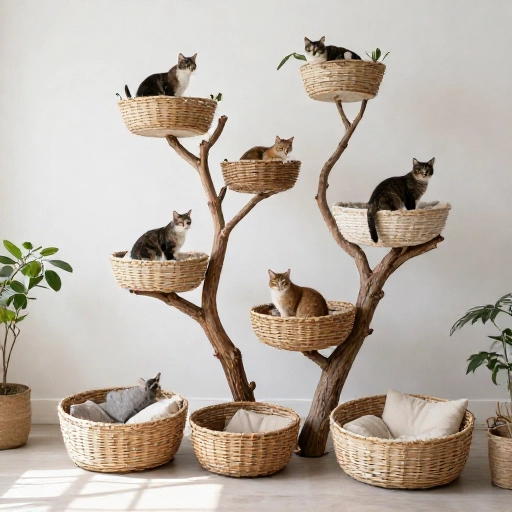
If you want a cat tree that blends with your plants, try a thick natural branch. I mount it to a base, then attach woven baskets as perches. It feels more like art than a pet product.
Make sure the branch is dry, sanded, and free of pesticides. I secure baskets with heavy-duty wire and line them with fleece. The slight sway actually appeals to many cats.
This design is better for relaxed cats than wild jumpers. Keep it lower unless you anchor it really well. Cats love the smell of real wood and the cozy basket shape.
6. The Wall-Mounted Climbing Wall
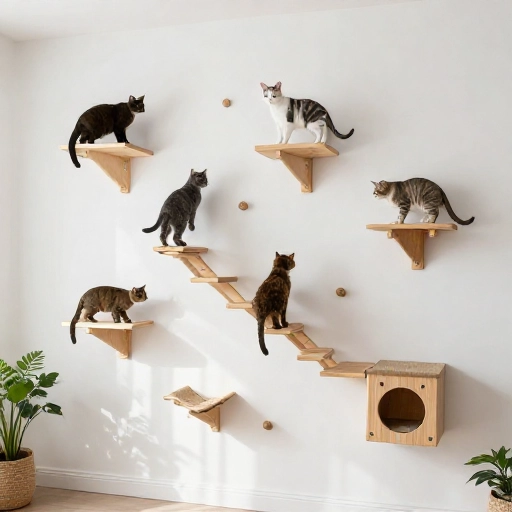
Wall-mounted cat trees save floor space and look amazing. I use sturdy shelves, brackets, and step stools attached to studs. It turns a blank wall into a vertical playground.
I map out a path first: low step, medium shelf, high lookout. Then I cover each shelf with carpet and add a hammock or bed at the top. Cats love having a route that leads to a high view.
This is the best option for small apartments. Always screw into studs or use heavy-duty anchors, and test each shelf with your hand before your cat tries it. Safety matters more than style here.
7. The Repurposed Bookshelf Cat Tower
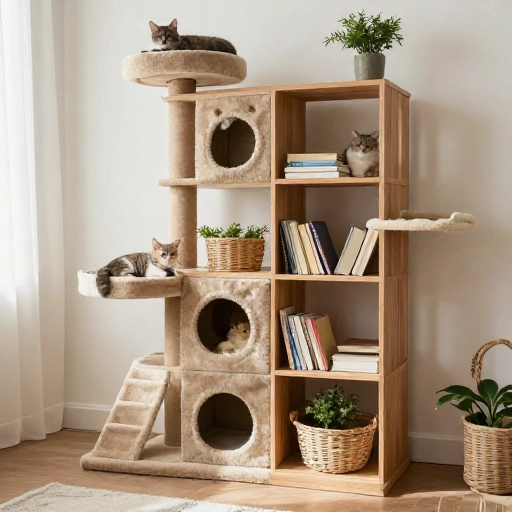
An old bookshelf can become a multi-level cat tower in an afternoon. I remove some shelves, cut holes in others, and attach sisal-wrapped posts to the sides. It’s a smart way to reuse furniture.
I paint it a color that matches my room, then add carpet on the shelves for grip. A basket on top makes a cozy lookout spot. My cat loves hopping from shelf to shelf like it’s a private staircase.
This is great if you already have a sturdy shelf you don’t use. Just make sure it can’t tip over—anchor it to the wall and avoid glass shelves. Then add a toy or two and let your cat explore.
Final Thoughts: Build a Cat Tree They’ll Actually Use
You don’t need fancy tools or a big budget to make a cat tree your cat will love. Start with one idea, keep it stable, and add cozy spots. The best cat tree is the one your cat chooses every day.
My best advice: watch where your cat already likes to perch, then build around that height and view. A homemade cat tree feels extra special when it fits their habits instead of forcing them into a new one.
And remember, safety first: no loose strings, no toxic glues, and always anchor tall pieces to the wall. With basic materials and a little creativity, you can build a cat tree that looks good and gets used.
FAQ: DIY Cat Trees Using Basic Materials
1. What basic materials are best for a DIY cat tree?
Cardboard, pine boards, PVC pipes, wooden crates, sisal rope, carpet squares, and sturdy baskets are all great. Choose materials that are pet-safe, easy to clean, and strong enough to hold your cat.
2. How do I stop my cat tree from tipping over?
Use a wide, heavy base and anchor tall towers to a wall stud. For PVC or lightweight builds, fill the bottom with sand or add weights. Test the tree with your hand before letting your cat jump on it.
3. Is hot glue safe for cats?
Hot glue is usually fine once it’s fully cooled, but a curious chewer might pick at it. Pet-safe white glue or screws are better if your cat likes to nibble on things.
4. How long does a homemade cat tree last?
Cardboard trees may last a few months, while wood and PVC builds can last years with regular tightening and replacing worn sisal. Check screws and rope often.
5. Do cats prefer tall or low cat trees?
Most cats love height because it feels safe. If you have a senior cat, add low steps and ramps so they can still enjoy perches without jumping too far.