10 Genius Large Dog Run Ideas to Maximize Your Yard Space
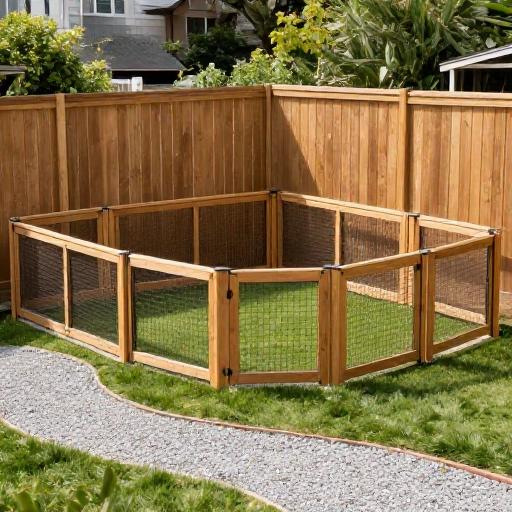
If you have a big pup, you know the struggle. They need room to zoom, stretch those long legs, and burn off that endless energy. But if your yard isn’t exactly sprawling, you might feel like you’re constantly fighting for space. I’ve been there—watching my German Shepherd do laps around a too-small patch of grass is both hilarious and a little sad.
The good news? You don’t need acres of land to give your dog the run of their dreams. With a little smart planning and some creative layout tricks, you can build a large dog run that feels massive, even in a compact backyard. Let’s dive into some practical, space-maximizing ideas that will make your dog’s tail wag non-stop.
1. The L-Shaped Run: Use the Corner You Forgot
Most backyards have that awkward corner where nothing really fits. Instead of leaving it empty, turn it into a doggy highway. An L-shaped run follows the fence line and wraps around the corner, giving your dog a longer straight path than a traditional rectangular pen ever could.
This design is a game-changer because it adds linear feet without eating up your entire lawn. Your dog gets to sprint from one end to the other, making that crucial U-turn at the corner. It’s like a mini race track for your furry friend.
To make it work, use heavy-duty metal panels that can be angled. You’ll be surprised how much running room you can create just by hugging the perimeter of your property.
2. The “Boomerang” or Curved Run
Straight lines are boring, and for a dog, a curved run feels much more natural. A boomerang or crescent-shaped run breaks up the visual line of sight, making the space feel larger and more interesting for your dog. It also fits beautifully into yards that have curved flower beds or patios.
Building a curve isn’t as hard as it sounds. You can use flexible metal edging or specially designed curved fence panels. The key is to create a wide berth so your dog doesn’t feel pinched. This shape encourages them to run in a wide arc, which is great for their joints.
It’s a stylish way to maximize space that would otherwise be split up by landscaping. Plus, it looks like a custom feature, not just a cage.
3. Employ the “Dog Path” Strategy
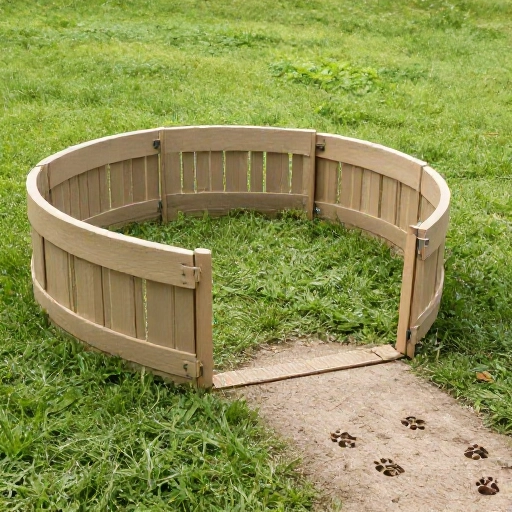
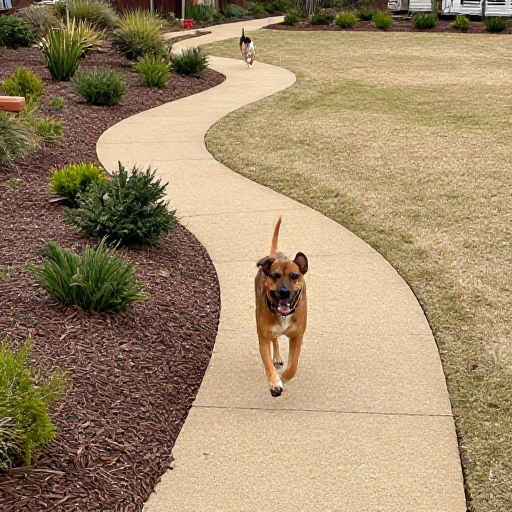
Instead of one huge square, think about creating a dedicated path that loops around the yard. This is perfect if you have a garden or a patio in the middle of your space. The run becomes a corridor that circles the yard, giving your dog a long, continuous route to patrol.
I love this because it lets your dog be part of the yard, not separated from it. You can line the path with pea gravel or mulch to keep it clean and define the boundary clearly. It’s basically a walking trail for your dog.
This maximizes yard space by using the edges, leaving the center for your furniture or lawn. Your dog gets way more running distance than they would in a standard pen.
4. Go Vertical with Elevated Platforms
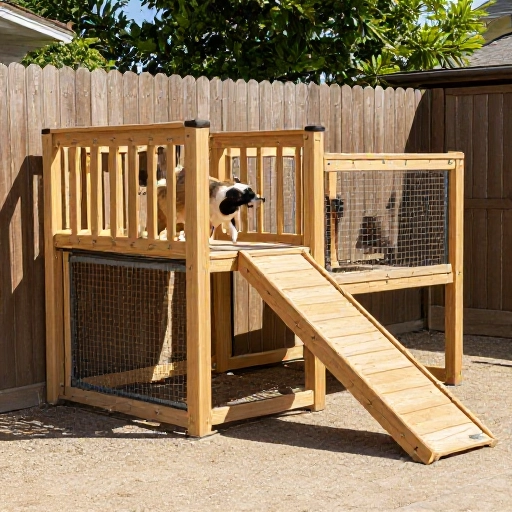
Who says a dog run has to be all on the ground? If you have a slope or a raised deck, incorporate elevated platforms into the run. Dogs love being up high—it gives them a sense of control and a great vantage point to watch the neighborhood.
Build a sturdy ramp leading up to a flat platform that’s part of the enclosed run. This adds a whole new dimension to the space. Your dog can sprint, then jump up to the platform to survey their kingdom. It’s a massive energy burner because they have to use their muscles to climb.
This trick maximizes the square footage by adding “levels.” It’s like a jungle gym for your large dog, and it looks incredibly cool.
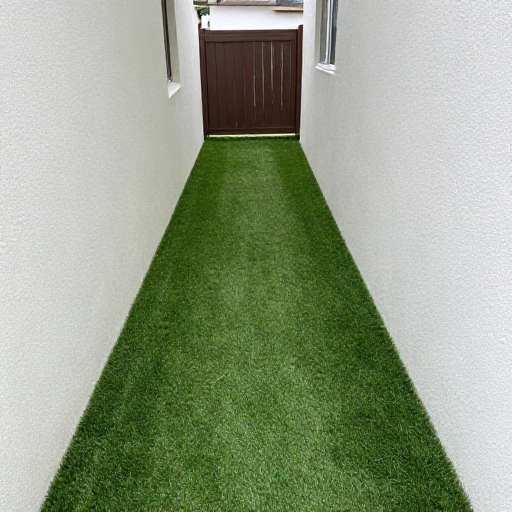
5. Use the Side Yard Strip
That narrow, often ignored strip between your house and the neighbor’s fence is prime real estate for a dog run. It might look skinny, but for a dog, it’s a long, straight tunnel perfect for zoomies. This is one of the best ways to reclaim lost space.
Measure the width; if it’s at least 4-5 feet wide, you can make it work. Use wire mesh or solid fencing to secure the sides. Because it’s tucked away, it doesn’t ruin the look of your main backyard at all.
This is my go-to recommendation for people who want to keep their main lawn pristine for entertaining. Your dog gets a dedicated space, and you get your yard back.
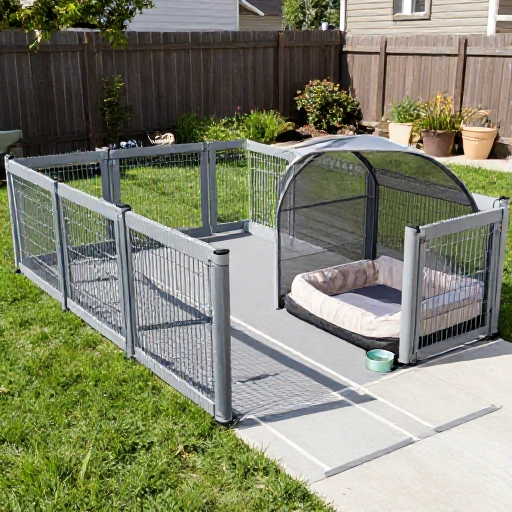
6. The Multi-Zone Run: Run + Chill
Maximizing space isn’t just about running length; it’s about functionality. Create a run that has a “high-speed lane” and a “lounge area.” This prevents boredom and gives your dog choices. A bored dog is a destructive dog, so zones are essential.
Designate one section with soft gravel or sand for running and digging, and another with a shady spot, a dog house, or a splash pool. By combining these into one long run, you save space because you don’t need separate areas in the yard.
Your dog can do laps and then crash out in the chill zone. It’s a complete doggy studio apartment in one footprint.
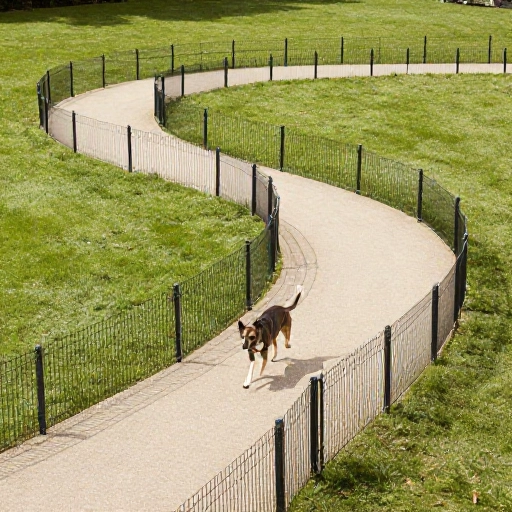
7. The “Figure 8” Layout
If you have two separate areas of your yard—like a front lawn and a back lawn—connect them with a dog run that flows in a figure 8. This involves creating a path that winds around a central obstacle, like a tree or a large planter.
This is excellent for mental stimulation. The twists and turns make the run feel much larger than it is. Your dog has to navigate, which tires them out faster than running in a straight line.
It uses the entire yard efficiently, turning every nook and cranny into part of the fun. It’s a more complex build, but worth it for the sheer joy it brings.
8. Build Around Obstacles
Don’t remove that big tree or that AC unit—build around it! Designing your dog run to weave around obstacles is a pro move. It creates natural shade and unique shapes that are far more interesting to your dog.
For example, you can make the run curve around a large oak tree, using the trunk as a natural pillar. This gives your dog a place to circle and sniff. It also looks like the run was always meant to be there.
This approach maximizes yard space because you aren’t clearing land; you’re working with it. Every inch of usable space gets turned into doggy territory.
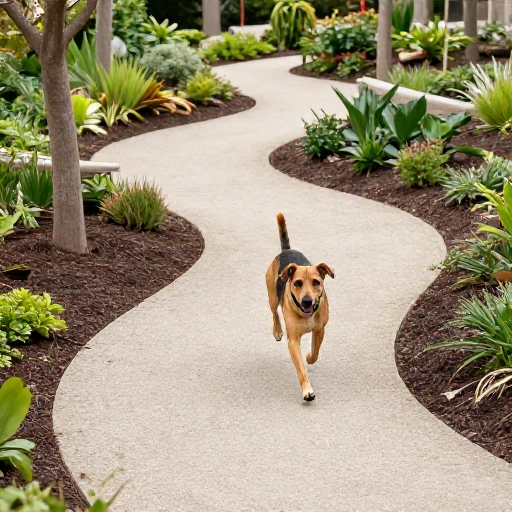
9. The “Doggy Track” Around the Garden
If you love your flowers but your dog loves to dig them up, this is your solution. Create a wide run that circles your garden beds. The fence protects your plants, and the path itself gives your dog a perfect perimeter to run.
This is a classic layout that works wonders. You can use a low fence for the garden and a taller one for the outer boundary. The space between them becomes the run.
You get to keep your beautiful landscaping, and your dog gets a long, winding track to exercise on. It’s a win-win for everyone.
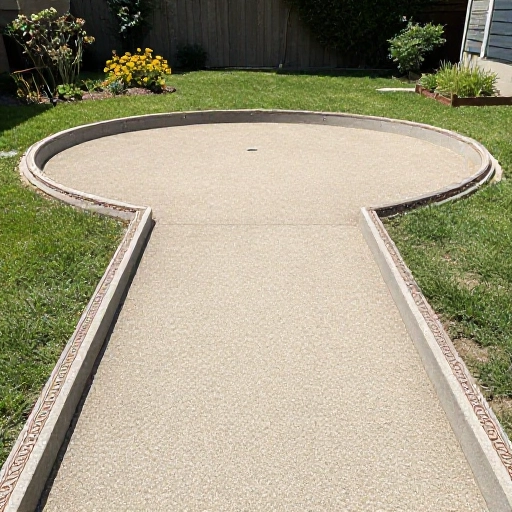
10. Use a “Runway” with a Viewing Deck
Finally, think about the human experience. If you want to be outside with your dog without being in the run, build a raised deck or patio that overlooks a long, straight run. This maximizes the yard by using the vertical space for you, and the ground level for them.
The run can be tucked along the back fence, while your deck sits a few feet higher. This gives you a great vantage point to throw a ball or just watch your pup play. It feels like a lot of space because the two areas are stacked.
This is perfect for smaller yards where you want to share the space without getting knocked over by a 70-pound furry missile.
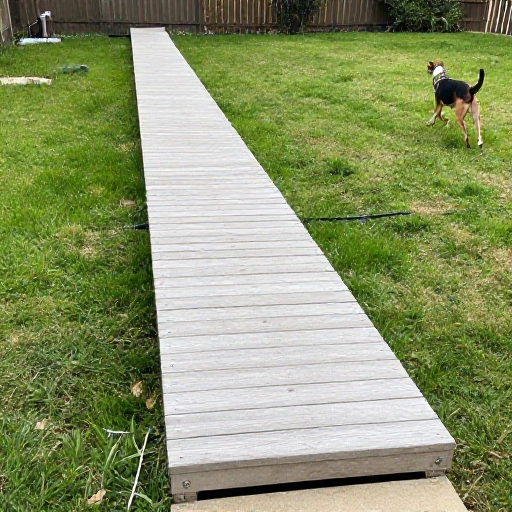
Final Thoughts: It’s All About the Flow
Building a large dog run in a small yard is totally doable. The secret is to stop thinking in squares and start thinking in paths and lines. Whether you go for an L-shape, a curved path, or a multi-level setup, your dog just wants to move.
Take a look at your yard with fresh eyes. Where are the dead zones? Where are the narrow strips? Turn those into your dog’s new favorite place. Your dog will thank you with endless happy zoomies and a tired, content smile.
Frequently Asked Questions
Q: How much space does a large dog really need to run?
A: While more is always better, a run that is at least 20-30 feet long is ideal for a large dog to stretch their legs. Width can be as little as 5-6 feet as long as the length is substantial.
Q: What is the best ground material for a dog run?
A: Pea gravel is a top choice because it drains well and is easy on paws. You can also use rubber mulch or artificial turf for a cleaner look, but make sure it has good drainage underneath.
Q: Can I install a dog run myself, or should I hire a pro?
A: If you are handy and the layout is simple, a DIY kit is totally doable. For complex shapes like curves or elevated platforms, hiring a professional is safer and ensures the structure is secure.
Q: How do I keep my dog from digging out of the run?
A: Bury the bottom of the fence 1-2 feet into the ground, or use an L-footer (a wire mesh skirt) that extends outward underground. This prevents dogs from tunneling out.
Q: Should the dog run be in the sun or shade?
A: Ideally, you want a mix of both. If your yard is mostly sunny, add a shade sail or a dog house. If it’s all shade, that’s fine, but ensure they have a dry, comfortable spot to lie down.