10 Practical Pet Barrier Ideas for Indoor Dog Spaces
If you share your home with a dog, you know the struggle of keeping them safe without turning your living room into a cage. Maybe your pup loves to sneak into the kitchen while you cook, or you just want to keep them off the stairs when guests arrive. I get it—I’ve tried every gate and barrier under the sun.
Over the years, I’ve learned that the best barriers don’t just block off areas; they blend into your home and actually make life easier. Whether you have a tiny apartment or a sprawling house, these ten ideas will help you create safe zones that feel intentional, not like obstacles.
Let’s dive into practical, dog-friendly solutions that really work for everyday life.
1. The Pressure-Mount Gate for Doorways
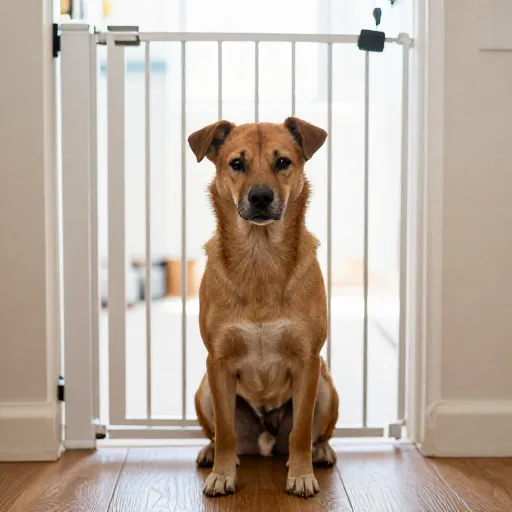
This is my go-to for quick separation. No drilling, no tools—just a sturdy gate that wedges between door frames. I use one to keep my dog out of the home office during video calls.
Look for a gate with a walk-through door so you don’t have to climb over it. Measure your doorway width first; most adjust from about 28 to 42 inches. It’s perfect for renters or anyone who wants a temporary solution.
Just check that your dog can’t squeeze underneath—small breeds are sneaky that way.
2. Freestanding Room Divider Panels
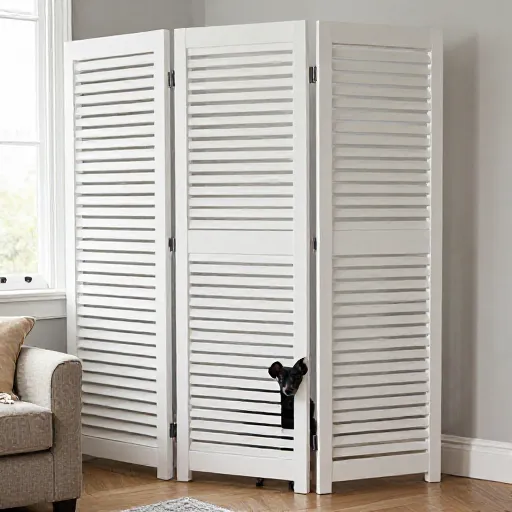
These are like stylish walls you can move around. I have a set of wooden panels that fold like an accordion. They create a cozy den for my dog near the fireplace without blocking all the light.
Use them to section off a corner of the living room or to block a hallway. They come in all heights, so pick one tall enough that your dog won’t jump over. Bonus: they double as a decorative screen when guests come over.
Just make sure the base is wide enough so an excited pup doesn’t knock them down.
3. Baby Gates with Pet Doors
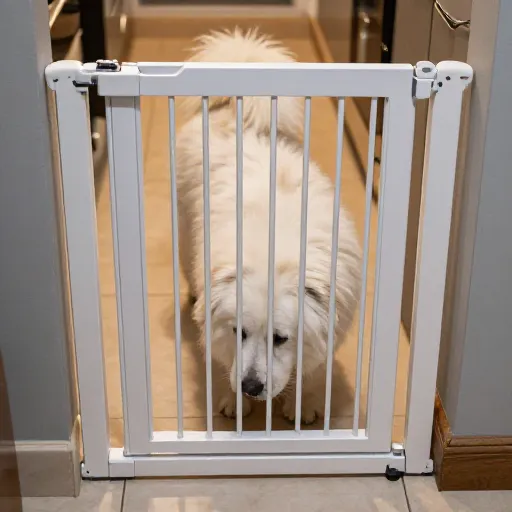
This is a genius twist on the classic gate. It has a small built-in door just for your cat or small dog. I installed one at the bottom of the stairs so my dog can go up to her bed but can’t get into the kitchen.
It’s great for multi-pet households. You can let the little one pass through while keeping the bigger dog contained. Look for ones with a latch that stays closed securely.
Measure the pet door opening to make sure your dog can actually fit through—if not, it’s just a regular gate.
4. Tall Mesh or Fabric Gates for Jumpers
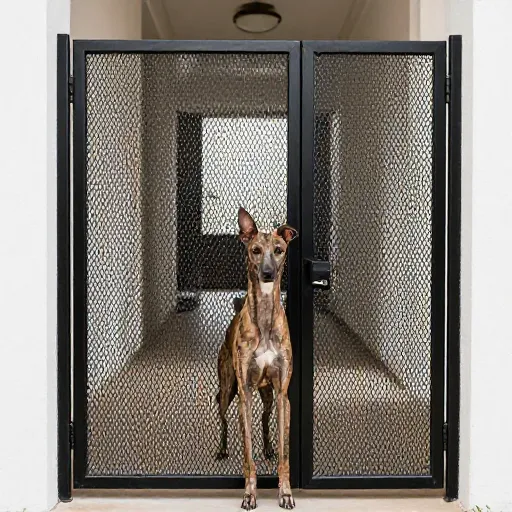
If your dog is a jumper, standard gates won’t cut it. I learned this the hard way with my lab mix. Tall mesh gates (around 36 to 48 inches) are lightweight but hard to climb.
They often have a mesh panel that you stretch across an opening. No hardware needed, and they roll up for storage. Perfect for doorways or between rooms where you need a visual barrier too.
Just make sure the mesh is strong—some dogs will try to chew through it if bored.
5. Sliding Barn Door on a Budget Track
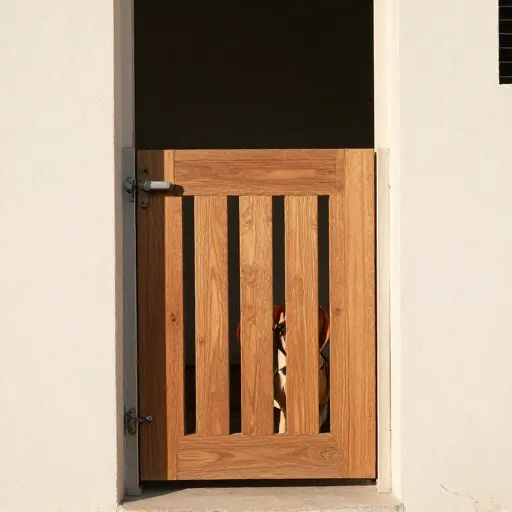
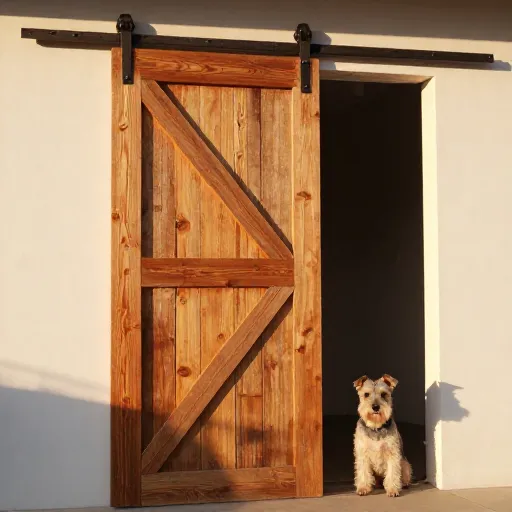
This is a semi-permanent solution that looks beautiful. I installed a simple barn door on a track kit from the hardware store. It slides over a doorway and stays out of the way when open.
You can use a solid wood door or a lighter hollow-core one. It’s great for separating a mudroom or laundry area where your dog sleeps. It also adds rustic charm to your home.
Installation takes a weekend, but it’s worth it for a barrier that doesn’t feel like a gate.
6. Extra-Wide Gates for Open Floor Plans
Open-concept homes have wide openings that standard gates can’t cover. I use an extra-wide gate (up to 60 inches) to block the living room from the dining area. It comes with extensions that screw together.
These gates are often pressure-mounted but can be hardware-mounted for extra stability. They’re perfect for keeping dogs out of a home gym or a child’s play area.
Measure your opening carefully, and buy one with a walk-through door so you don’t have to step over it constantly.
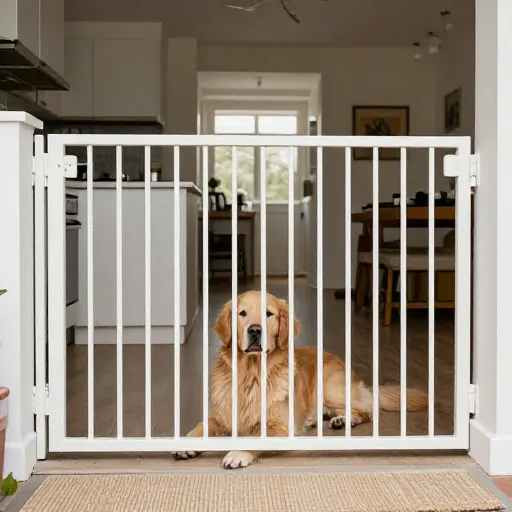
7. Under-Table Playpen with a Soft Floor
This is my favorite hack for small spaces. I took a simple metal playpen and placed it under my large dining table. I added a washable rug inside, and now my dog has a safe zone that’s out of the way.
The table hides the pen, so it doesn’t clutter the room. It’s also great for puppy training—you can toss in toys and a water bowl. Just make sure the pen is sturdy enough that your dog can’t push it around.
It’s like a tiny den that feels cozy, not confined.
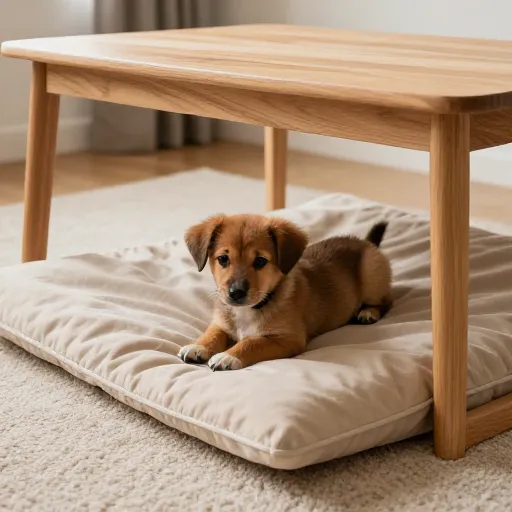
8. Cabinet Locks for Kitchen Safety
Not all barriers are gates. If your dog opens cabinets to steal food or trash, childproof locks are lifesavers. I use magnetic locks that are invisible from the outside—just tap a magnet to open.
Install them on lower cabinets, pantry doors, and even the trash can drawer. They’re cheap, easy to install, and keep your dog safe from harmful items. Plus, they don’t ruin your kitchen’s look.
Test them first to make sure your dog can’t figure out how to open them—some dogs are surprisingly clever.
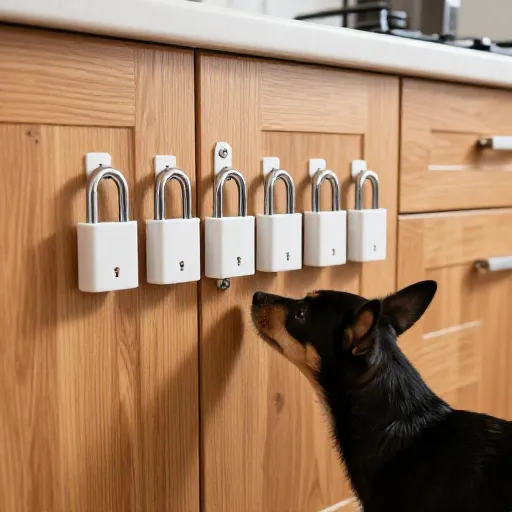
9. Tension Rod with a Curtain for Doorless Spaces
This is a super cheap and temporary solution. I put a tension rod in a wide doorway and hung a heavy curtain. It blocks visual access and creates a soft barrier that my dog respects.
It works great for keeping a dog out of a room where you don’t want a gate. Choose a thick fabric so it feels solid, not flimsy. You can even use a shower curtain rod if your opening is narrow.
Just know that determined dogs might push through, so this works best for polite pups or as a visual cue.
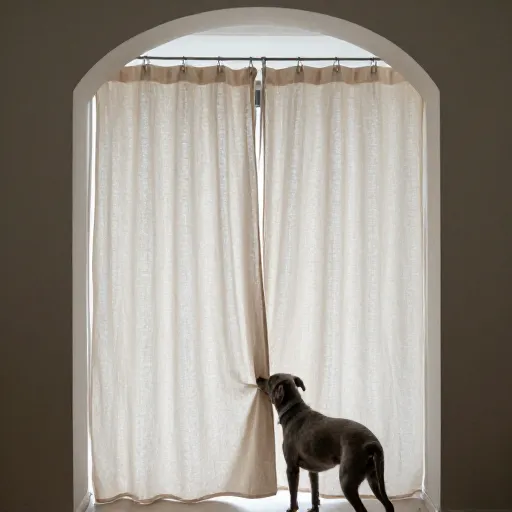
10. Custom-Built Half-Wall with a Gate Insert
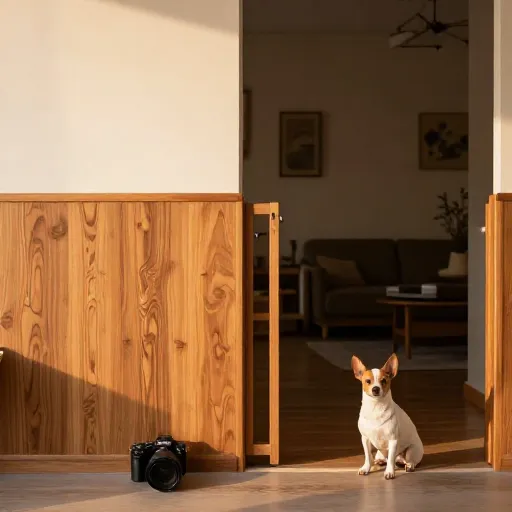
If you’re handy, this is the ultimate permanent solution. I built a small half-wall (about 3 feet tall) with a built-in gate at the top of the stairs. It matches my trim and looks like it was always there.
You can use wood, MDF, or even metal studs. Add a swinging gate with a latch that’s easy for you but hard for your dog. It’s a weekend project that adds value to your home.
This is perfect for separating a hallway or creating a permanent dog zone that feels intentional.
Conclusion
Creating safe spaces for your dog doesn’t have to mean ugly gates or cluttered rooms. The best barrier is one that fits your home, your dog’s personality, and your daily routine. Start with one or two ideas and see what works.
Remember, the goal is to keep your dog safe while letting them be part of the family. Whether you go with a simple tension rod or a custom half-wall, your pup will thank you for having their own cozy corner.
Frequently Asked Questions
What is the best dog barrier for a wide doorway?
Extra-wide pressure-mounted gates (up to 60 inches) work well. For very wide openings, look for hardware-mounted gates or freestanding panels.
Can I use a baby gate for a large dog?
Yes, but choose a tall one (36 inches or higher) if your dog is a jumper. Also check that the gate is sturdy enough for a large breed.
How do I keep my dog from jumping over a gate?
Use a tall gate (at least 36 inches) or add a second gate stacked above the first. Some dogs need a visual barrier like a mesh panel to stop jumping.
Are there barriers that don’t require drilling?
Yes, pressure-mounted gates, tension rods with curtains, and freestanding panels are all drill-free. Just make sure they fit snugly.
What is the cheapest dog barrier option?
A tension rod with a heavy curtain is the cheapest. You can also use a simple baby gate from a thrift store. Both cost under $20.