12 Beautiful Dog Crate Furniture Ideas That Actually Look Good in Your Living Room
For years, my dog’s crate sat in the corner of my living room like a piece of furniture I was apologizing for. Wire bars, a plastic tray, a blanket hanging over one side to make it less obvious. It worked, but it never felt like part of my home.
Then I started looking at dog crate furniture, and honestly, it changed everything. These pieces do double duty: they give your dog a safe, den-like space and they give you a surface for a lamp, a plant, or your morning coffee. Nobody walks in and says, “Oh, there’s a crate.” They say, “Where did you get that console table?”
Below are 12 ideas I’ve collected and tried, ranging from weekend DIY builds to store-bought pieces worth the splurge. Whether you have a Chihuahua or a Great Dane, there’s something here that fits your space and your budget.
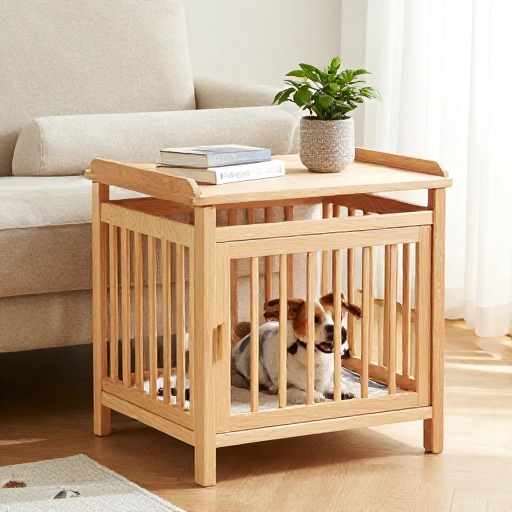
1. The End Table Crate With a Removable Top
This was my first real upgrade, and it’s still my favorite. The whole idea is simple: a wooden box sized to your dog, topped with a flat surface you can set things on. Mine holds a lamp, a stack of books, and a coaster I never use.
What makes it work is the removable or hinged top. You lift it, your dog hops in, you close it back up. Some versions have a tray top that slides off completely, which makes cleaning the inside a whole lot easier.
Measure your dog standing up and lying down before you buy or build. Add a few inches of breathing room. A crate that’s too tight gets ignored fast, no matter how pretty it looks.
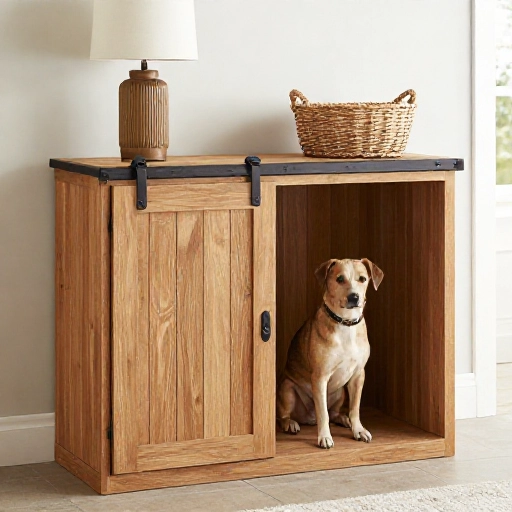
2. Sliding Barn Door Crate Console
Barn doors on a dog crate feel a little theatrical, and I mean that as a compliment. Instead of a gate that swings out into your walkway, the door slides along the front and tucks away.
That matters more than you’d think. In a tight hallway or beside a sofa, a swinging door is a nuisance. Sliding doors mean you can park this piece almost anywhere.
Look for soft-close hardware if you can. Slamming wood doors at 6 a.m. will wake up the whole house, and your dog won’t love it either. I added felt pads to mine and the noise dropped to almost nothing.
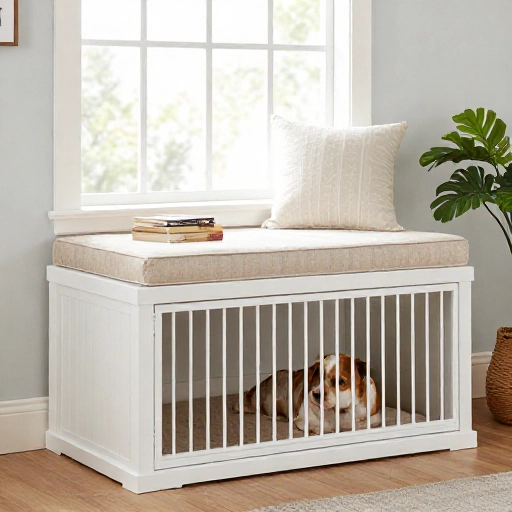
3. Built-In Bench Under the Window
If you have a bay window or a low windowsill, this is the move. A bench-height crate with a cushion on top turns dead space into a real seat, and your dog gets a front-row view of the neighborhood.
Dogs love watching the world go by. Mine spends most of the afternoon sprawled on top of the cushion rather than inside, which is fine by me. The crate is still there when he wants to hide from the vacuum.
Just watch the sun. A window bench can get hot in summer, so pick a breathable cushion cover you can toss in the wash.
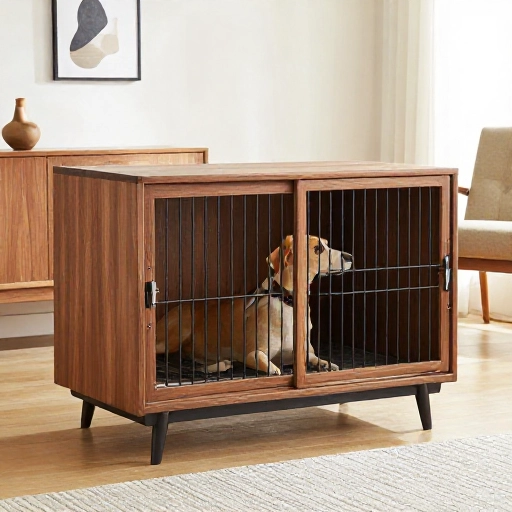
4. Mid-Century Walnut With Tapered Legs
Not every dog crate needs to look like a barn. A walnut or teak piece with slim tapered legs and clean lines reads as mid-century modern, and it slips into a styled living room without a fight.
These tend to cost more because of the wood and the joinery, but they’re usually built to last. I’d rather buy one good piece than replace a cheap one every two years.
Pair it with a neutral rug and a brass lamp and it looks intentional. That’s the whole goal here.
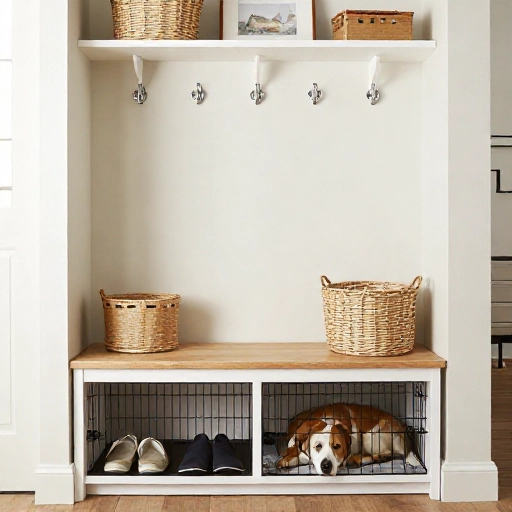
5. The Entryway Mudroom Bench Combo
This one solves two problems at once. The crate sits under a bench seat right by the door, so your dog has a spot to wait while you wrestle with your shoes, and you get somewhere to sit.
I keep a basket of leashes and bags on top, plus a towel for rainy paws. It’s the most-used corner of my house now.
One tip: put the crate on the side away from the door swing. You don’t want your dog getting bonked every time someone comes in with groceries.
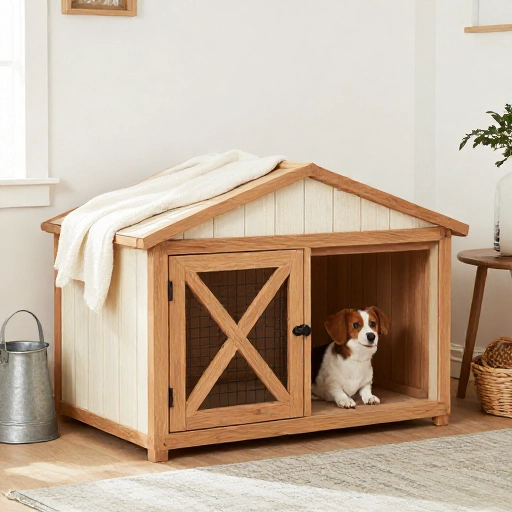
6. Farmhouse Shiplap With X-Detail Doors
If you love the modern farmhouse look, this is the version for you. Whitewashed shiplap panels, black metal hardware, and a classic X or Z brace on the door.
It photographs beautifully, which is probably why it’s all over Pinterest. In person it’s just as charming, especially against warm wood floors.
The downside is that light-colored finishes show paw prints. Keep a microfiber cloth nearby and wipe it down once a week, and it’ll stay looking new.
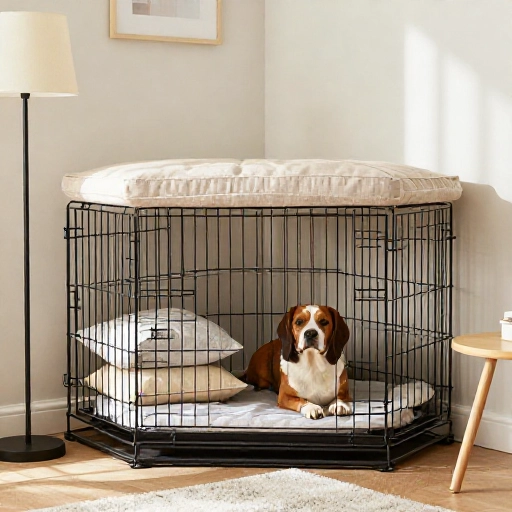
7. Corner Crate Nook With a Cushioned Top
Corners are wasted space in most homes. A crate built for a 90-degree angle fills that dead zone and gives your dog a tucked-away den feel, which many dogs genuinely prefer.
Add a thick cushion on top and you’ve got a reading spot or a place for a floor lamp. It’s a small footprint with a big payoff.
Measure carefully here. Corner crates are less forgiving than rectangular ones, and a gap against the wall looks sloppy.
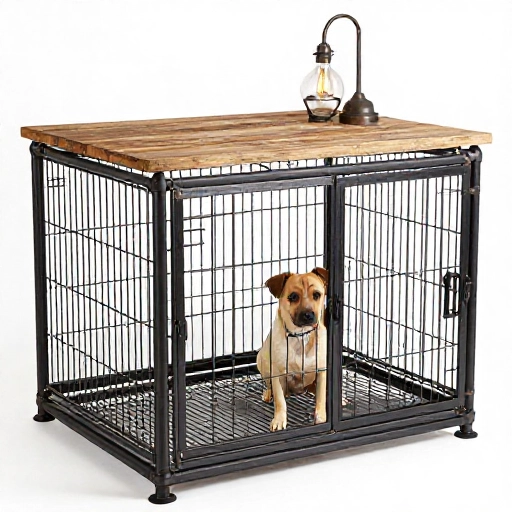
8. Industrial Pipe Frame With a Wood Top
Black steel pipe frames paired with reclaimed wood give you that loft-apartment edge. It’s sturdy, it’s a little bit rugged, and it hides scratches well.
The open design also means better airflow than a fully enclosed cabinet. That matters if you live somewhere humid or your dog runs warm.
Check that the pipe joints are tight and the whole thing doesn’t wobble. A wobbly crate makes nervous dogs more nervous, not less.
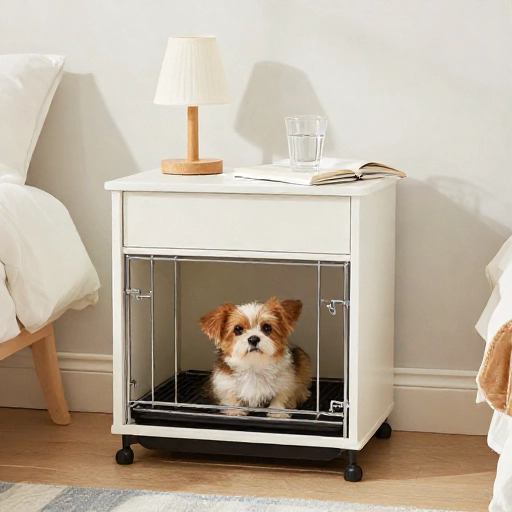
9. Bedside Nightstand Crate for Small Dogs
If you share a bedroom with a small dog, this is a game changer. A nightstand-sized crate keeps your pup close at night without taking over the floor.
You get a lamp, a book, and a glass of water on top. They get to hear you breathing two feet away, which for a lot of anxious dogs is the whole cure.
This only works for smaller breeds, obviously. A Great Dane nightstand is just a dresser.
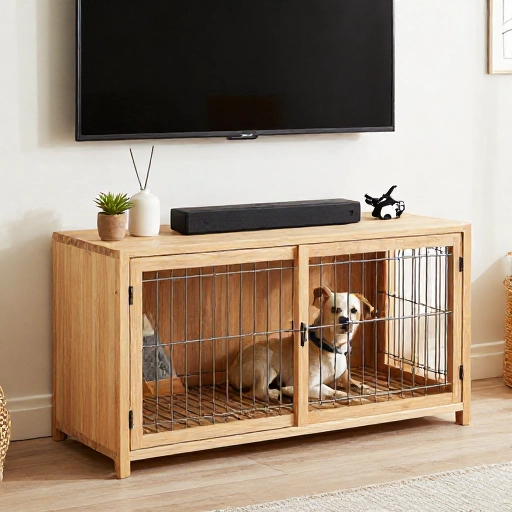
10. Crate That Doubles as a Media Console
Living rooms with one blank wall are perfect for this. A long, low crate with a solid top holds your TV, your soundbar, and a couple of baskets for remotes and cords.
It’s a smart use of space because a media console is basically a big empty box anyway. You might as well put a dog in it.
Make sure there’s ventilation on the sides, since electronics and closed cabinets both get warm. Slatted or louvered sides solve this neatly.
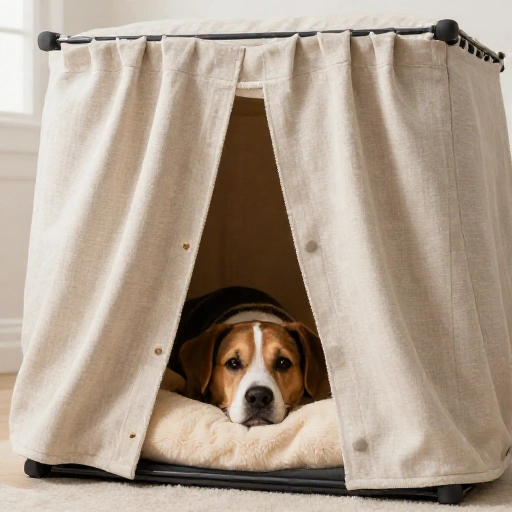
11. The Cozy Crate Cave With Curtain Panels
Not everyone wants slats and hardware. Some dogs settle best in a dark, den-like space, and fabric panels give you exactly that.
I used a wooden frame with a rail across the front and hung two washable canvas panels. They can be tied open during the day and closed at night.
Pick a fabric that matches your sofa or curtains so the pieces read as part of the same room. It’s a small detail that makes a big difference in photos.
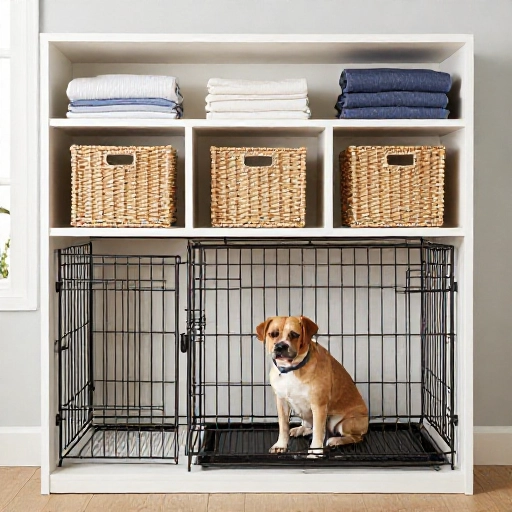
12. Custom Built-In Crate Wall With Storage Bins
This is the splurge option, and it’s worth it if you’re staying put. A carpenter builds the crate right into a wall of shelving, with cubbies above for toys, treats, and leashes.
It looks like it was always meant to be there, because it was. No gaps, no wobble, no “that’s a dog crate” comments from guests.
Plan for ventilation and easy access, and make sure the door hardware is something you can open one-handed while holding a leash and a coffee. Trust me on that one.
How to Choose the Right One for Your Home
Start with size, not style. Measure your dog standing and lying down, then add a few inches in each direction. A crate that’s too small gets refused, and one that’s too big can feel unsafe to a dog who likes a snug den.
Then match the finish to your existing furniture. White oak with your floors, black metal with your fixtures, warm walnut with your shelves. When the wood tone lines up, the piece disappears into the room.
Finally, think about how you’ll clean it. Removable trays, machine-washable cushions, and panels you can wipe down will save you a lot of grief over the years.
Frequently Asked Questions
Is dog crate furniture safe for my dog?
Yes, as long as it’s built with solid materials, has good airflow, and the door latches securely. Check for sharp edges or gaps where a paw or collar could get caught, and inspect the hardware every few months.
Will my dog actually use a wooden crate instead of a wire one?
Most dogs adjust fine, especially if you make it cozy with a familiar blanket and a few treats inside. Give it a week and keep the door open at first so they can explore on their own terms.
How much should I expect to spend?
Simple end table styles start around $100 to $200. Solid wood pieces with sliding doors usually run $300 to $600. Custom built-ins depend on your carpenter, but they’re a long-term investment.
Can I build one myself?
Absolutely. A basic box crate with a hinged top is a great beginner project if you can cut straight lines and drill pilot holes. Just be generous with the ventilation and sand every edge.
Do I still need a crate pad inside?
Yes. The wooden base is hard and cold, so add a washable pad or a low-profile orthopedic bed. It keeps the space inviting and makes cleanup a lot easier.
Final Thoughts
Dog crate furniture isn’t about hiding your dog. It’s about giving them a spot that feels like theirs while your home still feels like yours. Pick a style that matches what you already own, measure twice, and don’t overthink the rest.
Start with one piece. Once you see how much better the room looks without a wire cage in the corner, you’ll wonder why you waited so long.