15 Smart Indoor Dog Park Layouts Perfect For Bad Weather (So Your Dog Never Misses A Day Of Play)
Rain for the fourth day in a row. Snow up past my boots. A heat wave that makes the sidewalk feel like a frying pan. I’ve lived through all three with a high-energy dog, and I can tell you the same thing every time: the weather does not care about your dog’s exercise needs.
That’s why I started building little indoor dog parks in my own home. Not fancy, not expensive, and definitely not permanent. Just smart layouts that turn dead space into a place where my dog can run, sniff, dig, and crash out happily while the sky does whatever it wants.
Below are 15 layouts I’ve tested, borrowed, and tweaked. Some take five minutes to set up. Others live in a spare corner all winter. Pick one, try it on the next rainy day, and watch your dog’s whole mood change.
1. The Garage Zoomie Zone
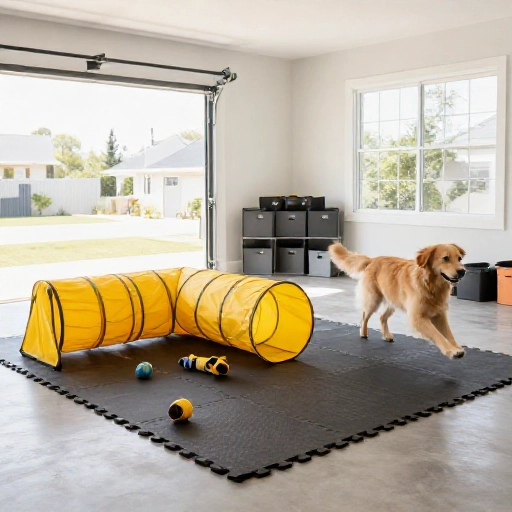
The garage is the closest thing most of us have to an outdoor run, and it’s already covered. I clear out the car, sweep the floor, and lay down interlocking foam mats so my dog isn’t sliding around on concrete.
A couple of traffic cones or a folded exercise pen create a boundary, and suddenly I have a real dog park at home. I keep a water bowl, a toy bin, and a small trash can for poop bags right by the door so nothing walks back into the house.
One tip: put a cheap tarp under the mats. It catches muddy paw prints and makes cleanup a two-minute job instead of a whole afternoon.
2. Basement Agility Alley
If your basement is dry and finished, you’ve got a built-in training facility. I line one long wall with a pop-up tunnel, three PVC weave poles, and a low jump made from two buckets and a broom handle.
Ten minutes of weaving and jumping tires a dog out faster than thirty minutes of fetch. Add a wobble board or a couch cushion on the floor for balance work and you’ve covered a full-body workout.
Basements get damp, so I run a dehumidifier and check the mats monthly. Soft knees need dry floors, not slippery ones.
3. The Living Room Zoomie Loop
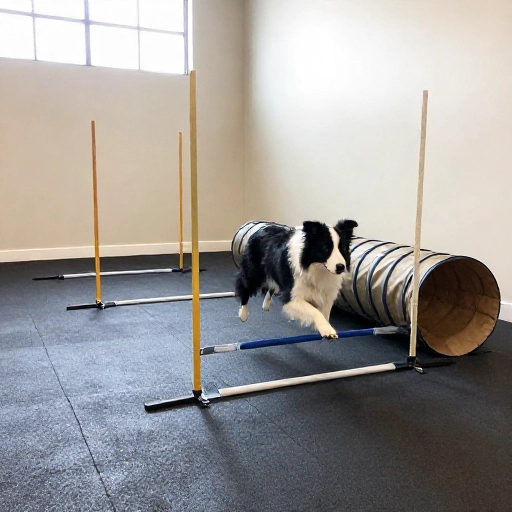
My dog’s favorite setup costs nothing. I push the coffee table against the wall, shift the ottoman, and create an oval track around the couch.
Rugs matter here. Hardwood plus a sprinting dog equals a slip, so I layer non-slip rugs on the main stretch. Then I stand at one end of the loop and let the zoomies happen.
Sixty seconds of full-speed laps is plenty. I usually follow it with a chew toy on a mat so the energy comes back down instead of bouncing off the walls.
4. Hallway Fetch Tunnel
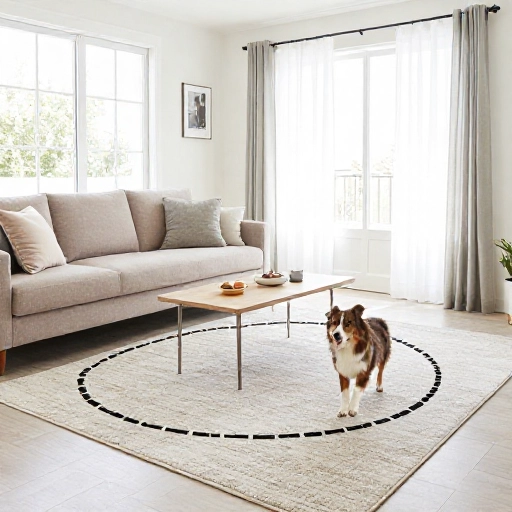
Long hallway, soft toys, no throwing. That’s the whole idea. I roll a fabric ball down the hall instead of launching it, which saves my walls and my picture frames.
I hang a folded blanket at the far end as a bumper and use a fleece tug toy for short throws. If your hallway is carpeted, you already have the perfect surface.
This one is great for small spaces because the dog gets sprinting and retrieving in a space that’s only three feet wide.
5. Sunroom Sniffari Station
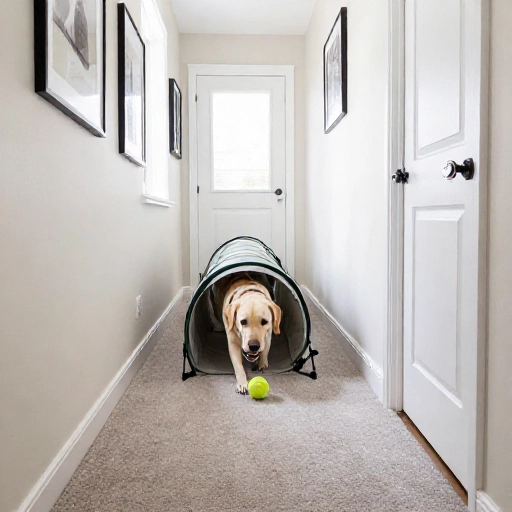
Not every indoor park has to be about running. Sniffing is exhausting in the best way, and a sunroom or enclosed porch makes a perfect scent zone.
I scatter kibble across a snuffle mat, hide treats in muffin tins covered with tennis balls, and let my dog shred a stack of cardboard boxes. Fifteen minutes of nose work and she’s flat out on the floor.
Cardboard shredding is messy, so I keep a laundry basket nearby and scoop it all up at once. Worth every scrap.
6. Spare Bedroom Ball Pit
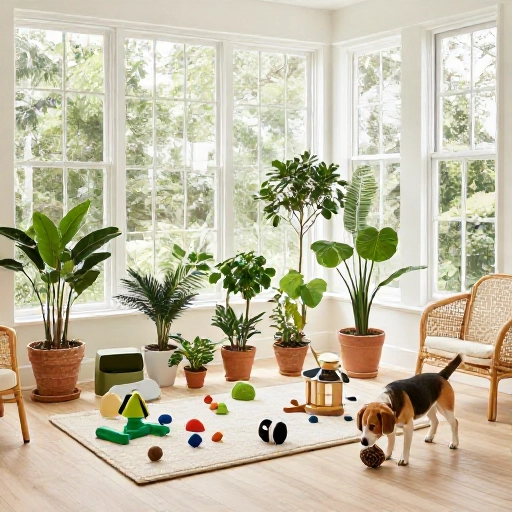
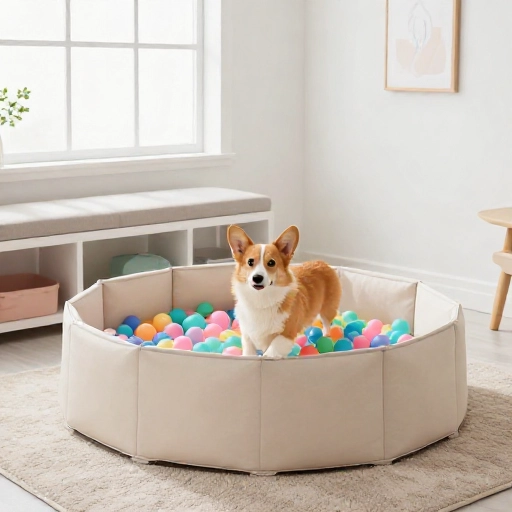
Sounds silly until you try it. I bought a hard plastic kiddie pool, filled it with ball pit balls, and buried a few toys and treats at the bottom.
My dog dives in nose first and digs around like she’s hunting. It’s fantastic for mental stimulation, and it keeps her busy while I fold laundry in the same room.
Supervise this one closely. Balls need to be too big to swallow, and the pool needs to be sturdy enough that it won’t tip when your dog launches in.
7. Mudroom Drop Zone And Paw Wash
This isn’t a play area, it’s the reason the rest of your indoor park stays usable. Wet weather means wet paws, and wet paws mean mud everywhere.
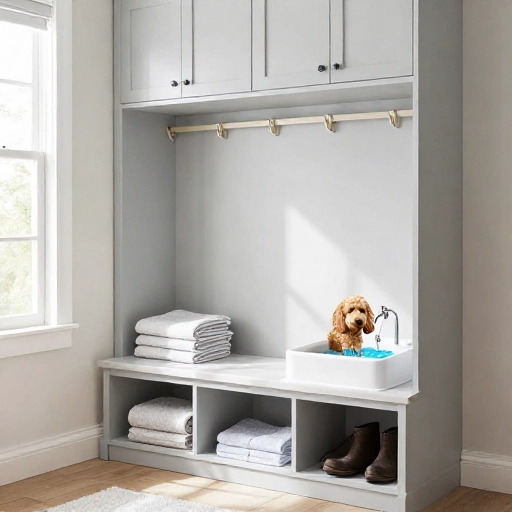
I set up a boot tray, a stack of microfiber towels, and a small paw-washing cup by the door. A washable runner leads from the door into the house.
Every dog comes in, stands on the towel, and gets a quick paw wipe before heading to the play zone. It takes thirty seconds and saves my floors.
8. Laundry Room Dig Box
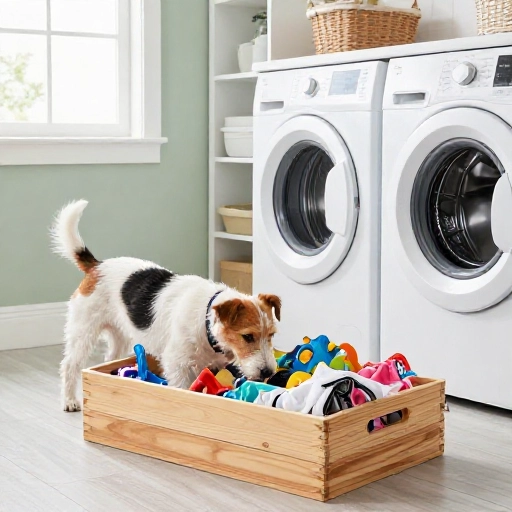
Dogs dig. If yours can’t dig outside in bad weather, give them a box. I use a shallow plastic tub filled with shredded paper and hide kibble and toys underneath.
Ten minutes of digging and tossing paper around is serious enrichment. My dog sleeps like a rock afterward.
Skip sand unless you want it tracked through the whole house, and never use dryer sheets or lint in the box. Those are a real hazard for pets.
9. Stairwell Cardio Circuit
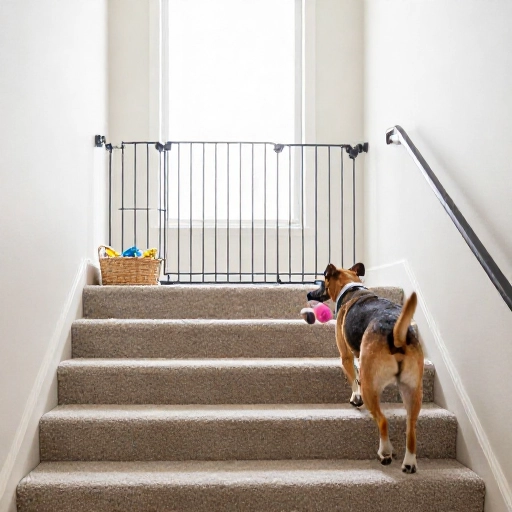
If your dog is healthy and cleared for stairs, a carpeted staircase is a natural treadmill. I toss a toy up a few steps and let my dog walk up and down while I stand at the bottom.
I keep a gate at the top and a mat at the base so there’s no sliding on the landing. Five or six trips is usually enough.
This one isn’t for puppies, seniors, or flat-faced breeds. If your dog has joint issues, stick with the flat-ground layouts instead.
10. Covered Balcony Patio Park
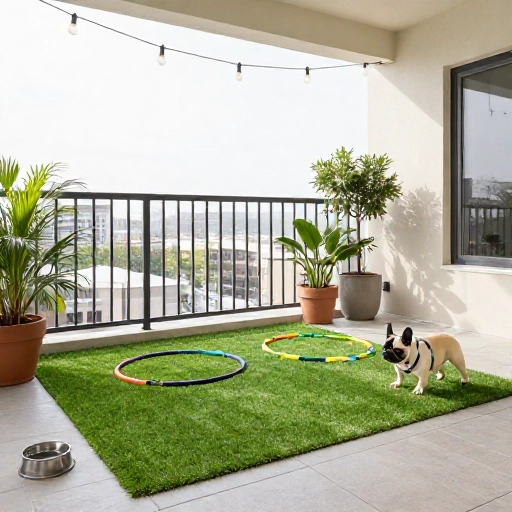
For apartment dogs, a covered balcony can be a mini dog park. I lay down a non-slip outdoor mat, add a wind-blocking panel, and set up a small grass potty tray near the corner.
It’s not for running, but it’s perfect for a quick potty break in a downpour and some fresh-air sniffing. A couple of potted plants give it a real park feel.
Check your building rules first, and always secure the railing so there’s no way to squeeze through.
11. Playpen Puppy Park
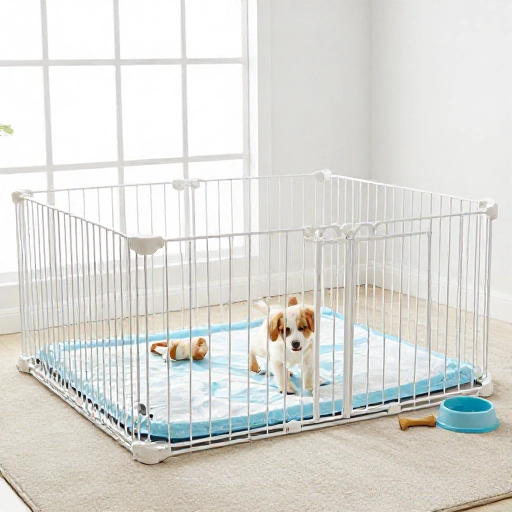
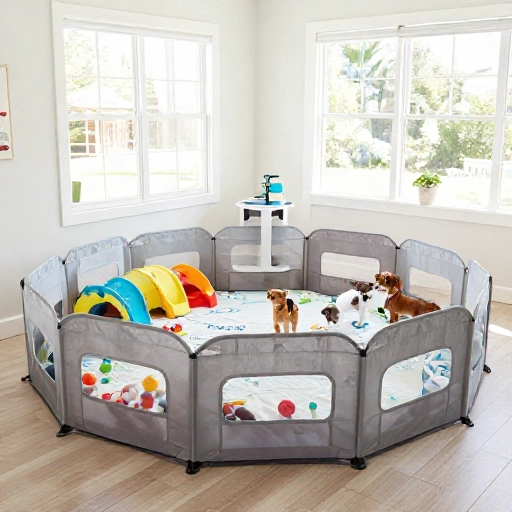
Puppies can’t safely use shared dog parks until they’re fully vaccinated, so I build them their own. An exercise pen, a crate with the door open, and a grass potty tray make a complete little world.
I rotate toys every few days so the space stays interesting, and I use this pen for short training sessions with treats.
Five to ten minutes at a time is plenty for a puppy. Short bursts, lots of naps, and a pen that’s safe to leave them in for a moment.
12. Dining Room Rally Course
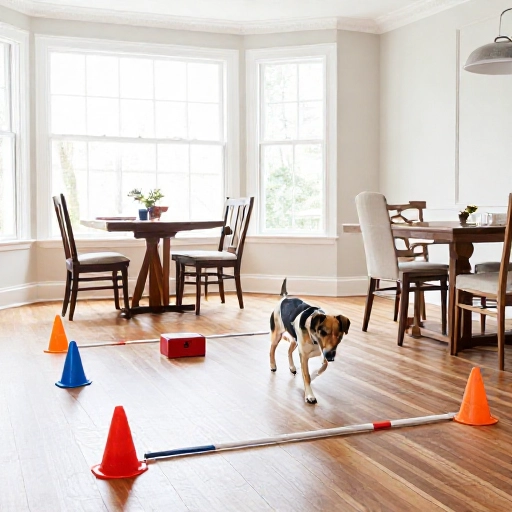
Rally is just obedience with a fun obstacle course attached, and it fits beautifully in a dining room. I set out a few cones, a tunnel, and sticky notes with cues like “sit” and “spin.”
We run the course twice, take a water break, then run it again in the other direction. It’s fast, it’s silly, and it builds real focus.
Keep sessions under ten minutes. Short and cheerful beats long and frustrating every single time.
13. Corner Den And Chew Nook
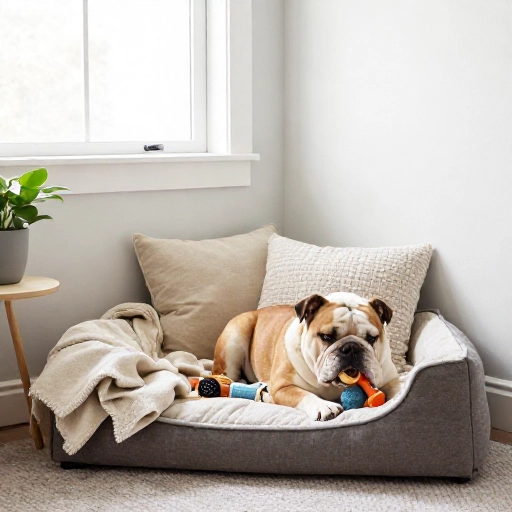
Every indoor dog park needs a calm corner. Mine is a covered crate with a blanket over the top, a thick bed, and a basket of long-lasting chews nearby.
When thunder rolls or the wind howls, this is where my dog goes to decompress. A white noise machine or a fan helps muffle the outside noise.
I never use this corner for punishment. It’s a happy place, and that’s exactly why it works.
14. Multi-Room Circuit Course
This one turns your whole home into a course. I set up five stations: a mat in the living room, a tunnel in the hallway, a snuffle mat in the kitchen, a dig box in the laundry room, and a chew spot in the bedroom.
We move from station to station, doing one quick task at each. It’s a scavenger hunt and a workout rolled into one, and it burns energy without needing any single large space.
I check the route first for dead ends and slippery turns. Wide paths and non-slip rugs make it safe to sprint between stops.
15. Pop-Up Playdate Park
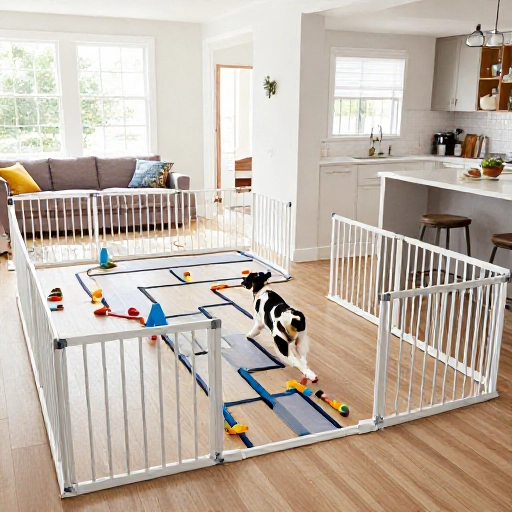
Bad weather doesn’t mean your dog has to be lonely. I invite one or two calm, friendly dogs over and set up the living room as a temporary park.
Two exercise pens divide the space, water bowls sit on opposite ends, and mats give everyone traction. Play sessions last ten minutes, then everyone gets a break.
I wipe down the floor and toys before and after, and I keep the group small. Three dogs max, and only ones who already get along.
Wrapping It Up
You don’t need a spare warehouse to give your dog a real workout when the weather turns ugly. You need a cleared floor, a non-slip surface, and about fifteen minutes of creativity.
Start with the easiest layout for your space, like a hallway fetch tunnel or a corner sniffari. Once you see how fast your dog settles down afterward, you’ll start planning the next one.
My rule is simple: weather cancels the walk, not the fun. There’s always a way to play inside.
Frequently Asked Questions
How much space do I really need for an indoor dog park?
Less than you’d think. A 10 by 10 room works for most layouts, and if you can clear a straight line of 10 to 15 feet, you’ve got room for fetch or zoomies. Hallways and stair-free loops are great options for smaller homes.
What’s the safest flooring for indoor dog play?
Anything with grip. Interlocking foam mats, rubber horse mats, non-slip rugs, and yoga mats taped down all work well. Bare hardwood, tile, and laminate are the biggest slip risks, especially during fast turns.
How do I keep the space from smelling like a dog park?
Ventilation and routine. I open windows when I can, wash soft mats weekly, wipe hard surfaces with a pet-safe cleaner, and keep an enzyme spray handy for accidents. A paw towel at the entrance does most of the heavy lifting.
How long should an indoor play session last?
Usually 10 to 30 minutes, depending on your dog’s age and energy. Mental games like sniffing and digging often tire a dog out faster than running, so mix them in. Two shorter sessions beat one long one.
Is an indoor dog park safe for puppies?
Yes, and it’s often safer than the real thing. Puppies aren’t fully protected until their vaccine series is complete, so an indoor pen with potty tray and rotating toys gives them play and training without the risk.