Pet-Proof Your Home with These 11 Genius Dog Barrier Ideas
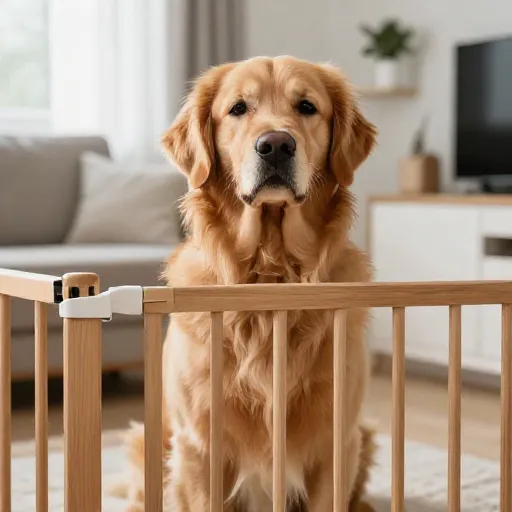
Let’s be honest—our dogs are adorable, but they’re also tiny (or not-so-tiny) demolition experts. I learned this the hard way when my golden retriever decided my new sofa was a chew toy and the kitchen trash can was a buffet. If you’ve ever come home to a mess, you know the struggle is real.
The good news? You don’t need to turn your house into a fortress. With a few clever barriers, you can keep your pup safe, protect your belongings, and still have a home that looks like adults live there. Here are 11 genius dog barrier ideas I’ve tested (and loved) that will change your life.
1. The Classic Baby Gate (But Make It Stylish)
Baby gates aren’t just for babies! They’re the easiest way to block off staircases, kitchens, or entire rooms. The trick is picking one that doesn’t scream “nursery.” Look for wooden or metal gates that match your decor.
I love the pressure-mounted ones because they don’t require drilling holes in your walls. You can move them around in seconds, which is perfect if your dog’s “forbidden zone” changes weekly.
Pro tip: Get one with a walk-through door. You’ll thank me when your hands are full of groceries and your dog is trying to escape.
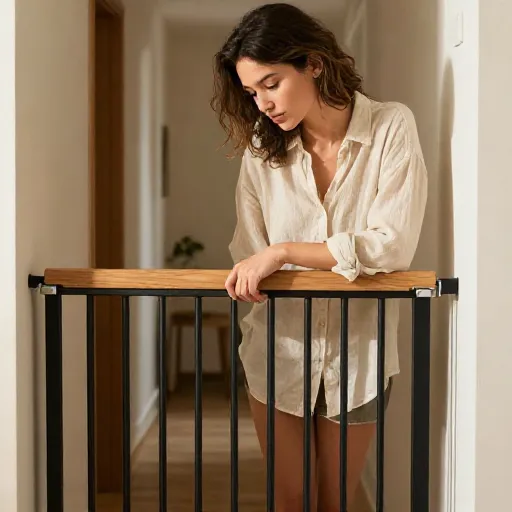
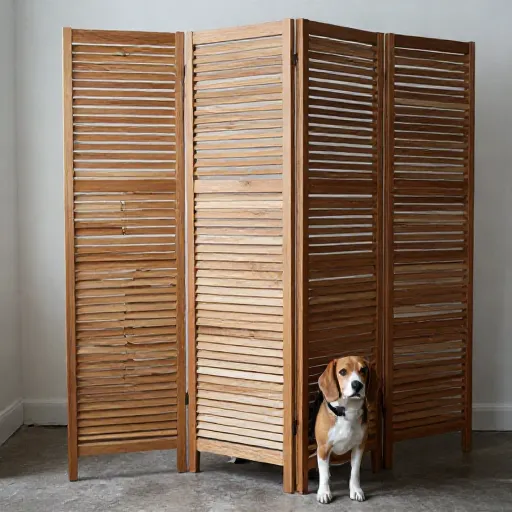
2. The Freestanding Room Divider
If you have an open floor plan, traditional gates might not fit. That’s where freestanding room dividers come in. These are basically decorative screens that you can fold and position anywhere.
They’re amazing for blocking off hallways, creating a cozy corner for your pup, or hiding the litter box. Plus, they come in tons of styles—from rustic farmhouse to sleek modern.
I use one to block off my home office during Zoom calls. My dog still watches me through the slats, but at least he’s not barking at my coworkers anymore.
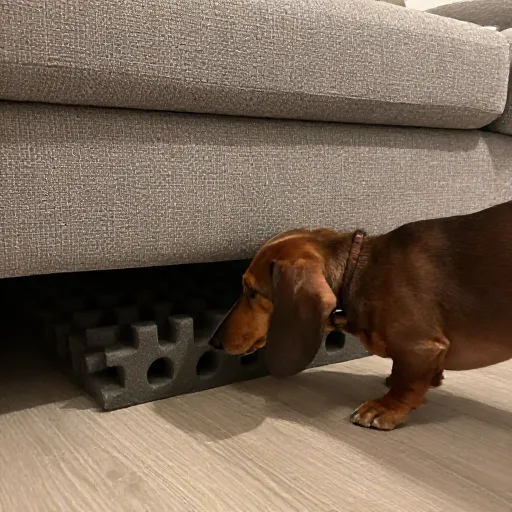
3. The Under-the-Sofa Gap Blocker
Does your dog lose toys (and maybe a few of your socks) under the couch? Or worse, does your small pup squeeze under there and refuse to come out? This is a simple fix that saves so much frustration.
You can buy foam pool noodles and cut them to size, then wedge them in the gap. Or, for a prettier option, use decorative storage baskets that slide under the sofa and block the space.
This isn’t just about retrieval—it’s also a safety thing. Puppies can get stuck, and older dogs can hurt their backs trying to wedge themselves into tight spots.
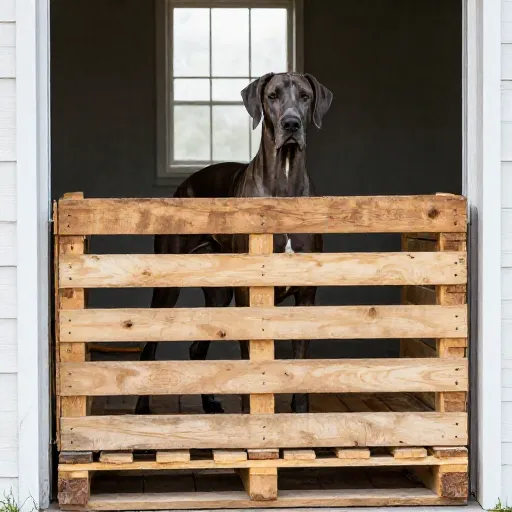
4. The DIY Pallet Gate for Big Dogs
If you have a large breed, store-bought gates can feel flimsy. A wooden pallet gate is a rugged, budget-friendly DIY project that actually looks pretty cool. Just sand down a pallet, add some hinges, and attach it to your doorframe.
I built one for my back door, and it’s been a game-changer. My 80-pound lab can’t budge it, and it gives the house a nice rustic vibe.
Just make sure the slats are close enough together that your dog can’t squeeze through. And always check for splinters before you install it.
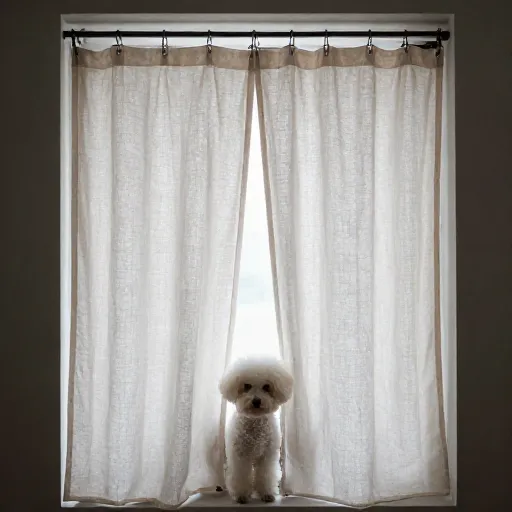
5. The Tension Rod Curtain Trick
This one is genius for renters or anyone who hates drilling holes. Install a tension rod in a doorway and hang a cute curtain. It’s not a physical barrier, but it works surprisingly well for most dogs.
Dogs are visual creatures. If they can’t see what’s on the other side, they’re less likely to push through. Plus, a sheer curtain lets light in while still creating a sense of separation.
I use this in my bedroom door. It keeps my dog from wandering in during the night, but it looks way softer and more elegant than a metal gate.
6. The Kitchen Cabinet Lock System
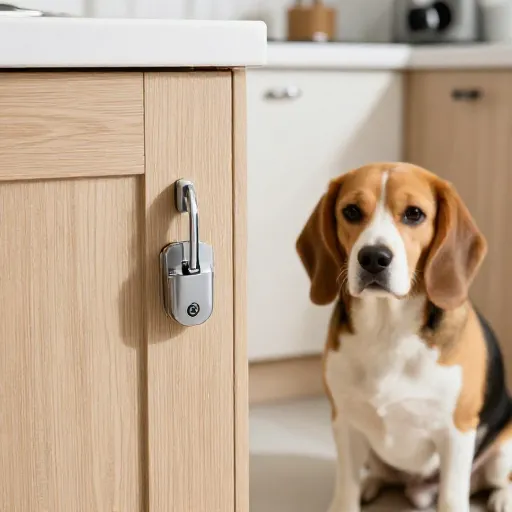
Dogs are smart. If they see you grab treats from a cabinet, they’ll figure out how to open it. Childproof locks are the obvious answer, but they can be annoying for adults to use too.
Instead, try magnetic cabinet locks. They’re hidden inside the cabinet, so you just tap the outside to release them. No more fumbling with plastic clips.
I also love the sliding latch style—they’re super easy to install and don’t require any tools. Just stick them on and you’re done.
7. The Furniture Protector Shield
Sometimes the barrier isn’t about blocking a room—it’s about protecting a specific piece of furniture. If your dog loves to scratch the sofa or shed all over your favorite chair, a furniture shield is your best friend.
You can buy clear acrylic panels that attach to the sides of your sofa, or use oversized throw blankets as a temporary fix. There are also stylish slipcovers that are surprisingly durable.
I found a waterproof couch cover that looks like a regular blanket. My dog can’t tell the difference, but my couch is finally safe from muddy paws.

8. The Indoor Pet Fence (For Outdoor Vibes)
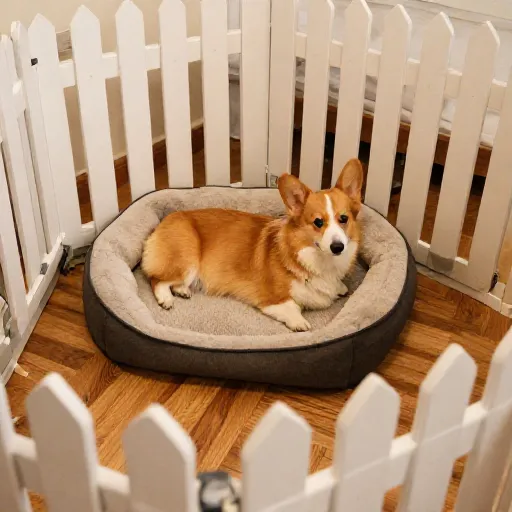
Want to give your dog some outdoor freedom without installing a permanent fence? An indoor pet fence with a matching gate is a great compromise. These are basically freestanding panels that you can configure in any shape.
You can create a playpen area in your living room, or block off an entire section of the house. They’re portable, so you can take them to grandma’s house or on vacation.
I set mine up in a square in the corner of my living room. My dog has his bed, water bowl, and a few toys in there. He actually goes in on his own now when he wants a break.
9. The Door Draft Stopper (Double Duty)
This is the sneakiest barrier on the list. A door draft stopper—the long, tube-shaped thing you put at the bottom of a door—is perfect for blocking small gaps. It keeps out cold air, and it also keeps your pup from sticking his nose under the door.
It’s especially useful for doors that don’t quite close all the way. My bedroom door has a huge gap, and my dog used to slide his toys under it at 6 AM. The draft stopper solved that instantly.
Plus, they come in cute patterns, so it feels like part of the decor rather than a punishment.
10. The Tall Folding Screen for Jumpers
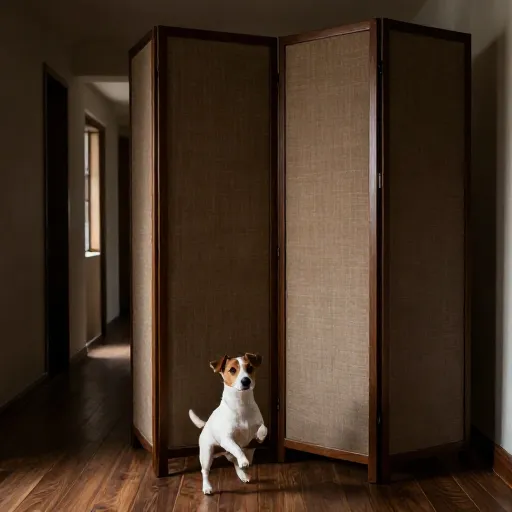
For the athletic dogs who think they’re parkour champions, you need height. A tall folding screen (about 5-6 feet) is the perfect solution. It’s impossible for most dogs to jump over, and it looks like a piece of art.
You can find screens with beautiful designs—like bamboo, floral, or geometric patterns. They’re lightweight, so you can move them around easily, but they’re sturdy enough to stay put.
I have one blocking my dining room, and honestly, it’s one of my favorite home decor pieces. People always ask where I got it.
11. The Automatic Pet Door with Sensors
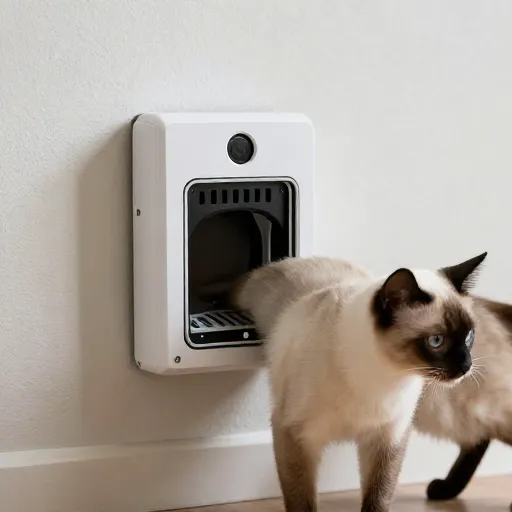
Okay, this is the fancy option, but hear me out. An automatic pet door uses a sensor on your dog’s collar to open the flap only for them. It keeps stray animals out and gives your dog independence.
It’s not a traditional barrier, but it does control access. You can set it to only allow entry during certain hours, which is great for managing nighttime potty breaks.
I saved up for one of these, and it’s worth every penny. My dog can go out to the backyard whenever he wants, but the neighborhood cats are still locked out.
Final Thoughts
Pet-proofing your home doesn’t have to be ugly or expensive. Start with the areas that cause the most chaos—maybe it’s the kitchen or the stairs—and pick a barrier that fits your style. You’ll be amazed at how much calmer (and cleaner) your home feels.
Remember, the goal isn’t to trap your dog. It’s to create safe boundaries that let both of you relax. Your pup will still have plenty of room to play, nap, and be adorable.
FAQ: Dog Barrier Questions, Answered
Q: What’s the best dog barrier for large breeds?
A: Look for heavy-duty gates made of metal or solid wood. Pressure-mounted gates can be too flimsy for big dogs. The DIY pallet gate is also a great budget option for extra-strong pups.
Q: How do I keep my dog out of the kitchen without a gate?
A: Try a tension rod curtain, a freestanding room divider, or a tall folding screen. These are all non-invasive and easy to remove when guests come over.
Q: My dog chews on the barrier itself. What should I do?
A: Spray the barrier with a bitter apple spray (safe for pets). Also, make sure your dog has plenty of chew toys nearby so they have a better outlet for their energy.
Q: Are there barriers that don’t require drilling holes?
A: Absolutely! Pressure-mounted gates, tension rods, freestanding screens, and furniture shields all work without any screws or nails. Perfect for renters.
Q: Can I use a baby gate for a puppy?
A: Yes, but make sure the slats are spaced close enough that your puppy can’t squeeze through. Also, choose one with a step-over door so you don’t have to leap over it all day.