Your Complete ESA Dog Requirements Guide

Thinking about getting an Emotional Support Animal (ESA) dog? You’re not alone. So many of us find that a furry friend provides incredible comfort and stability. But the process can feel confusing with all the different rules and paperwork.
I’ve been through it myself, and I want to help you navigate it clearly. This isn’t about gaming the system—it’s about understanding your legitimate rights and your dog’s role. An ESA is more than a pet; it’s a prescribed part of a treatment plan for a mental or emotional disability.
Let’s break down the real requirements, step by step, so you and your support pup can live your best life together.
1. Understand What an ESA Actually Is
First things first: an Emotional Support Dog is not the same as a service dog. This is the most important distinction. Service dogs are trained to perform specific tasks for a person with a disability. An ESA provides therapeutic benefit just through their companionship.
Your ESA dog doesn’t need special training. Their very presence is what helps alleviate symptoms of conditions like anxiety, depression, or PTSD. Recognizing this difference is key to understanding the rights you do and don’t have.
2. Get a Legitimate ESA Letter from a Licensed Professional
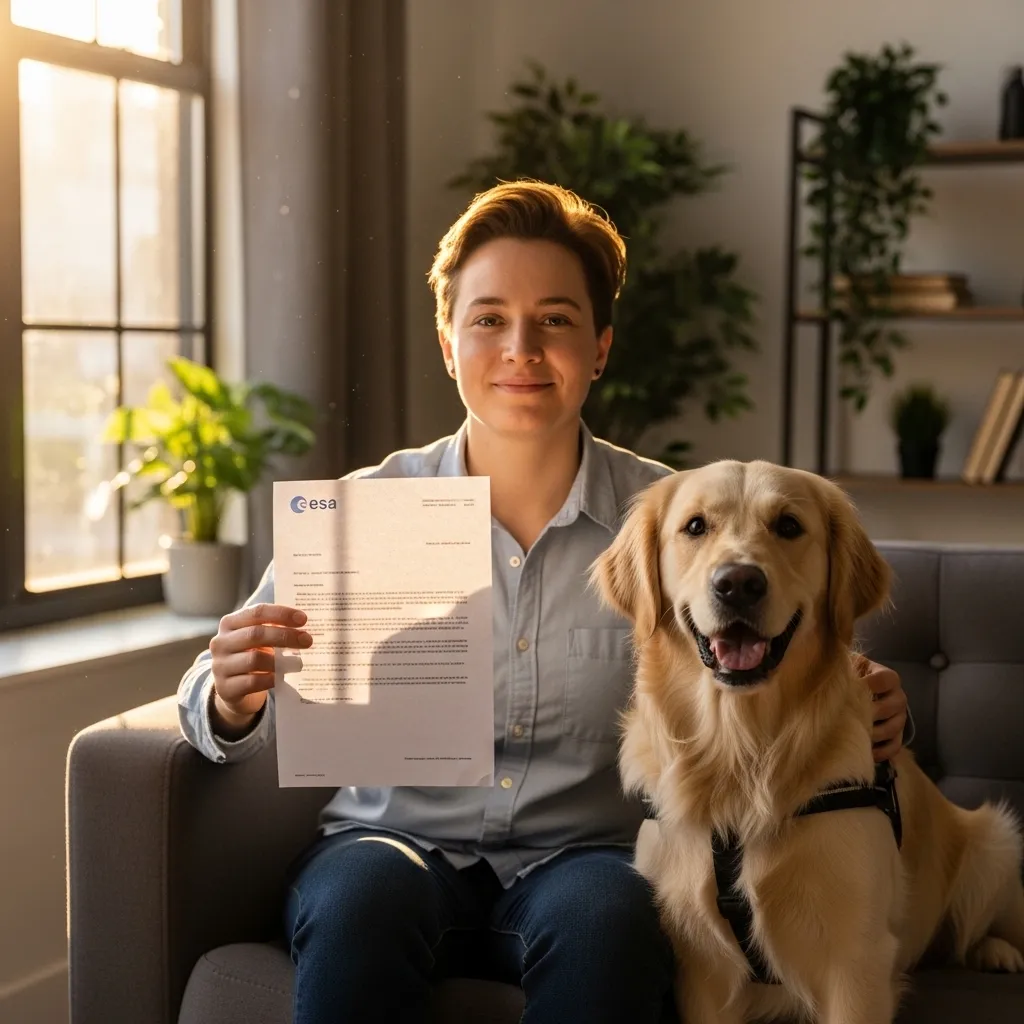
This is the golden ticket. The only document that matters is an ESA letter from a licensed mental health professional who is treating you. Think therapists, psychologists, or psychiatrists.
The letter must:
- Be on the professional’s official letterhead.
- State that you have a mental health disability.
- Confirm that the ESA is part of your treatment.
- Include the professional’s license details and signature.
Beware of instant “certification” websites. A real letter comes from an ongoing therapeutic relationship.

3. Focus on Your Dog’s Basic Manners
While no formal training is required, your dog must be under control. Housing providers and airlines (when they allowed ESAs) could deny an animal that is disruptive, aggressive, or not housebroken.
I worked on the basics with my dog: no barking excessively, walking nicely on a leash, and being generally well-behaved in public spaces we had access to. It’s about being a responsible handler and ensuring your dog is a good neighbor.

4. Know Your Housing Rights (The FHA)
This is where ESA rights are strongest. The Fair Housing Act requires landlords to make reasonable accommodations for ESAs, even in “no-pet” policies. You can’t be charged a pet fee or deposit.
You will need to present your valid ESA letter to your landlord. They can only ask limited questions and cannot demand details about your diagnosis. They can, however, deny a specific animal if it poses a direct threat or causes excessive damage.

5. Be Realistic About Public Access & Travel
Here’s a big change: ESAs do not have public access rights like service dogs. Your ESA is not automatically allowed in restaurants, grocery stores, or other public businesses.
For air travel, major U.S. airlines now follow the Department of Transportation’s rules, which treat ESAs as pets. This means they may require a carrier and charge a fee. Always check the specific airline’s policy well before your flight.

6. Choose the Right Dog for Your Lifestyle
Your ESA should be a source of calm, not stress. Consider your living space, energy level, and needs. A high-energy herding breed might not be the best fit for a small apartment if you need quiet comfort.
I adopted a mature, mellow dog from a rescue. She naturally had the temperament I needed. Whether you adopt or go through a breeder, prioritize temperament and compatibility over everything else.

7. Keep Your Documentation Organized & Updated
Your ESA letter has an expiration date, typically one year from issuance. Mark your calendar to renew it. Your mental health professional will need to reassess your need for the ESA.
Keep digital and physical copies safe. I have a folder in my email and a copy in my important documents box. Having it readily available makes the accommodation process with housing much smoother.

8. Register Your Dog Locally (As a Pet)
Don’t confuse national “ESA registries” with local requirements. Those online databases are not legally recognized. However, you are almost always required to license your dog with your city or county, just like any other pet.
Make sure your dog is up-to-date on vaccinations like rabies. This is a basic part of responsible dog ownership and is often needed for the local license.

9. Advocate for Yourself Politely & Firmly
You may encounter landlords or others who don’t understand ESA law. Be prepared to educate them calmly. I keep a simple script: “I have a disability, and this is my Emotional Support Animal, which is a prescribed part of my treatment. Here is the letter from my licensed therapist.”
Know that you are not asking for a favor; you are requesting a legally mandated reasonable accommodation. Being polite but informed is your best approach.

10. Prioritize the Bond & Your Well-being
At the end of the day, this is about your mental health. The paperwork is just the framework. The real magic happens in the daily walks, the quiet moments of companionship, and the unconditional love.
Focus on building that bond. Your dog isn’t just a tool for housing access; they’re your partner in healing. Their well-being directly supports yours, so take good care of each other.

Conclusion
Navigating the ESA dog requirements is about combining legal knowledge with heartfelt responsibility. It starts with a genuine need and a legitimate letter from your doctor. From there, it’s your job to be a stellar ambassador by ensuring your dog is well-behaved and your documentation is in order.
The journey with my ESA has been transformative. By understanding these requirements, you can secure the housing you need and build a life filled with more comfort, stability, and joy, one paw at a time.
ESA Requirements FAQ
Q: Can any dog be an ESA?
A: Yes, any dog can be an ESA if a licensed mental health professional determines their presence alleviates your disability symptoms. Temperament is more important than breed.
Q: Do I need to “register” or “certify” my ESA online?
A: No. Those websites sell certificates and IDs that hold no legal weight. The only legitimate document is an ESA letter from your treating professional.
Q: Can my landlord deny my ESA?
A: They can only deny it if your dog is a direct threat to others, causes excessive property damage, or if the housing is exempt (like a owner-occupied building with 4 units or less). They cannot deny based on breed or size alone.
Q: Can I take my ESA to work?
A> This is not covered under the FHA. You must request an accommodation from your employer under the Americans with Disabilities Act (ADA), which has a higher threshold. Many employers are not required to allow ESAs.
Q: How do I talk to my therapist about getting an ESA letter?
A: Be open about how your mental health impacts daily life and discuss how a companion animal could help. If they agree it’s a valid part of your treatment plan, they can provide the letter.