13 Quick & Easy Cat Beds to Make This Weekend (Cozy DIY Ideas Your Cat Will Actually Use)
Every fancy pet bed I’ve ever bought ends up ignored, while my cat curls up in the cardboard box it came in. That took me way too long to accept. Now I only make cat beds at home, and honestly, my cats have never slept better.
The best part? Most of these take an afternoon or less. Some take five minutes. You probably already have most of the supplies sitting in a closet or a recycling bin.
Here are 13 cat beds I’ve tested with my own very picky cats, ranked by how fast you can pull them off this weekend.
1. The Five-Minute T-Shirt Bed
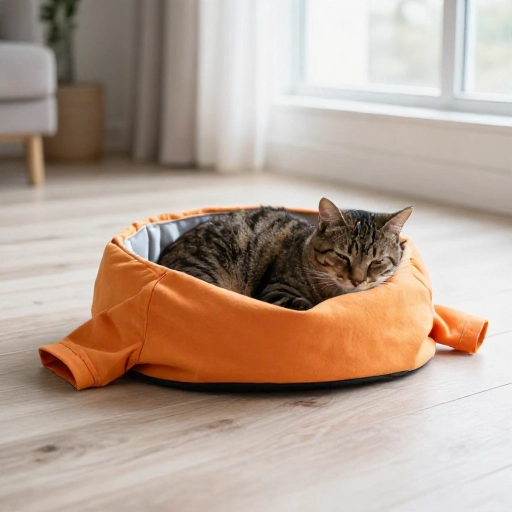
Grab a shallow cardboard box or a plastic storage tub and one old t-shirt you don’t mind giving up. Stretch the shirt over the box, then tuck the neck hole and sleeves underneath so it holds tight like a fitted sheet.
The magic here is your scent. Cats trust things that smell like you, so a worn tee works better than anything brand new. Toss a folded towel inside for padding.
When it gets gross, peel the shirt off and wash it. Takes 30 seconds to reassemble.
2. No-Sew Fleece Knot Bed
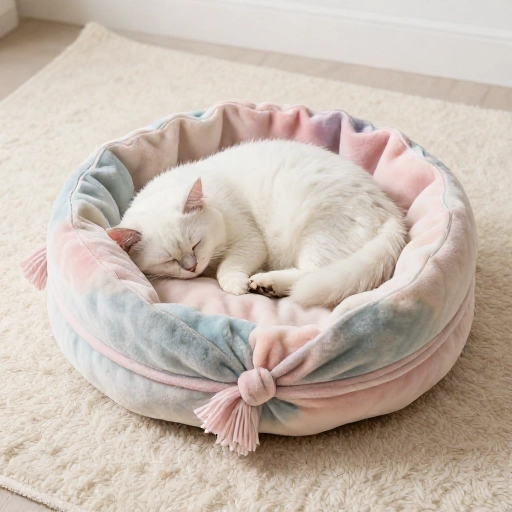
This one is my favorite for cold floors. You need two squares of fleece (about a yard each), scissors, and a stack of old pillows or a bag of stuffing.
- Cut 3-inch fringe all the way around both layers
- Knot the top and bottom fringes together, leaving a gap
- Stuff the middle, then finish the knots
It ends up looking like a fluffy donut, and cats sink right into it. Pre-wash the fleece first so it doesn’t shrink weird after the first wash.
3. Upcycled Sweater Cat Cave
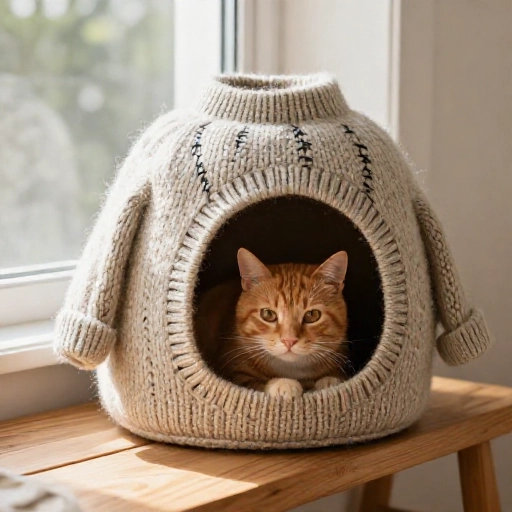
Old wool sweater plus one wash cycle equals felted fabric that holds its shape and won’t unravel when you cut it. That’s the whole trick.
Cut off the sleeves, slide the body over a round laundry basket or an embroidery hoop, and tuck the raw edges under. The result is a cozy little cave with a soft rim for chin resting.
If you’re handy with a needle, sew the bottom closed. If not, a few safety pins hidden underneath work fine.
4. Vintage Suitcase Nap Spot
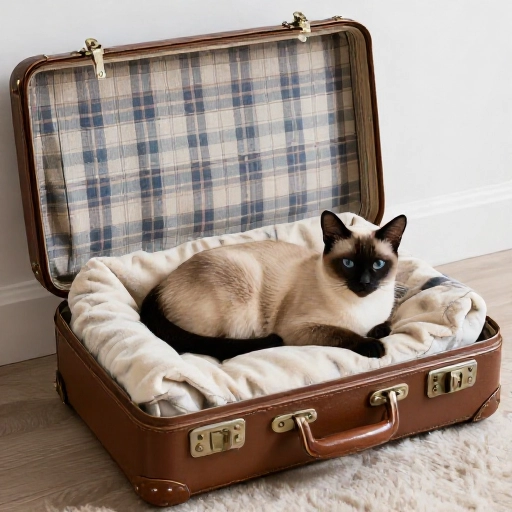
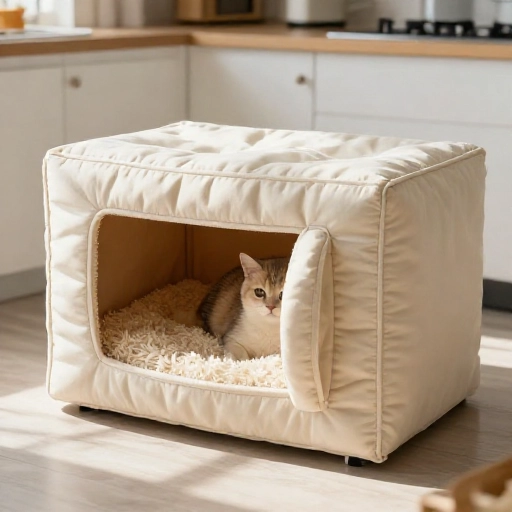
Thrift stores are full of hard-shell suitcases for a few dollars. Leave it open and flat with a pillow inside, or prop the lid up at an angle for a cave-style hideout.
Give it a good airing first and sprinkle baking soda inside for a day to kill that musty attic smell. Vacuum it out, then add a washable blanket.
My oldest cat claimed ours immediately. There’s something about the raised walls that makes cats feel safe.
5. Window Hammock From a Crate or Shelf Board
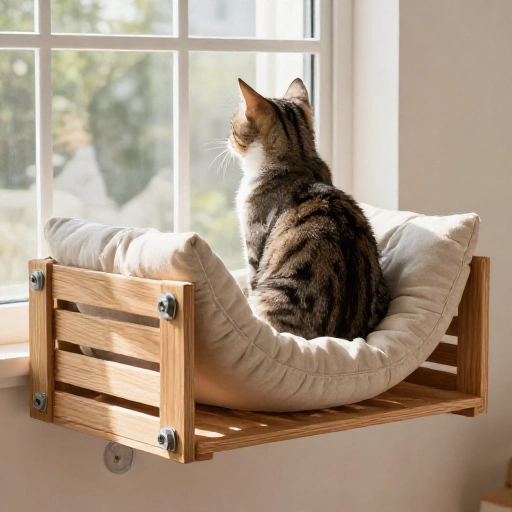
Cats want sun more than they want anything else, so a window spot is a shortcut to a happy cat. A sturdy wooden shelf board, two strong suction cups, and a soft pad gets you there.
Skip the cheap suction cups. Test the weight before your cat hops on, and never hang one above anything breakable or over a radiator.
If you’d rather not risk it, set a shallow crate or a wide basket on the windowsill instead and line it with fleece.
6. Dollar Store Basket Bed
This is the cheapest one on the list. A plastic basket, a small pillow, and a crib sheet or a cut-up fleece blanket. That’s it.
If the basket has handles, snip them off so nothing catches on a paw. Line the inside with the pillow, then wrap the fabric around the edge like an elastic sheet.
Add a folded towel underneath in winter for insulation. Total cost: usually under five dollars.
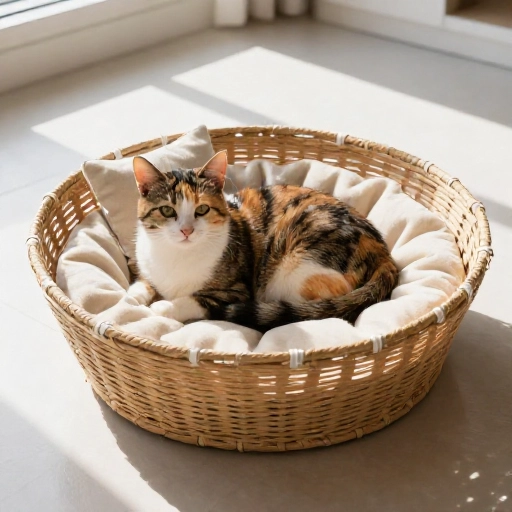
7. Chunky Crochet or Knit Pod
If you already crochet or knit, this is a great weekend project. Work a big oval in chunky yarn, then fold it in half and seam the sides, leaving a wide opening at one end.
No pattern needed, really. Just keep going until it’s about the length of your cat stretched out, plus a few inches.
Don’t crochet? Thick yarn and a pair of hands can make a hand-knit pod in an evening. It’s messy but cats don’t judge.
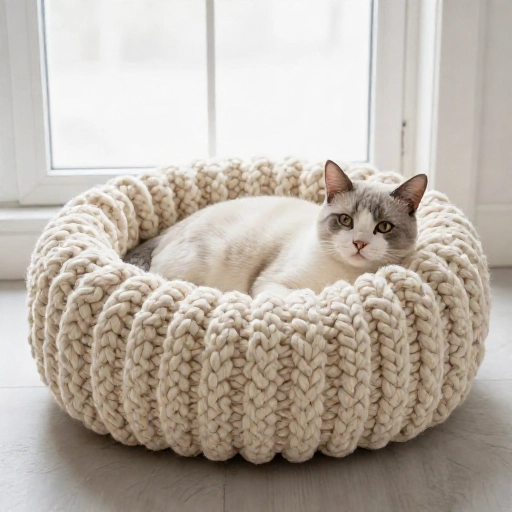
8. Cardboard Cat Castle
Stack two sturdy boxes, cut a doorway in the front of the bottom one, and tape the whole thing together with duct tape. Add a fleece pad on top for a lookout perch.
Cut a second escape hole in the back. Cats hate feeling trapped, and a second exit means more play and less hiding.
Replace it when it gets saggy. Cardboard beds are temporary by design, and that’s fine because they cost nothing.
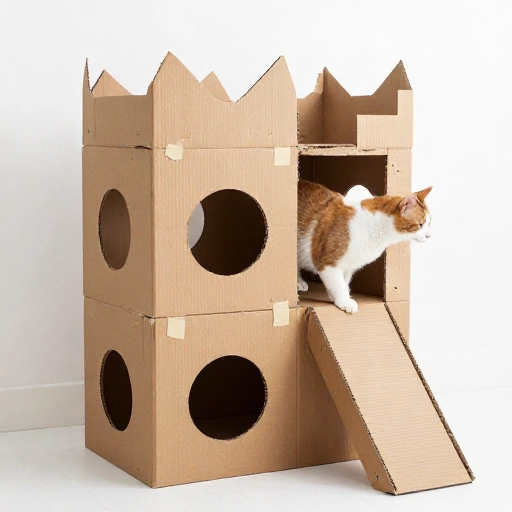
9. Old Dresser Drawer Bed
An old wooden drawer makes a surprisingly handsome cat bed. Sand any rough edges, wipe it down, and paint it if you want it to match your room.
Add a thick cushion cut to size, plus a small blanket the cat can knead into a nest. Stick felt pads on the bottom so it doesn’t scratch your floors.
Vintage wood smells like home to cats, which is a weird bonus but a real one.
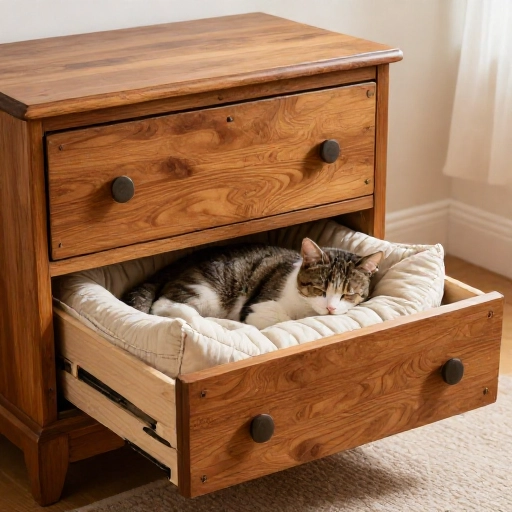
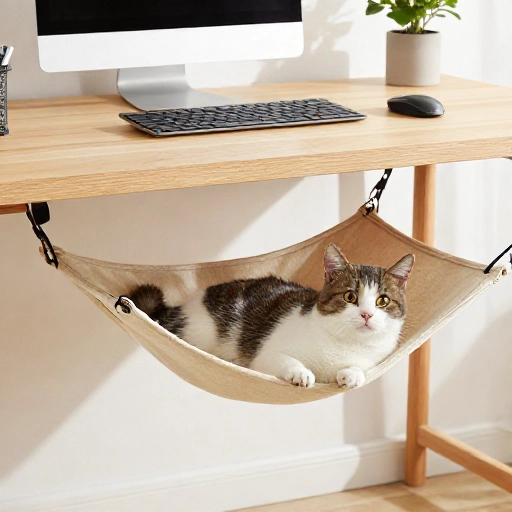
10. Under-Desk Hammock
Got a cat who follows you around while you work? Hang a piece of canvas or an old pair of leggings between two desk legs with carabiner clips.
Check for splinters and sharp edges first, and make sure the fabric sits low enough that your cat can climb in without a running start.
This is the bed my cats fight over the most. Being near you is the whole appeal.
11. Microwave Rice Warming Bed
Fill a clean cotton sock or a fabric pouch with dry rice, sew or tie the end shut, and microwave it for one to two minutes. Slip it under a blanket in your cat’s bed.
Always test the temperature with your wrist before letting your cat near it. It should feel warm, not hot.
This is a lifesaver for senior cats with stiff joints or tiny kittens in a cold room. Reheat it whenever it cools down.
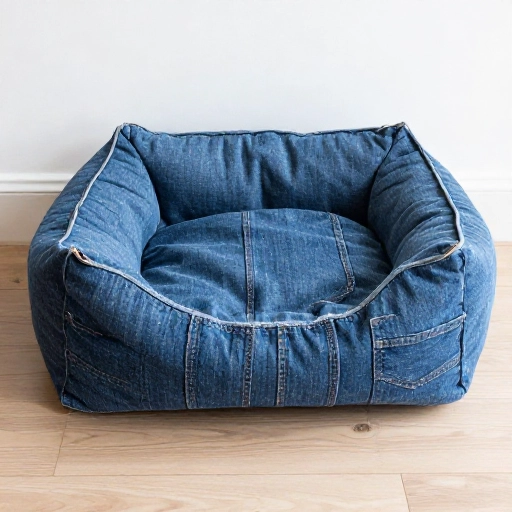
12. Denim Jeans Cat Bed
Old jeans are tough, machine washable, and just about indestructible, which makes them perfect for cats who knead aggressively.
Cut the legs off, stitch or fabric-glue the openings closed, and stuff the whole thing into a round nest shape. You can also leave the back pockets intact for a smaller cat to burrow into.
It comes out looking a little rustic, which I happen to love.
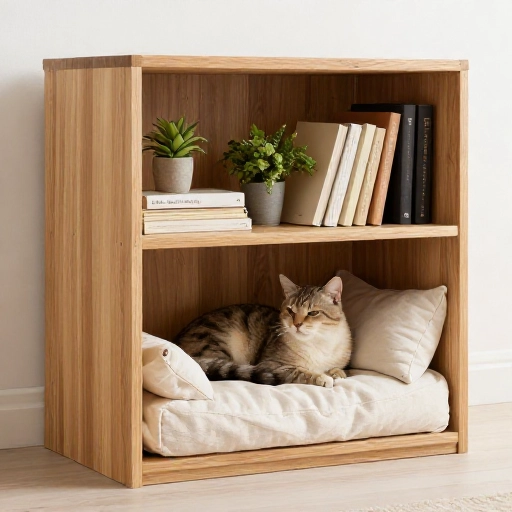
13. Bookcase Cubby Nook
Empty the bottom shelf of a bookcase and you’ve got an instant cat cave. Cut a cushion to fit, add a small blanket, and you’re done.
Cats love being off the ground with walls on three sides. It feels safe and gives them a view of the room at the same time.
Just anchor the bookcase to the wall if you haven’t already. A leaping cat can absolutely tip one over.
Final Thoughts
You don’t need to spend a fortune to give your cat a good place to sleep. You need warmth, your scent, a bit of height or enclosure, and something soft underneath.
Start with the five-minute t-shirt bed if you’re short on time. If you’ve got a full weekend, try two or three and see which one your cat claims first.
And if your cat ignores the bed you made and sleeps in the box of supplies instead? Congratulations, you’ve been chosen. Just wait a week. They always come around.
FAQ
What size should a DIY cat bed be?
Your cat should be able to curl up with a little room to spare, but not so much space that they feel exposed. When in doubt, go slightly smaller rather than bigger.
Do cats prefer cave beds or flat beds?
It depends on personality. Shy or anxious cats usually love enclosed caves and covered beds, while confident cats often pick flat, open beds with a good view of the room. Make one of each and let them decide.
How do I get my cat to use a new bed?
Put it where your cat already naps, rub it with a favorite blanket, and add something that smells like you. You can also sprinkle a little catnip on the cushion. Never force them into it.
Are homemade cat beds safe?
Yes, as long as you skip loose buttons, long dangling strings, and small parts your cat could swallow. Avoid staples and glue on surfaces your cat will actually lie on.
How do I wash a homemade cat bed?
Anything fleece, denim, or cotton can usually go in the machine on a gentle cycle with mild detergent. Rice pouches must never get wet, so remove those before washing.