14 Space-Saving DIY Pet Feeder Station Ideas That Actually Look Good
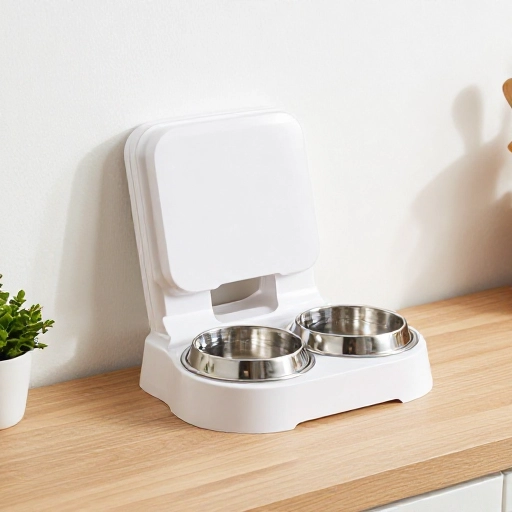
If you live in a small apartment or have a corner that feels cluttered, you know the struggle. Pet bowls take up floor space, water spills happen, and feeding time can feel messy. I wanted something neat, easy to clean, and stylish without spending a fortune. So I started building my own.
After trying a few designs, I found that simple changes make a big difference. You can use wall space, tuck bowls under cabinets, or even hide them inside furniture. These 14 ideas are practical, budget-friendly, and perfect for small homes. Let me show you how to save space and keep your pet happy.
1. Wall-Mounted Fold-Down Feeder
This is a genius solution for tiny kitchens or hallways. You mount a small wooden shelf on a hinge. When it is mealtime, you flip it down. When you are done, it folds flat against the wall.
Use a piece of pine board, two hinges, and a simple bracket. Paint it to match your wall. It takes up zero floor space and looks like a little shelf when not in use. Your pet will learn the routine fast.
Add a small lip to the front edge so bowls do not slide off. This works great for cats and small dogs.
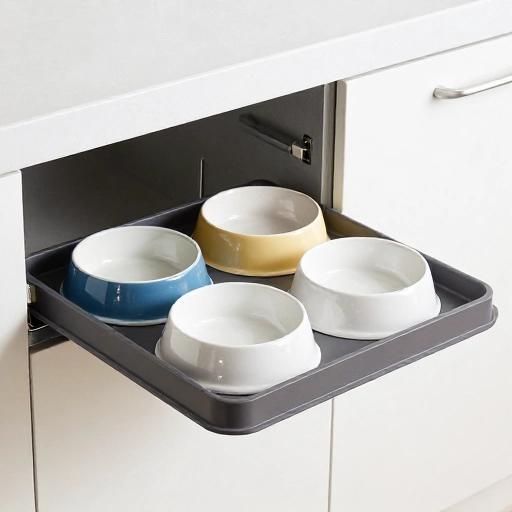
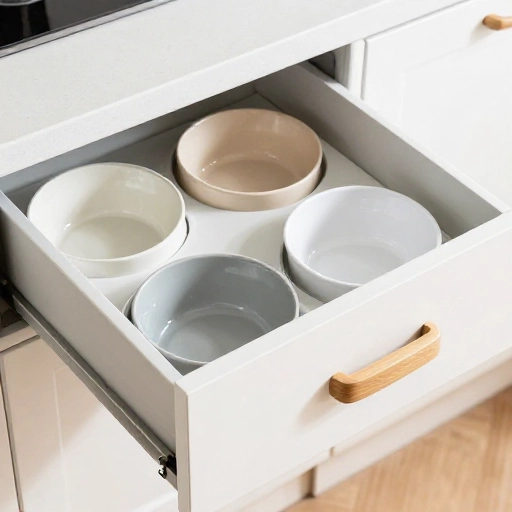
2. Under-Cabinet Pull-Out Tray
Have you ever looked under your kitchen cabinets and thought, “I could use that space”? I did. A simple pull-out tray slides out from under a cabinet or shelf. You attach it with drawer slides.
You can use a wooden cutting board or a thin piece of plywood. Cut two holes for bowls or just place them on top. When feeding is done, push it back under the cabinet. It hides everything.
This works best if you have a gap of at least 4 inches under your cabinets. It keeps bowls off the floor and makes cleanup a breeze.
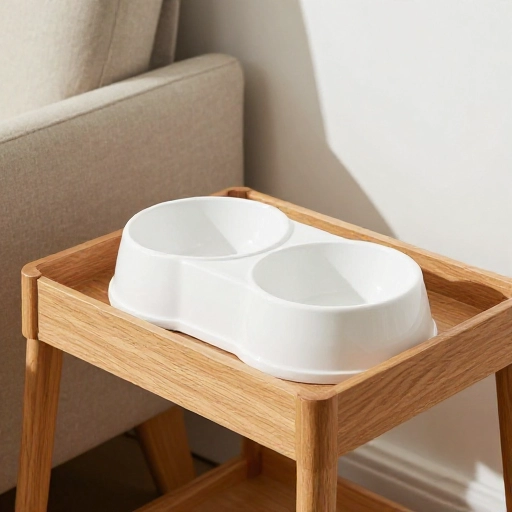
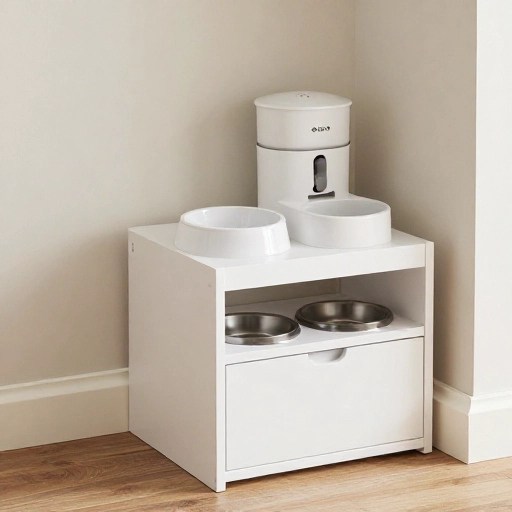
3. Raised Feeder Inside a Side Table
I love furniture that does double duty. Find a small side table with a lower shelf. Cut a hole in the shelf to drop in two bowls. Now your pet eats at a comfortable height, and the table top is free for your coffee cup or a plant.
Use a table that is about 18 inches tall for medium dogs. For cats, go shorter. You can also add a small drawer above the bowls for storing treats or kibble bags.
This hides the bowls beautifully. No one will know your pet’s dining area is right next to your sofa.
4. Hanging Wall Planter Feeder
Repurpose a wall planter with pockets. Hang it at your pet’s eating height. Place smaller bowls or silicone cups inside the pockets. This is perfect for cats who like to eat off the ground.
Choose a fabric or felt planter with strong stitching. Washable is best. You can swap out bowls easily. It takes up zero floor space and adds a fun, green look to your wall.
Make sure the planter is sturdy enough for ceramic bowls. Test it before letting your pet use it daily.
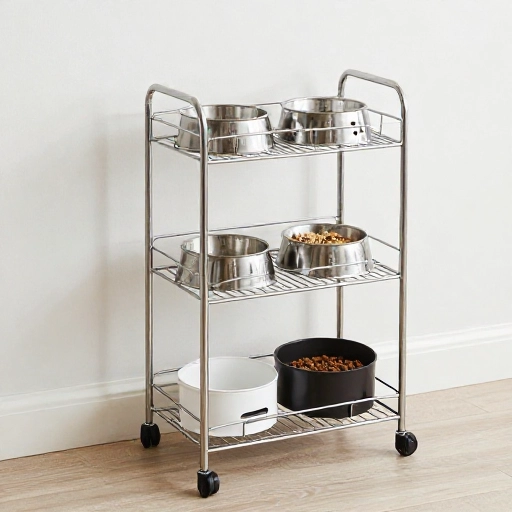
5. Slim Rolling Cart Feeder
A narrow rolling cart is a lifesaver in tight spaces. Look for one with two or three tiers. Place bowls on the top tier. Use the lower tiers for food storage, water bottles, or mats.
Roll it out during feeding time. Roll it back into a closet or beside the fridge when done. You can find slim carts at discount stores for under $20. Paint it to match your decor.
This is portable and flexible. You can move it to different rooms if your pet likes to eat in different spots.
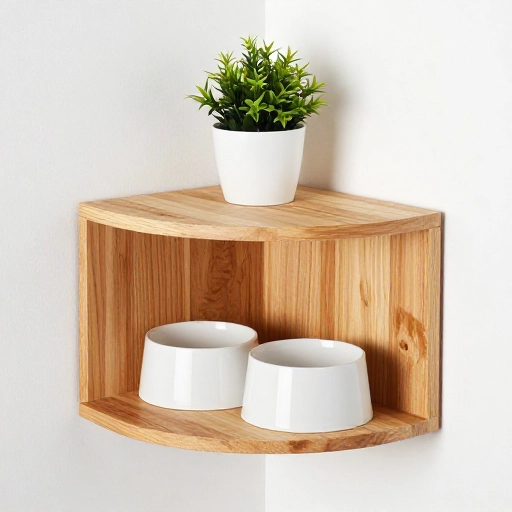
6. Corner Shelf Feeder
Corners are often wasted space. Install a small corner shelf high enough for your pet to reach comfortably. Place the bowls on the shelf. This keeps them out of walkways and away from busy traffic areas.
Use a shelf that has a raised edge to prevent spills. You can find corner shelves at any hardware store. Stain or paint it to match your room. It looks like a decorative shelf with a purpose.
Measure your pet’s height first. The shelf should be just below their shoulder level for easy eating.
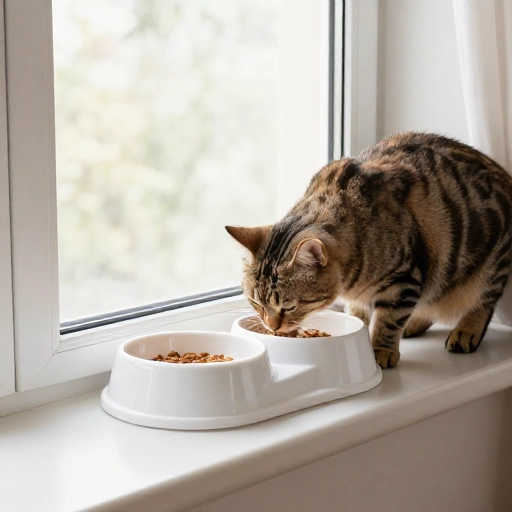
7. Built-In Window Sill Feeder
If you have a wide window sill, use it. Place shallow bowls directly on the sill. Your cat or small dog can eat while looking outside. It makes mealtime more fun for them and saves floor space for you.
Use non-slip mats under the bowls. Make sure the sill is deep enough so bowls do not fall off. You can also install a small rail or lip for safety.
This works best for cats and tiny dogs. It also gives your pet a nice view while they eat.
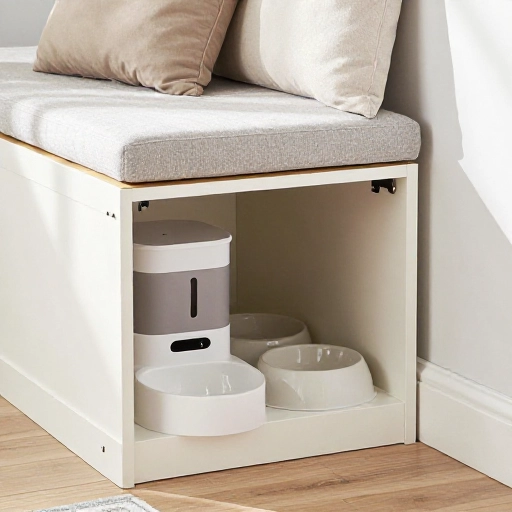
8. Hidden Feeder Inside a Bench
A storage bench is perfect for hiding pet supplies. Build or buy a simple wooden bench. Cut a hole in the top for bowls. The bench acts as a seat or a spot for cushions. Inside, store food bags, leashes, and toys.
Use a bench with a hinged lid. When you lift the lid, you can access the bowls easily. This keeps everything hidden and organized. It is great for entryways or mudrooms.
Add a mat inside to catch crumbs. Clean the bench top regularly to keep it looking nice.
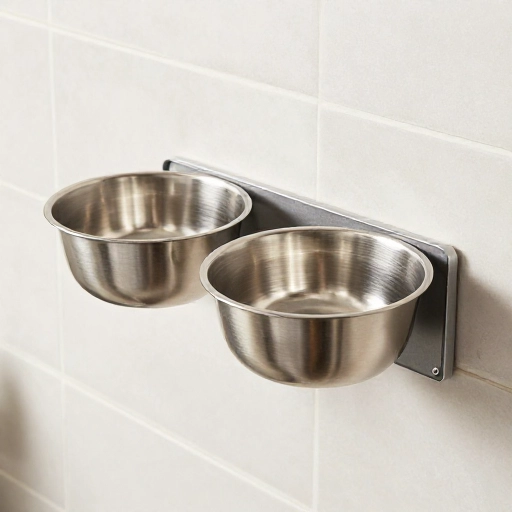
9. Magnetic Wall Mount Bowls
This is a modern and clean look. Use metal bowls and attach strong magnets to a metal strip mounted on the wall. The bowls stick to the strip. They are easy to remove for washing and stay put during eating.
You can buy magnetic bowl sets or DIY with adhesive magnets. Mount a metal sheet or a piece of galvanized steel on the wall. The bowls snap right on. No floor mess.
This works great for small dogs and cats. It also adds an industrial-chic vibe to your home.
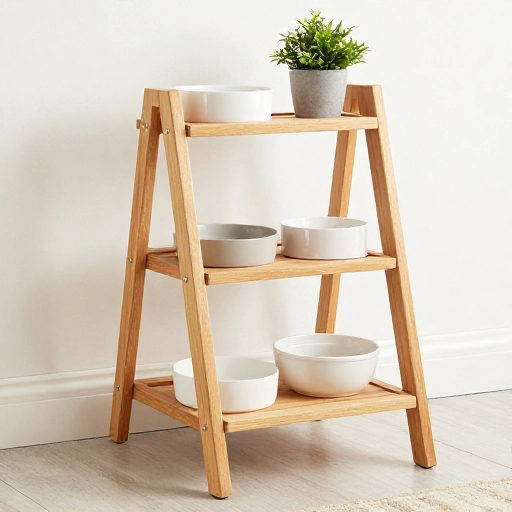
10. Tiered Ladder Shelf Feeder
A small wooden ladder shelf can hold multiple bowls at different heights. This is perfect if you have a multi-pet household. Each pet gets their own level. No more fighting over bowls.
Place the shelf against a wall. Use each rung or shelf for one bowl. You can also use the top shelf for storage. This creates a vertical feeding station that takes up very little floor space.
Paint the ladder to match your room. It looks like a decorative piece of furniture.
11. Under-Stairs Nook Feeder
If you have stairs, the space underneath is often unused. Build a small nook with a shelf or a low cabinet. Place bowls inside. You can even add a curtain or a small door to hide everything.
This uses awkward space that usually collects dust. Measure the height under your stairs. Make sure your pet can stand comfortably while eating. Add a mat for easy cleaning.
It becomes a cozy little dining spot for your pet. They will feel like they have their own secret room.
12. Drawer Feeder Conversion
Do you have an old dresser or nightstand? Remove a drawer and place it on the floor. Place bowls inside the drawer. The drawer walls keep spills contained. You can also use the top of the dresser for decor.
Sand and paint the drawer to match your room. Add a non-slip mat at the bottom. This is a super cheap and easy project. It also looks vintage and charming.
You can stack two drawers if you have a tall dog. Just make sure they are stable.
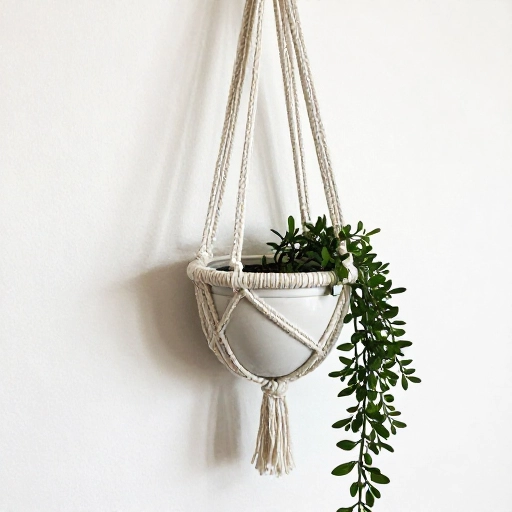
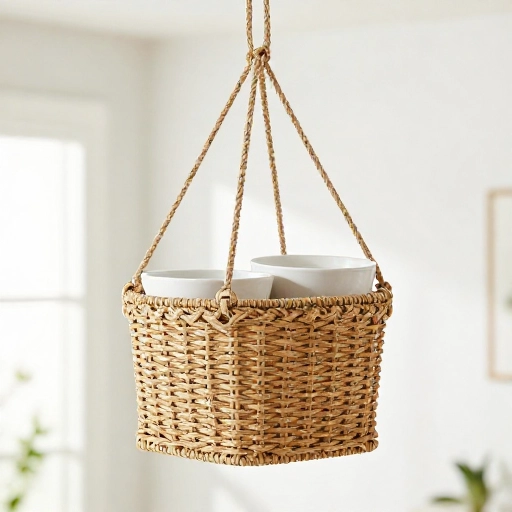
13. Hanging Basket Feeder
Use a sturdy hanging basket from the ceiling or a wall hook. Place a bowl inside the basket. Hang it at your pet’s eating level. This keeps bowls off the floor and adds a boho touch to your home.
Use a basket with a wide base so it does not tip. Macrame hangers work well. Make sure the bowl fits snugly. You can also hang a second basket for water.
This is great for cats who love to perch. It also frees up floor space completely.
14. Foldable Tabletop Feeder
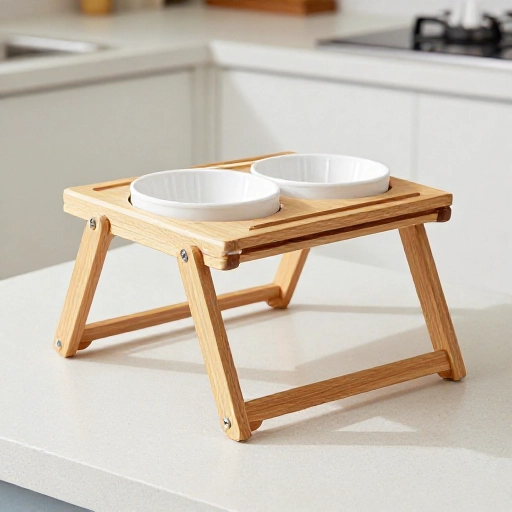
If you eat at a small table, consider a foldable feeder that clips onto the table edge. You can use a small wooden box or a plastic tray with a clip. Attach it to the side of your table. Bowls sit on top. When not in use, fold it down or remove it.
This is perfect for breakfast or dinner time with your pet nearby. It keeps bowls off the floor and within reach. Make sure the clip is strong so it does not fall.
Use a waterproof tray to catch drips. It is a simple solution that works in a pinch.
Conclusion
You do not need a big house to give your pet a nice feeding area. These 14 ideas prove that small spaces can be functional and stylish. Pick one that fits your home and your pet’s needs. Most projects take just a few hours and cost very little. Your pet will love having their own spot, and you will love having a clutter-free home. Try one this weekend and see the difference.
Frequently Asked Questions
1. What is the best height for a raised pet feeder?
For most dogs, the bowl should be at chest height. Measure from the floor to your dog’s chest while they stand. For cats, about 4 to 6 inches off the ground is good. Raised feeders help with digestion and reduce neck strain.
2. Can I use regular bowls for a raised feeder?
Yes, you can. But stainless steel or ceramic bowls with non-slip bottoms work best. They are easier to clean and stay in place. Avoid plastic bowls if your pet has allergies.
3. How do I clean a DIY feeder station?
Wipe down surfaces with a damp cloth daily. Remove bowls and wash them in warm soapy water. For wooden stations, use a pet-safe sealant to protect against spills. A quick weekly wipe keeps everything fresh.
4. Are wall-mounted feeders safe for cats?
Yes, as long as they are securely mounted. Use heavy-duty anchors and screws. Make sure the bowls are stable and do not wobble. Cats adapt quickly to eating at a height.
5. What materials should I avoid for DIY pet feeders?
Avoid untreated wood that can soak up spills and smell. Also avoid sharp edges or small parts that could break off. Stick with smooth, non-toxic materials like pine, plywood, stainless steel, or food-safe plastic.