7 Ways Aromatherapy Helps Your German Shepherd (And How to Start Safely)
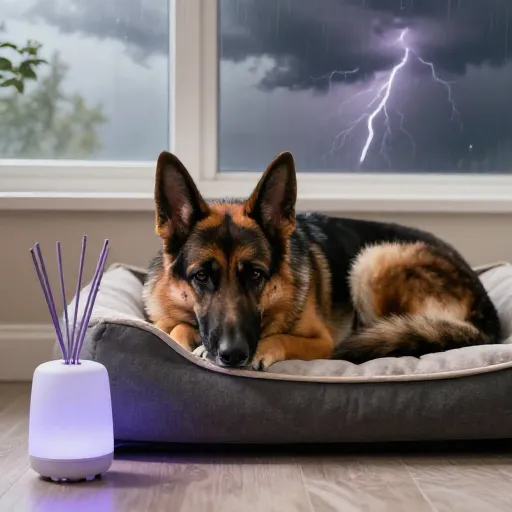
I remember the first time I saw my German Shepherd, Max, pacing nervously during a thunderstorm. His tail was tucked, his ears flat, and nothing I did seemed to comfort him. That’s when a friend suggested trying lavender essential oil—just a tiny drop on his bandana. The change was subtle but real. Within minutes, he lay down, his breathing slowed, and the storm became just background noise.
Aromatherapy isn’t just for humans. Our loyal, high-energy German Shepherds can benefit from the gentle power of plant scents, too. Whether your pup struggles with anxiety, joint stiffness, or just needs help winding down after a long day, the right essential oils can make a difference. But—and this is important—dogs are not small humans. Their noses are thousands of times more sensitive, so we have to be careful, informed, and gentle.
In this post, I’ll share seven practical ways aromatherapy can support your German Shepherd’s well-being. I’ll also include tips on how to use oils safely, so you can start with confidence.
1. Calm Storm Anxiety and Firework Fears
German Shepherds are known for their bravery, but loud noises can shake even the steadiest pup. The sharp cracks of thunder or sudden booms of fireworks trigger a deep fear response. Instead of reaching for a sedative, try a calming scent like lavender or chamomile.
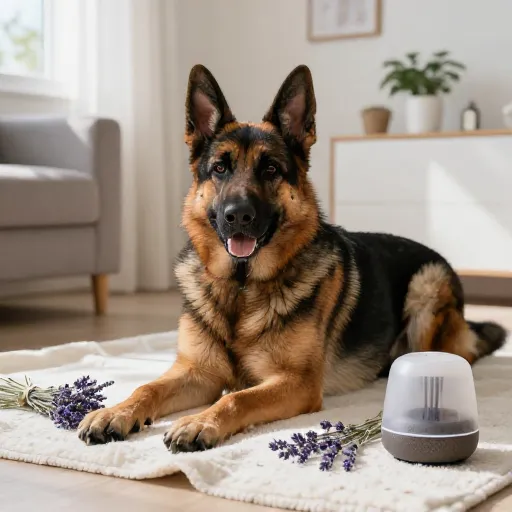
I diffuse lavender in the room where Max retreats during storms. Just five minutes before the noise starts, I set up a small, cool-mist diffuser with three drops of pure lavender oil. The scent works on his limbic system—the emotional center of the brain—helping him feel safe without making him drowsy.
If you don’t have a diffuser, add one drop of lavender to a cotton ball and place it inside a sniffle mat or near his bed. Never apply directly to his fur or skin without dilution.
2. Ease Joint Discomfort and Stiffness
As German Shepherds age, hip and elbow issues become common. Aromatherapy won’t replace a vet’s care, but it can support comfort. Frankincense and ginger are two gentle choices for soothing sore muscles and joints.
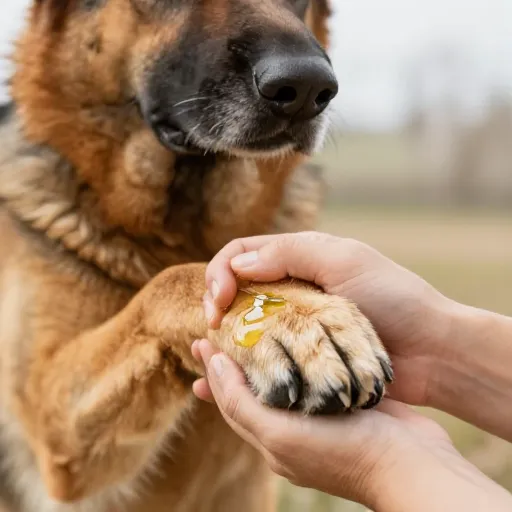
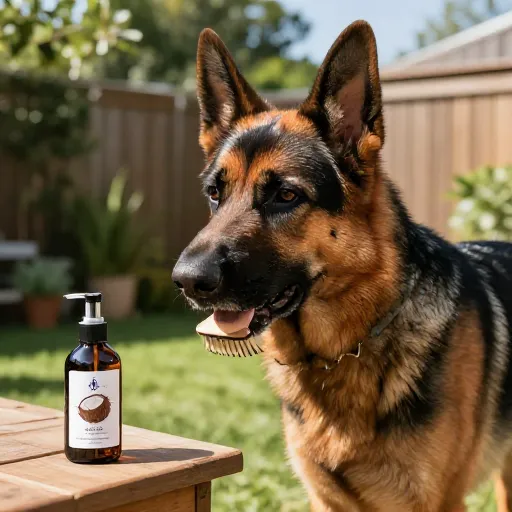
I mix one drop of frankincense with a tablespoon of coconut oil and massage it into Max’s hips after his evening walk. He leans into my hands, which tells me it helps. Ginger can be warming and comforting, but always dilute heavily—dogs can be sensitive to spicy oils.
Remember to test a small patch first. Watch for any licking or irritation. If your dog seems uncomfortable with the smell, stop and try a different oil later.
3. Support Healthy Skin and Coat
German Shepherds have thick double coats that can trap dirt and moisture, sometimes leading to hot spots or dry patches. Certain oils can help maintain a healthy skin barrier without harsh chemicals.
- Tea tree oil? Careful—it’s toxic to dogs if used undiluted or in high amounts. Skip it.
- Instead, try cedarwood or chamomile. Both are mild, soothing, and safe when diluted.
I add two drops of cedarwood to a spray bottle filled with water and spritz Max’s bedding lightly. It repels fleas gently and keeps his skin calm. For dry spots, a drop of chamomile mixed with aloe vera gel can be dabbed on (avoid areas he can lick easily).
Always avoid the face and genitals, and never use oils near eyes or open wounds.
4. Help Him Settle After High-Energy Play
German Shepherds are working dogs at heart. They need mental and physical stimulation, but sometimes they don’t know when to stop. After a long game of fetch or a hike, a calming scent can help shift their brain from “go” mode to “rest” mode.
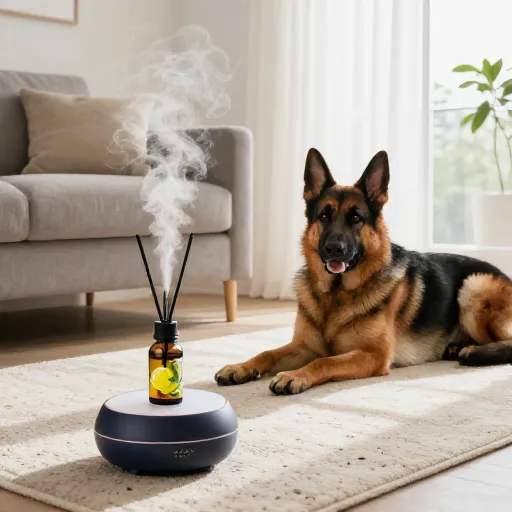
I use a blend of lavender and sweet orange in the diffuser while Max chews a frozen Kong. The citrus is uplifting but not stimulating, and lavender brings the relaxation. Within ten minutes, his tail stops wagging and he curls up.
Don’t use citrus oils around cats if you have them, but for dogs, sweet orange is generally safe in small amounts. Start with one drop and see how your Shepherd responds.
5. Freshen the Air Without Harsh Chemicals
Let’s be honest—German Shepherds can have a distinct “dog smell.” Instead of covering it up with synthetic sprays that irritate their noses, use aromatherapy to naturally freshen the space.
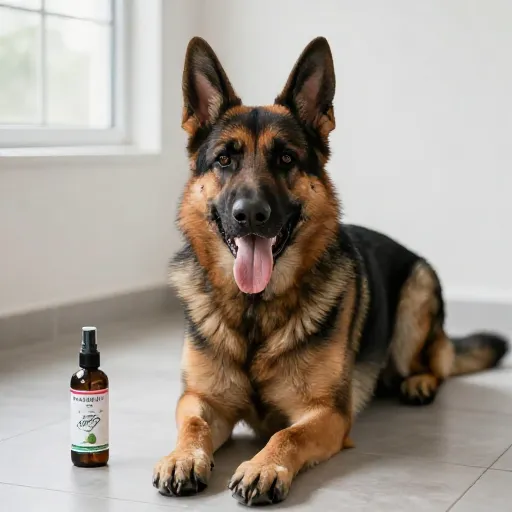
I keep a small diffuser in the mudroom with a blend of lavender and lemon (just two drops total). It neutralizes odors without being overpowering. Another option: simmer a pot of water with a slice of lemon and a sprig of rosemary on the stove. The steam carries the scent gently through the house.
Never use essential oils in a way that forces your dog to inhale them directly. Always ensure there’s a way for them to leave the room if they want to.
6. Reduce Separation Stress While You’re Away
German Shepherds bond deeply with their humans. Being left alone can trigger anxiety, leading to barking, chewing, or pacing. Aromatherapy can help create a sense of safety in your absence.
Before I leave, I put one drop of lavender on a bandana I tie loosely around Max’s collar. The scent stays with him for hours. Some people use a calming collar infused with essential oils, but I prefer making my own so I control the strength.
You can also place a cotton ball with a drop of vetiver or chamomile in a puzzle toy. The act of sniffing and working for the scent is calming in itself.
7. Build a Relaxing Bedtime Routine
Just like humans, dogs sleep better with a consistent wind-down ritual. Aromatherapy can become a cue that says, “It’s time to rest.”
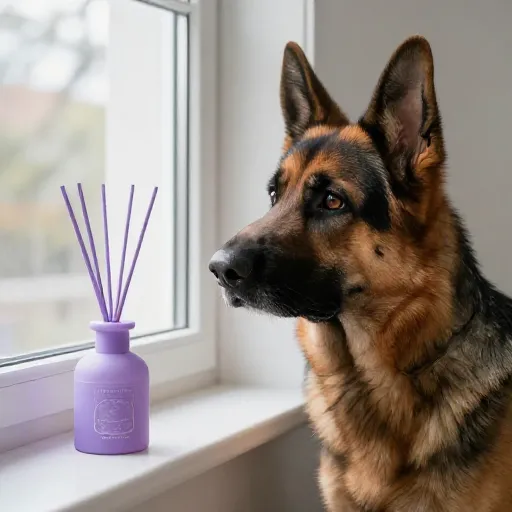
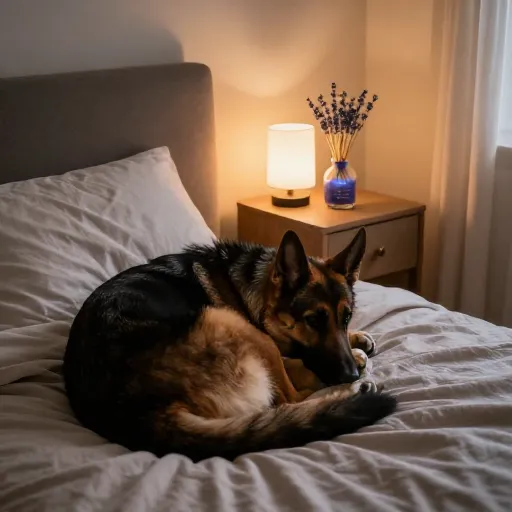
Every night, I diffuse a single drop of lavender in the bedroom for ten minutes while I brush Max. He associates the scent with calm evenings and sleeps more deeply. I also place a small piece of flannel with a drop of chamomile near his bed (out of reach of licking).
If your Shepherd is restless at night, try this routine for a week. You may notice fewer midnight wake-ups and a more relaxed morning.
Conclusion: Go Slow, Stay Safe, Listen to Your Dog
Aromatherapy has become a gentle, natural tool in my German Shepherd care toolkit. It’s not a cure-all, but it’s a way to support their emotional and physical health without harsh medications or synthetic fragrances. The key is always to start small, use pure oils, and watch your dog’s reactions. Some Shepherds love lavender; others prefer chamomile. Let your dog guide you.
If you’re new to essential oils, buy from reputable brands, avoid “fragrance oils” (they’re synthetic), and always dilute. When in doubt, ask your holistic vet. Your German Shepherd trusts you—and with a little patience, aromatherapy can become a beautiful part of your bond.
Frequently Asked Questions
Is lavender safe for German Shepherds?
Yes, lavender is one of the safest essential oils for dogs when used properly. Always dilute it (one drop per tablespoon of carrier oil) and never let your dog ingest it. Diffuse in a well-ventilated room or apply to bedding, not directly on skin.
Can I use peppermint oil on my German Shepherd?
Peppermint is generally safe in very small amounts, but it’s strong. Some dogs dislike the smell. I avoid it because it can be too stimulating for anxious dogs. Stick with lavender or chamomile for calming, and peppermint only for short-term cooling (like after a hot walk) and only with dilution.
How do I know if an oil is bothering my dog?
Watch for signs like sneezing, pawing at the face, excessive licking, or trying to leave the room. If your dog avoids the area where you’ve placed the oil, stop using it. Every dog is different—trust their reaction.
Can I put essential oils directly on my German Shepherd’s fur?
Not without dilution. Essential oils are very concentrated and can cause skin irritation or be absorbed too quickly. Always mix with a carrier oil like coconut, olive, or jojoba oil. One drop of essential oil per tablespoon of carrier is a good starting ratio.
Should I use a diffuser or a spray for aromatherapy?
Both work, but diffusers are gentler because they disperse the oil as a fine mist without strong droplets. Sprays can be useful for bedding or bandanas. Just make sure your dog can leave the room if they want to—never trap them in a space with a strong scent.