How to Train Your New Dog to Lay Peacefully on a Mat
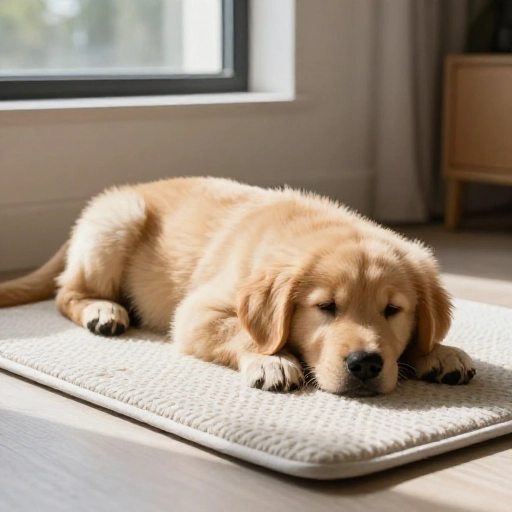
Bringing a new dog home is such a joy, but it also comes with its own little challenges. One of the most useful skills you can teach your pup is how to settle calmly on a mat. It’s not just about having a quiet dog; it’s about giving them a safe, happy space to relax while you cook, work, or just sip your coffee.
I remember when I first tried this with my rescue dog, Pip. He was a bundle of energy, always under my feet. The mat trick changed everything. It gave him a job (to relax), and it gave me a moment of peace. The best part? It’s easier than you think. You just need patience, some tasty treats, and a cozy mat.
Let’s break it down into simple, doable steps. No fancy terms, just real training that works for both of you.
1. Choose the Right Mat
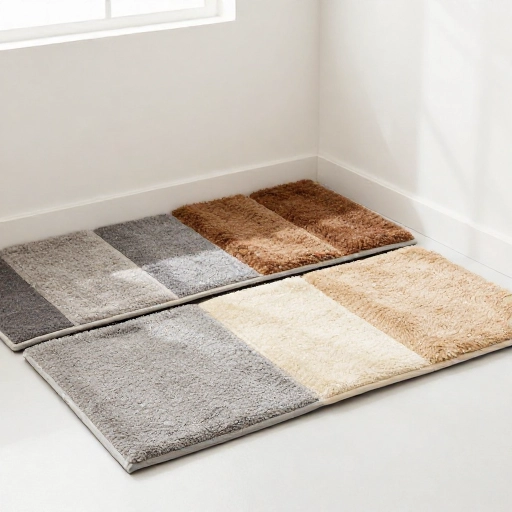
Your dog’s mat is their little sanctuary. It doesn’t have to be expensive. A cheap bath mat, a folded blanket, or even an old towel works perfectly. The key is that it’s something you can easily move around the house.
Make sure it’s not too big or too small. Your dog should be able to lie down comfortably, but it should also be a defined space. If your dog loves to chew, pick a mat that’s durable. Avoid anything too fluffy that might become a toy.
Keep this mat special. Don’t use it for anything else during training. When your dog sees it, they will start to understand it’s their calm-down spot.
2. Build a Positive First Impression
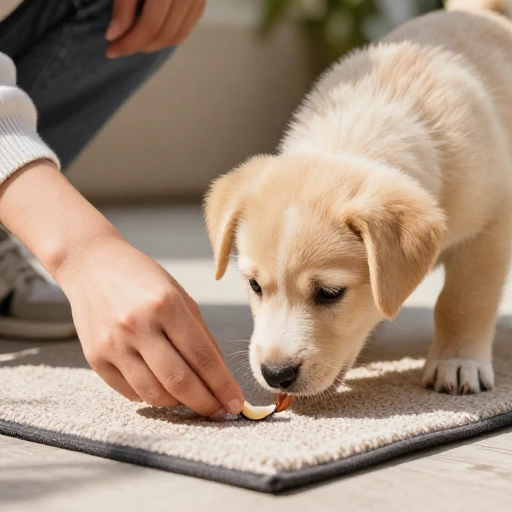
Before you ask for anything, let your dog explore the mat. Toss a few tiny, high-value treats onto it. Let them sniff and wander. You want them to think, “Hey, this mat is a good place!”
Do this a few times a day for short periods. Don’t say any commands yet. Just let them discover that good things happen near the mat. If they step on it, even accidentally, toss a treat right onto the mat. This builds a happy connection.
This step is all about creating a positive feeling. When your dog loves the mat, the rest of the training becomes so much smoother.
3. Use a Simple Cue Word
Once your dog is excited about the mat, pick your cue word. I use “go to your spot,” but “place,” “mat,” or “settle” all work. Say it in a happy, bright voice right as your dog steps onto the mat.
Don’t repeat yourself. Say the word once, then pause. If your dog looks at you, great! Toss a treat. The goal is to link the word with the action, not with you repeating it over and over. Keep it light and fun, like a little game.
Over a few days, your dog will start to anticipate the word. They might even look at the mat when they hear it. That’s a huge win!
4. Lure Them Into Position
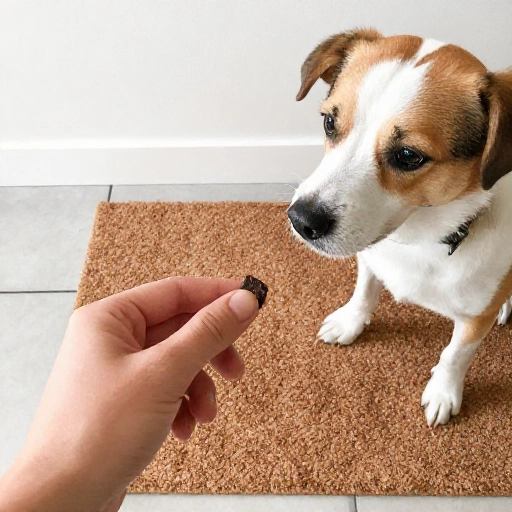
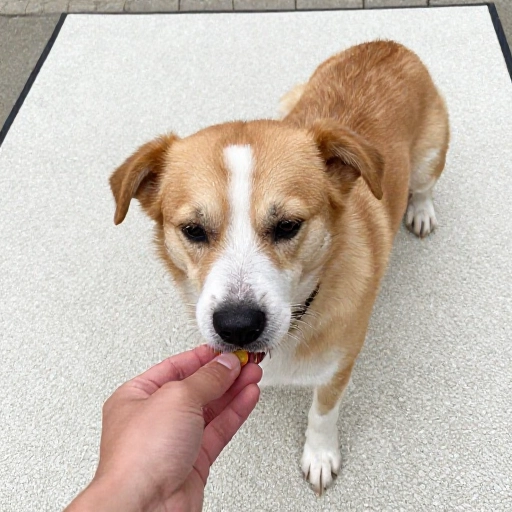
Hold a treat close to your dog’s nose. Slowly move your hand toward the mat. As they follow the treat, lead them right onto it. The moment all four paws are on the mat, say “yes” or click your tongue, and give them the treat.
Do this slowly. If your dog jumps off, just start again. No frustration, just a gentle redo. You are teaching them that being on the mat is what earns the reward. The treat is not for coming to you; it’s for touching the mat.
After a few successful lures, let them figure it out. Pause for a second before you give the treat. This tiny wait helps them understand they are doing the right thing.
5. Reward for the “Down” Position
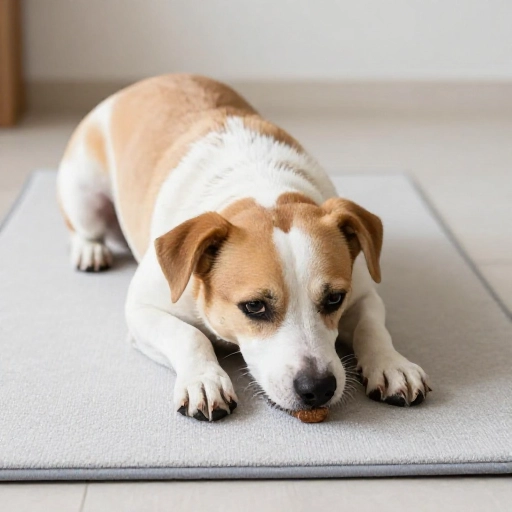
Once your dog is standing on the mat, start rewarding them for lying down. You can lure them down by moving a treat from their nose down to the floor between their paws. As they lie down, say your cue word (“settle” or “down”) and reward.
Don’t rush this. Some dogs prefer to sit first, and that’s okay. The final goal is a relaxed lie-down, but you can reward any calm behavior on the mat in the beginning. Keep your voice soft and slow.
If your dog pops right back up, that’s normal. Just wait for them to lie down again. Patience here builds a strong foundation. A dog that learns to stay down is a dog that learns to relax.
6. Increase the Time Gradually
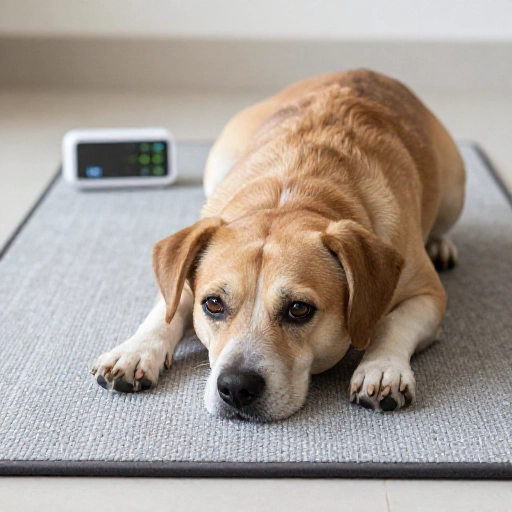
Now that your dog lies down on the mat, it’s time to stretch that duration. Start with just a second or two. Give a treat while they are still lying down. Then release them with a happy “free” or “okay.”
Slowly build up the time. Three seconds, then five, then ten. If your dog gets up early, you waited too long. Go back to a shorter time and try again. You want them to succeed every time. This builds confidence.
Use a variety of treats to keep it interesting. Sometimes a tiny piece of cheese, sometimes a bit of kibble. The surprise makes them want to stay longer, just in case the next treat is the best one.
7. Add Small Distractions
Once your dog is solid on the mat in a quiet room, it’s time to level up. Start adding tiny distractions. I like to drop a pen on the floor or make a soft noise. If your dog stays on the mat, reward them big time.
If they get up, just reset. No scolding. Think of it as a test, not a failure. You want your dog to learn that even when interesting things happen, the mat is still the best place to be.
Work up to bigger distractions, like having someone walk across the room or opening the fridge. Keep the sessions short and always end on a successful note. This is where real calmness starts to build.
8. Practice in Different Rooms
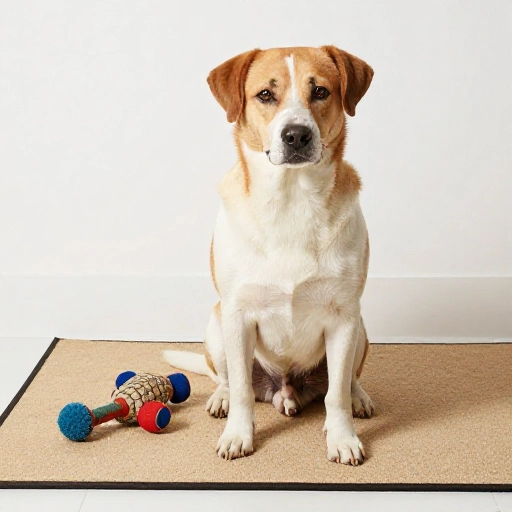
A mat-trained dog in the living room might not understand the mat in the kitchen. So take your mat with you! Move it to a new spot and start from scratch for a few minutes. Your dog might look confused at first, but they will catch on fast.
Repeat the same steps: lure, reward, increase time. Because the mat itself is the cue, your dog will start to generalize. Soon, any mat in any room will mean “relax here.” This is super practical for visiting friends or going to the vet.
Don’t expect perfection right away. Each new location is a fresh lesson. Be patient and praise generously. Your dog is learning to trust you in new places.
9. Make It Part of Your Daily Routine
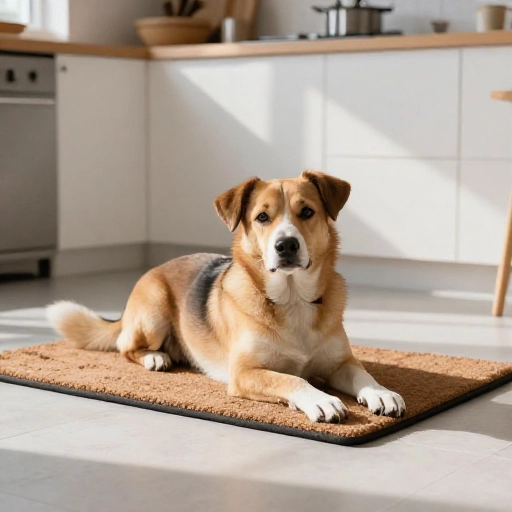
Training doesn’t have to be a separate activity. Use the mat during your normal day. When you are eating dinner, ask your dog to go to their mat. While you fold laundry, send them to their spot. This turns practice into a habit.
I love using the mat when I am on the phone. My dog knows that if the mat comes out, it’s quiet time. It becomes a predictable, comforting part of their day. Dogs thrive on routine, and this mat time becomes a cherished break for both of you.
Keep treats handy in a little jar near the mat. That way, you can reward spontaneously. Over time, you’ll need fewer treats, but the habit will stick.
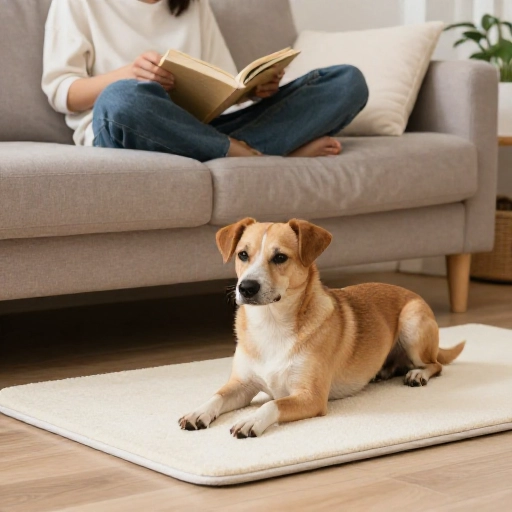
10. Celebrate the Calm Moments
The final step is to reward actual relaxation. Watch for the signs: a soft eye, a relaxed tail, a deep sigh. When you see your dog truly settling, quietly drop a treat near them. Don’t say anything. Just let the calm be its own reward.
This is the magic moment. You are teaching your dog that being still and peaceful is valuable. Not just lying down, but truly relaxing. Over time, your dog will choose the mat on their own, looking for that quiet reward.
Be consistent, but also be kind. Some days your dog will be too excited, and that’s okay. Training is a journey, not a race. Every peaceful moment is a little victory worth celebrating.

Conclusion
Training your dog to lie peacefully on a mat is one of the most rewarding skills you can teach. It’s simple, kind, and so practical. It gives your dog a job, a safe place, and a way to relax in a busy world. And for you? It means a calmer home and a deeper bond with your furry friend.
Remember, the key is patience and positivity. Start small, celebrate every step, and make it fun. Your dog wants to please you. With a little time and a lot of love, you’ll both enjoy those quiet moments together on the mat.
[[IMG:IMG12]]
FAQ
Q: What if my dog refuses to lie down on the mat?
A: That’s totally normal. Go back to rewarding them for just standing or sitting on the mat. Some dogs need more time to feel comfortable. Use a softer mat or a different texture. And always use super yummy treats to build motivation.
Q: How long does it take to train this?
A: It depends on your dog. Some pick it up in a few days, others take a few weeks. The key is short, frequent sessions. Five minutes twice a day works better than a long, boring session. Progress, not perfection.
Q: Can I use this for a puppy?
A: Absolutely! Puppies can learn this too. Just keep sessions very short, like one or two minutes. Puppies have tiny attention spans. Focus on building a positive association, not on perfect behavior. They will grow into it.
Q: What if my dog gets off the mat after a few seconds?
A: That just means you moved too fast. Decrease the time you ask them to stay. Reward them while they are still on the mat, even if it’s just for a second. Build up slowly. You’ll get there.
Q: Do I always need to use treats?
A: Not forever. In the beginning, treats are essential. Once your dog understands the game, you can phase them out. Use praise, a pat, or a favorite toy sometimes. But always keep treats handy for the tough days. They are a great tool, not a crutch.