12 Creative Dog Food Storage Ideas That Actually Work
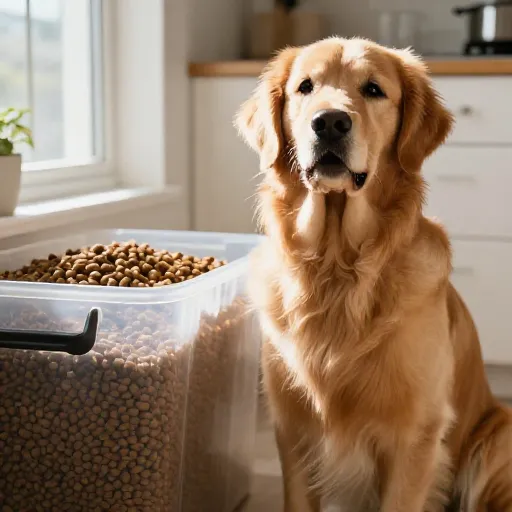
Let’s be real—dog food bags are not cute. They’re bulky, they rip, and they’re basically an invitation for ants and moths to move in. I’ve been through my fair share of sad, half-empty bags spilling kibble all over the laundry room floor. It’s messy, wasteful, and honestly, it stresses me out.
But here’s the good news: you don’t need a fancy pantry or a massive kitchen to store your pup’s food the right way. Over the years, I’ve tried a ton of different storage tricks—some were genius, and some were total fails. Today, I’m sharing the 12 dog food storage ideas that actually worked for me. They keep food fresh, pests out, and your space looking tidy. Ready to ditch the ugly bag? Let’s dive in.
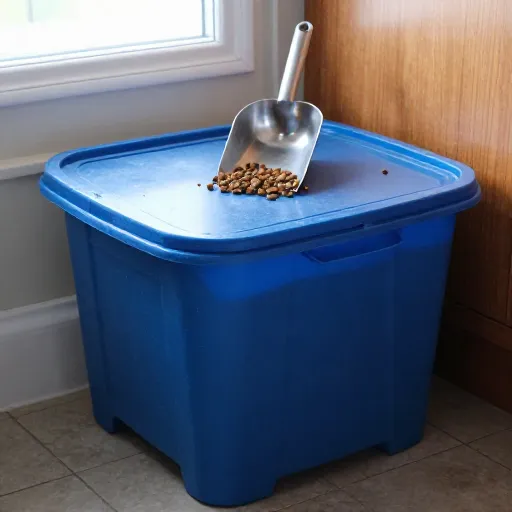
1. Repurpose a Large Plastic Storage Tote
This is probably the most classic trick, and for good reason. Grab a sturdy, BPA-free plastic tote with a snap-tight lid—the kind you’d use for holiday decorations. Dump the whole bag of kibble right in. The lid keeps moisture and bugs out, and the handles make it easy to slide out from under a counter. I like to tape the feeding instructions from the bag to the inside of the lid so I never forget how much to serve.
Pro tip: Get a clear tote so you can see how much food is left without lifting the heavy lid. You’ll thank me later.
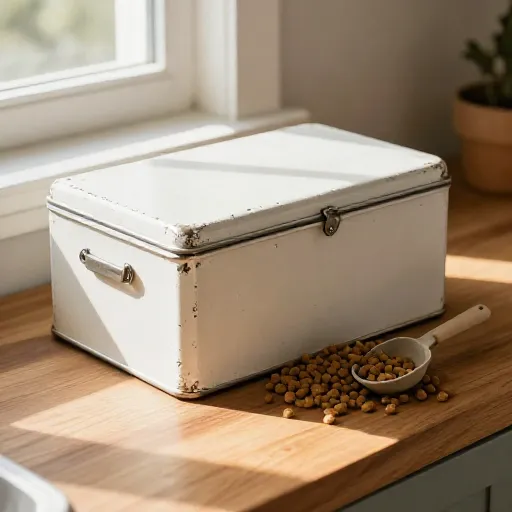
2. Use a Vintage Metal Bread Box
If you’re short on counter space and want something that looks good, a retro metal bread box is a total win. They’re usually big enough to hold a 15-pound bag of kibble, and the tight seal keeps food fresh. Plus, they come in fun colors like mint green or cherry red. It’s basically a cute piece of decor that hides the dog food. I keep mine next to the coffee maker—no one even knows it’s dog food.
Just make sure the box is completely dry inside before you pour in the kibble. Moisture is the enemy.
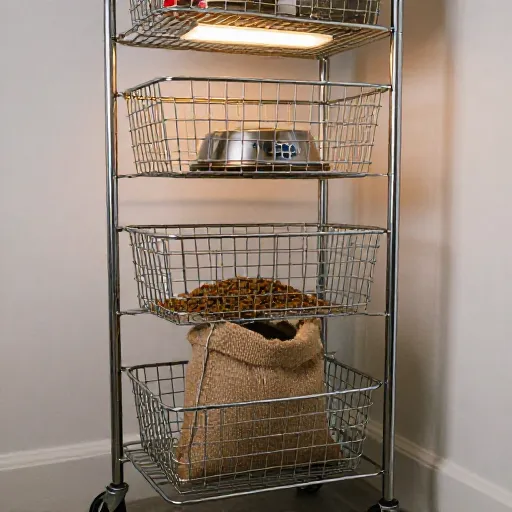
3. Go for a Rolling Cabinet or Cart
I love this one because it combines storage with convenience. A small rolling cabinet or a metal utility cart can hold a large container of dog food on the bottom shelf, bowls on the middle shelf, and treats up top. Roll it out for feeding time, then tuck it away in a corner or closet. It’s especially great if you have a small kitchen or a multi-pet household.
Look for one with locking wheels so it doesn’t roll away when your dog gets excited. Trust me.
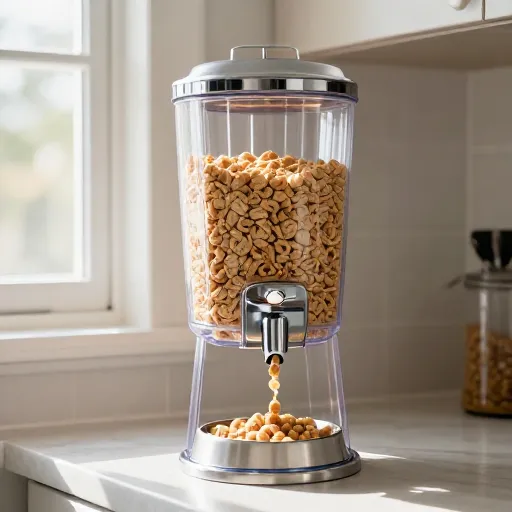
4. Try a Cereal Dispenser for Small Portions
Okay, this one is a little quirky but super practical. You know those big cereal dispensers from diners? They work perfectly for dog food. Fill the clear tube with kibble, and just pull the lever to dispense a portion. It’s a fun way to control portions and keep food airtight. I use this for my small dog’s daily kibble and keep the big bag stored elsewhere.
Just make sure the opening is big enough for the kibble shape. Some larger breeds’ food might get stuck.
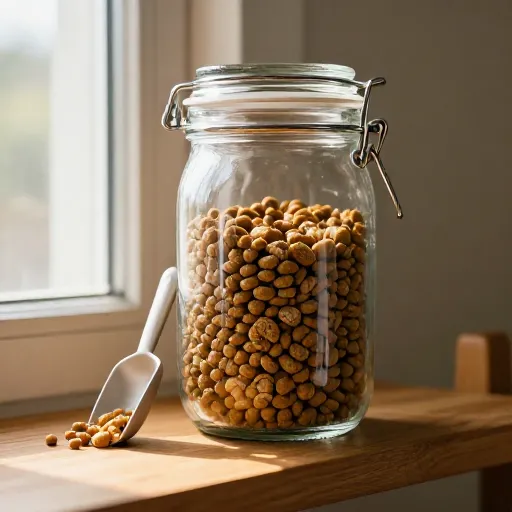
5. Store Kibble in a Large Mason Jar
For smaller dogs or for storing just a week’s worth of food, big glass mason jars are a lifesaver. They’re airtight, you can see exactly how much is left, and they look pretty on an open shelf. I keep one on my counter next to a little scoop. It makes feeding feel like a nice little ritual instead of a chore.
Tip: Keep the main bag in a cool, dark place and only refill the jar as needed. This keeps the bulk of your food fresher longer.
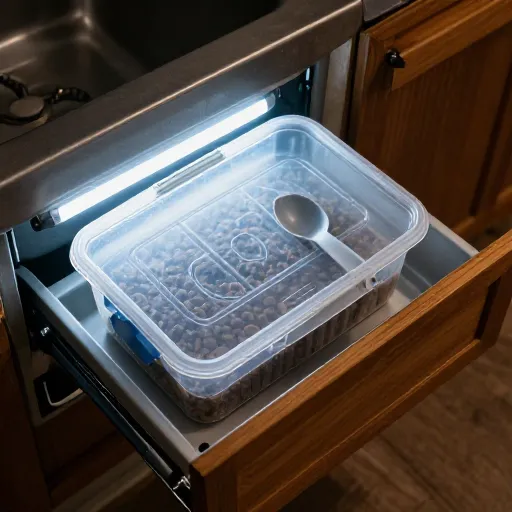
6. Use a Under-Sink Pull-Out Drawer
If you have a little DIY skill, adding a pull-out drawer under a cabinet or sink is a game changer. You can install a heavy-duty slide drawer that holds a plastic bin or a metal container. It keeps the food hidden, off the floor, and easy to access. I did this in my laundry room and it freed up so much floor space.
Measure twice, buy once. Make sure the drawer can handle the weight of a full bag of kibble.
7. Repurpose an Old Trash Can (Clean One!)
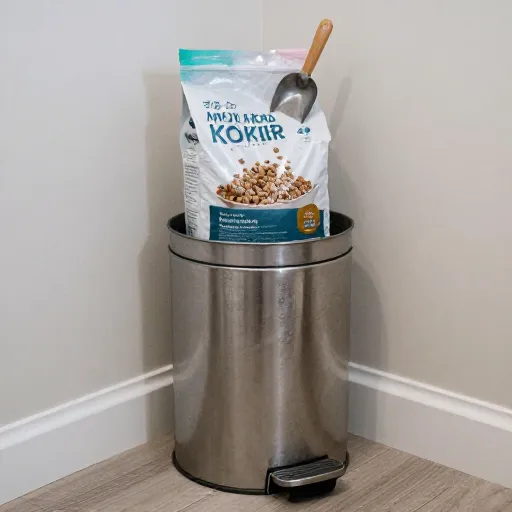
Before you judge me, hear me out. A brand-new, clean plastic trash can with a tight lid is basically a giant food storage container. They come in all sizes, they’re cheap, and they’re easy to move. I use a small, stepping trash can for my dog’s food. The pedal makes it easy to open with my foot when my hands are full of leashes and poo bags.
Just make sure you buy one that’s never been used for garbage. Wash it thoroughly with soap and water first.
8. Keep It in a Cool, Dark Pantry Basket
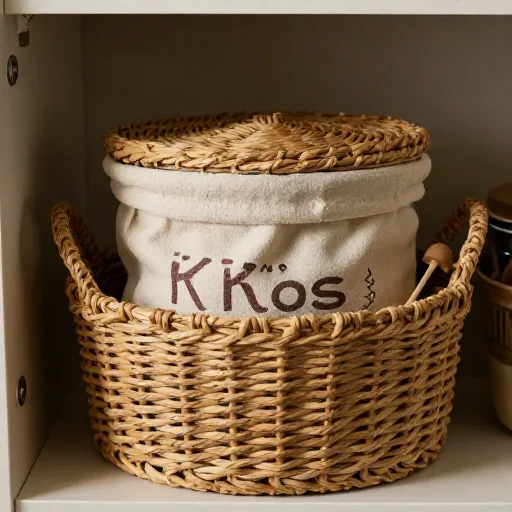
Not all storage needs to be a container. Sometimes the simplest solution is just a large, sturdy basket that fits the whole bag. I use a woven seagrass basket from a thrift store. I put the entire unopened bag inside, fold the top down neatly, and set it on a low shelf. It’s easy to grab, looks nice, and keeps the bag from getting torn.
This works best if you go through a bag quickly—within a month or so—since the bag itself isn’t fully airtight.
9. Try a Vacuum-Sealed Storage System
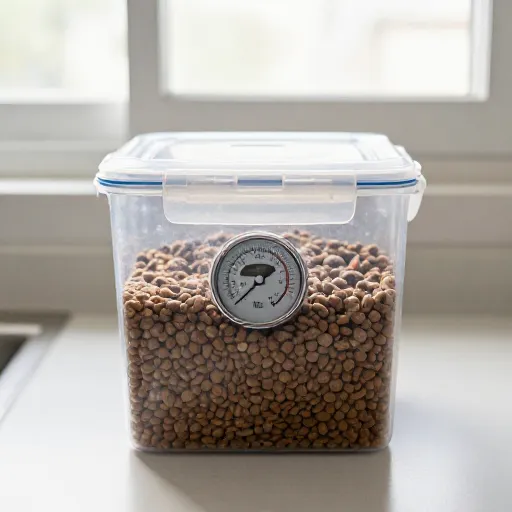
If you buy in bulk or make your own dog food, this one is for you. Vacuum-seal bags or containers remove all the air, which keeps food fresh for months. I portion out a week’s worth of kibble into vacuum bags and store them in the freezer. It’s a bit of work upfront, but it saves me from worrying about staleness or freezer burn.
You can also get special vacuum containers with a pump. They’re pricier, but they last forever.
10. Use a Hanging Wall Organizer
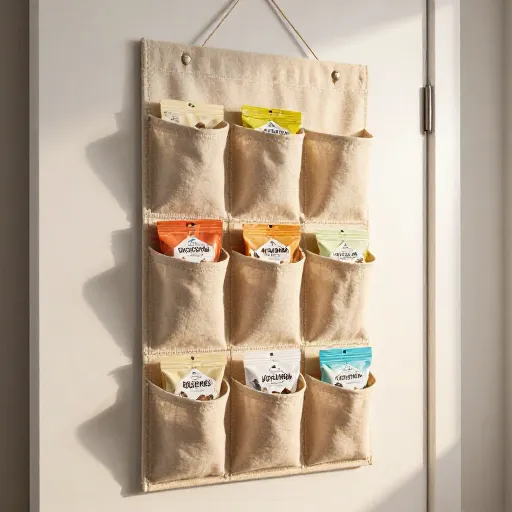
Short on floor space? Go vertical. A heavy-duty hanging wall organizer with clear pockets can hold small bags of treats, individual servings, or even a small bag of kibble. I have one mounted in my mudroom. It keeps everything off the ground and super easy to grab on the way out the door. Plus, it’s great for organizing leashes, poop bags, and wipes.
Just make sure you screw it into a stud. Kibble is heavy and you don’t want it crashing down.
11. Repurpose a Wooden Wine Crate
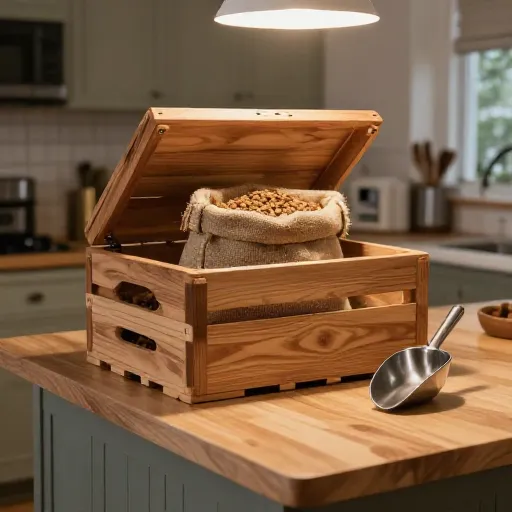
For a rustic, farmhouse-style look, a wooden wine crate is a perfect home for a bag of dog food. They’re usually the perfect size for a 15- to 20-pound bag. Line it with a cloth or a plastic liner to keep the wood clean, and set it on the floor or a low shelf. It adds a cozy, warm vibe to any room.
Sand down any rough edges so your dog doesn’t get splinters. Safety first!
12. Invest in a Stainless Steel Canister
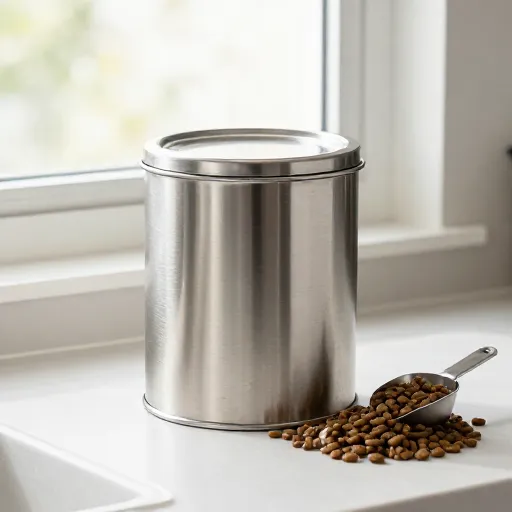
If you want something that’s both stylish and practically indestructible, go with a large stainless steel canister. They’re airtight, easy to clean, and they don’t absorb odors like plastic does. I have one that holds about 40 pounds of kibble. It sits in my pantry and looks like a high-end kitchen piece. It’s not cheap, but it’s the last dog food container you’ll ever buy.
Look for one with a rubber gasket seal—that’s what keeps the air out and the food fresh.
Conclusion
Storing dog food doesn’t have to be an eyesore or a hassle. Whether you go for a simple plastic tote, a vintage bread box, or a fancy stainless steel canister, the goal is the same: keep the food fresh, safe from pests, and easy to access. I’ve tried most of these ideas myself, and honestly, the best one is the one that fits your space and your routine.
Don’t be afraid to mix and match. Maybe you use a rolling cart for daily feeding and a vacuum-sealed system for bulk storage. Whatever works for you and your pup is the right answer. Now go make your kitchen a little more dog-friendly!
Frequently Asked Questions
Can I store dog food in the original bag?
Yes, the original bag is actually designed to keep food fresh. But it’s not very sturdy. I recommend putting the whole bag inside a clean container or bin for extra protection against pests and tears.
How long does dry dog food last in a sealed container?
Most kibble stays fresh for about 6 weeks after opening if stored properly in a cool, dry place. Airtight containers help extend that a bit. Always check the expiration date on the bag.
Should I keep dog food in the fridge or freezer?
You can freeze kibble to keep it fresh longer, especially if you buy in bulk. Just make sure it’s in an airtight bag or container. I don’t recommend refrigerating dry food—it can get damp and grow mold.
Is it safe to store dog food in plastic containers?
Yes, as long as the plastic is food-grade and BPA-free. Avoid containers that previously held chemicals or strong-smelling items. Stainless steel or glass are great alternatives if you’re worried about plastic.
How do I prevent bugs in my dog food storage?
Keep the container tightly sealed at all times. Store it in a cool, dry place away from direct sunlight. You can also add a bay leaf or two inside the container—some people swear it repels weevils and moths.