7 Perfect Dog Gates Indoor for Dogs (That Actually Look Good)
Let’s be real—dog gates are a lifesaver, but they can totally ruin the vibe of your living room. I’ve been through the struggle of trying to keep my pup out of the kitchen while also not wanting my home to look like a daycare center. After a lot of trial and error (and a few chewed-up wooden gates), I found some amazing options that are both functional and actually cute.
Whether you have a tiny escape artist, a giant breed that thinks they’re a lapdog, or a senior pup who needs a safe zone, there’s a perfect gate out there. Here are my top 7 picks for indoor dog gates that blend safety with style.
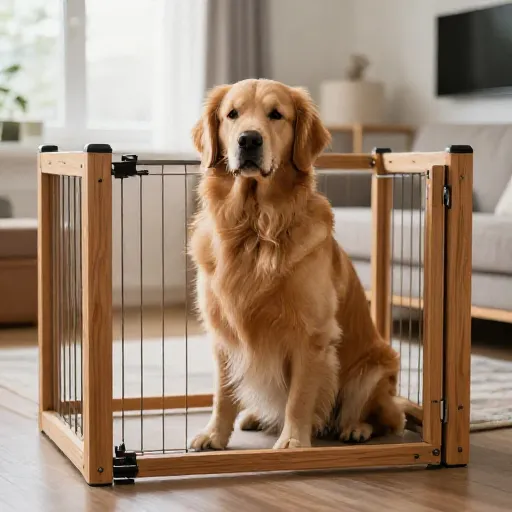
1. The Classic Wooden Freestanding Gate
If you want something that looks like furniture instead of a baby product, this is your best bet. These gates are usually made of solid pine or bamboo and don’t require any drilling. They work by pressure mounting between two walls or doorframes.
I love these for wide openings like hallways or archways. They look like a room divider, so guests won’t even realize it’s a dog gate until they see my golden retriever staring longingly through the slats.
- Best for: Wide entrances and renters (no screws needed).
- Pro tip: Look for one with a small walk-through door so you don’t have to climb over it.
- Watch out: Make sure the slats are close enough that small paws can’t squeeze through.
2. The Heavy-Duty Metal Gate for Big Dogs
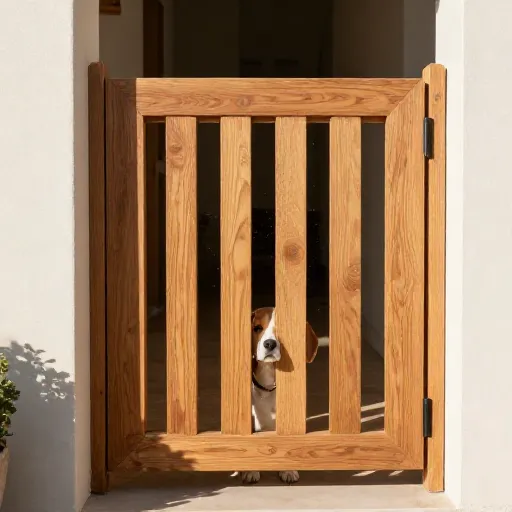
I have a friend with a 100-pound German Shepherd who thought gates were just suggestions. For big, strong dogs, you need something with serious metal construction. These are the ones with thick steel frames and a strong latch system.
They’re not the prettiest, but they are the most reliable. Most of them come in black or white, so they can blend in with modern decor. They are also super easy to clean—just wipe off the drool and muddy nose prints.
- Best for: Chewers and dogs that like to body-slam obstacles.
- Pro tip: Choose a gate with a bottom rail that sits flush to the floor to prevent tripping.
- Watch out: These can be heavy to move, so pick a spot and stick with it.

3. The Retractable Mesh Gate (Space Saver)
This is my absolute favorite for small apartments or homes where you don’t want a permanent gate blocking your path. The retractable mesh gate rolls up into a compact case when not in use. It’s like a window shade for your hallway.
It’s not for dogs that are determined to push through, but it’s perfect for creating a visual barrier for a small or medium-sized dog. It’s super lightweight and can be mounted to the wall or used with the included hardware. When guests come over, just roll it up and tuck it away.
- Best for: Temporary barriers and small spaces.
- Pro tip: Make sure the mesh is taut enough so your dog doesn’t get tangled in it.
- Watch out: Avoid using this if your dog is a heavy chewer—the mesh can be a tempting target.
4. The Extra-Tall Gate for Jumpers
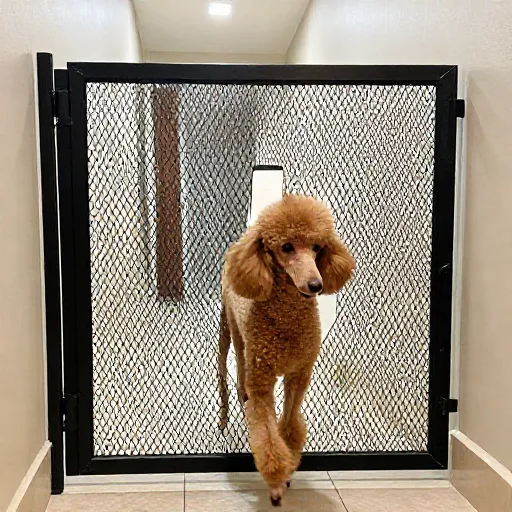
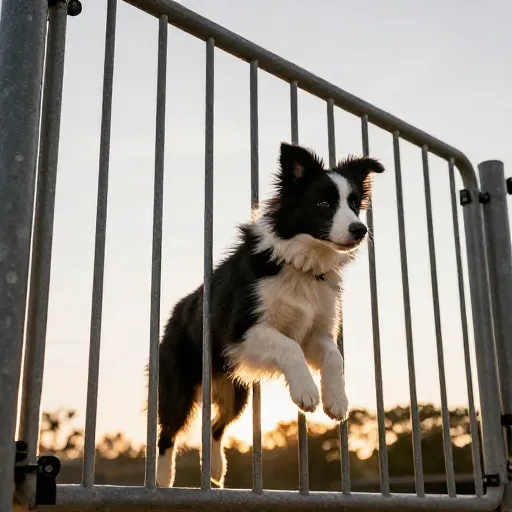
If your dog thinks your living room is the obstacle course from a dog show, you need height. Standard gates are usually around 30 inches, but for jumpers, you need something closer to 36–42 inches tall. I learned this the hard way when my terrier cleared a standard gate like it was nothing.
These tall gates often come with vertical bars that make climbing difficult. They are usually made of metal or a sturdy plastic composite. They give you peace of mind knowing your furry acrobat is staying put.
- Best for: Huskies, terriers, and other athletic escape artists.
- Pro tip: Pair it with a gate that has a secure latch at the top to prevent nose-pushing.
- Watch out: Tall gates can look imposing, so place them in less visible areas if you care about aesthetics.
5. The Folding Wooden Gate (The Aesthetic Pick)
This is the one I actually have in my dining room. It’s a freestanding wooden gate that folds into a zig-zag shape. It looks like a beautiful decorative screen. It doesn’t attach to anything, so you can bend it around corners or shape it to fit oddly sized openings.
It’s not meant to keep a determined dog contained, but it’s perfect for blocking a specific spot like the TV cords or the cat’s litter box. It’s light, easy to move, and looks like a piece of mid-century modern art.
- Best for: Aesthetic purposes and blocking off small areas.
- Pro tip: Use it to create a “no-dog zone” around your indoor plants.
- Watch out: Make sure the hinges are sturdy; flimsy ones can sag over time.
6. The Pressure-Mounted Gate with a Pet Door
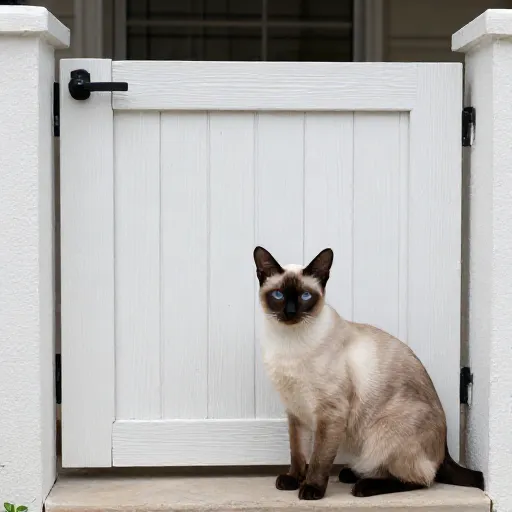
This is the ultimate convenience gate. It has a small built-in door that only opens for your small dog or cat, while keeping the big dogs out. It’s genius for multi-pet households. My cat can go eat her food in peace, and my dog just stares at her from the other side.
It’s usually made of metal or wood and installs via pressure springs—no tools needed. The little pet door is typically around 8-10 inches wide, perfect for smaller pets. It’s a game-changer for mealtime separation.
- Best for: Multi-pet homes with size differences.
- Pro tip: Teach your small dog to use the little door with treats first.
- Watch out: Make sure the pet door flap is quiet so it doesn’t wake you up at 3 AM.
7. The Customizable Barrier Gate (Modular Panels)
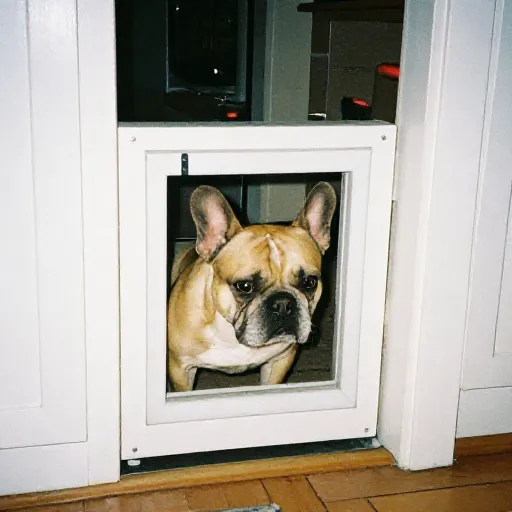
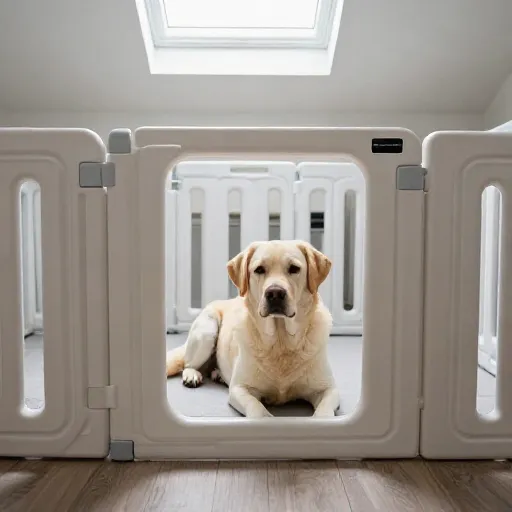
Sometimes you need a gate that isn’t a standard rectangle. Modular panel gates are like building blocks for your home. They come in sections that you can clip together to create a custom fence, an X-pen, or a wide barrier for unusually shaped spaces.
I used these to create a safe pen around my fireplace. They are flexible and can be bent into a circle or a straight line. They are usually made of metal or heavy-duty plastic and are super easy to reconfigure as your needs change.
- Best for: Odd angles, fireplaces, and creating temporary play areas.
- Pro tip: Look for panels that can be added to over time to expand your setup.
- Watch out: The connections can be slightly wobbly if not snapped in correctly, so double-check the locks.
Final Thoughts
Finding the right dog gate is all about balancing your dog’s needs with your home’s style. Don’t just buy the first one you see. Measure your doorway, think about your dog’s jumping skills, and consider how much you care about the look. Trust me, there is a perfect gate out there for every home.
Take your time, read reviews, and remember that a good gate is an investment in your sanity and your dog’s safety. Happy gating!
FAQ: Quick Answers to Common Gate Questions
Q: How do I measure for a dog gate?
A: Measure the width of the opening at three points: the top, the middle, and the bottom. Use the narrowest measurement to ensure a tight fit. Also, check if your baseboards are deep, as this can affect the fit.
Q: Are pressure-mounted gates safe for all dogs?
A: No. They are great for dogs that don’t push hard, but a rambunctious big dog can knock them down. For heavy dogs, always go with a hardware-mounted gate that screws into the wall.
Q: Can I use a baby gate for my dog?
A: Yes, but with caution. Many baby gates have horizontal bars that dogs can climb like a ladder. Look for a gate with vertical bars or a mesh panel to prevent climbing.
Q: Should I get a wooden or metal gate?
A: It depends on your dog. Wood looks nicer but can get scratched and chewed. Metal is more durable and easier to clean. If you have a chewer, definitely go with metal.
Q: How do I stop my dog from jumping over the gate?
A: You need a taller gate. Look for one that is at least 3/4 of your dog’s height at the shoulder. For serious jumpers, consider a gate that is 36 inches or taller.