Stop the Bark Chain Between Your 2 Dogs: 10 Calm-Down Tricks That Actually Work

If you live with two dogs, you know the sound. One barks. The other answers. Suddenly it’s a full-on barking relay in your living room, and you’re standing there wondering who started it and how to make it stop.
I’ve been there. The “bark chain” happens when one dog’s bark triggers the other, and then they keep feeding off each other’s energy. The good news? You can break the chain without yelling, punishing, or losing your patience.
Here are the practical tricks I use to stop the bark chain between my two dogs, keep the peace, and help both pups feel calmer.
1. Find the First Dog Who Starts the Chain
Every bark chain has a spark. It might be your younger dog reacting to a noise, or your older dog guarding the window. Watch closely for the first bark, the first stiff body, or the first stare.
Once I know who starts it, I can step in earlier. I don’t wait for both dogs to explode. I interrupt the first dog with a cheerful “let’s go” and move them away from the trigger.
If you can’t tell who starts it, film a few minutes on your phone. The camera often shows the tiny trigger you missed in the moment.
2. Break Eye Contact and Separate the Spark
Dogs often bark because they’re locked in a stare. One dog looks, the other looks back, and the tension climbs. I break that eye contact fast.
I step between them—calmly, not angry—and guide one dog to a different spot. A baby gate, a couch cushion, or even my body can block the visual line.
I don’t drag them apart. I make space, then reward the first moment of quiet. That tiny pause is where the chain starts to loosen.

3. Teach a “Quiet” Cue Before the Chaos
You can’t teach “quiet” in the middle of a barking storm. I practice when my dogs are calm and the house is boring.
I say “quiet” in a soft voice, wait one second of silence, then reward. I repeat this for a few minutes a day. Soon, the word starts to mean “pause and look at me.”
During a real bark chain, I use the cue once. If it works, I reward big. If it doesn’t, I skip the repeat and go straight to separating them. Repeating “quiet, quiet, quiet” just adds noise.

4. Use Barriers, Not Punishment, in the Moment
When both dogs are barking, punishment usually makes it worse. Yelling sounds like barking to them, and it can crank up the energy.
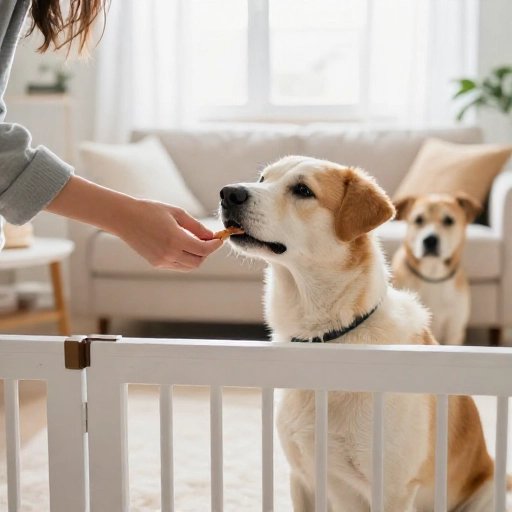
Instead, I use a barrier. A baby gate, an exercise pen, or a closed door gives everyone a chance to reset. It’s not a time-out prison; it’s a calm pause.
I keep the barrier boring. No scolding. I just separate them, wait for quiet, then let them back together one at a time if they’re relaxed.

5. Change the Trigger: Doorbell, Fence, Window
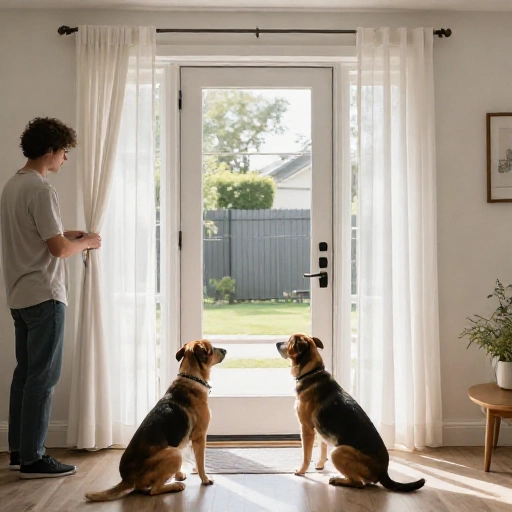
Most bark chains have a trigger. The doorbell rings. A dog walks past the fence. A squirrel dares to enter the yard. Then the chain begins.
I change the trigger before it changes my dogs. I block the window with frosted film, play doorbell sounds at low volume during dinner, or bring them inside before the mail carrier arrives.
When I can’t remove the trigger, I add white noise or a TV. Less input means less barking. It’s simple, but it works.
6. Reward the First Dog Who Stays Silent
Barking gets attention. Quiet usually gets ignored. I flip that. I reward the dog who stays silent, even for a second.
If one dog barks and the other holds it together, I calmly praise and treat the quiet one. I don’t make a big party—just a soft “yes” and a treat.
Over time, both dogs learn that silence pays better than joining the bark chain. It’s a slow shift, but it’s powerful.
7. Practice “Parallel Calm” With Both Dogs
My dogs don’t always need to play together. In fact, they need to learn how to be calm near each other without interacting.
I put them on separate beds or mats in the same room. I give each a chew or a stuffed toy. The rule is simple: no staring, no barking, just chilling.
Start with five minutes and build up. This teaches them that being together doesn’t always mean reacting together. The bark chain loses its fuel.

8. Give Each Dog a Job or Puzzle to Redirect Energy
A bored dog is a barking dog. If my two dogs have nothing to do, they’ll invent a game. Usually it’s “who can bark louder?”
I give them jobs. One gets a snuffle mat, the other gets a frozen Kong. Or we do a quick training session with simple tricks. Mental work tires them out faster than a walk.
When their mouths are busy chewing or searching, they can’t bark at each other. It’s one of my favorite ways to stop the chain before it starts.

9. Keep Your Energy Boring and Predictable
Dogs read our energy. If I run into the room yelling, they think I’m joining the bark chain. If I panic, they get more aroused.
I practice being boring. I move slowly. I use a low voice. I don’t wave my arms or make sudden moves. Boring is calming.
I also keep a routine. Walks, meals, potty breaks, and quiet time happen around the same time. Predictable days mean fewer surprise bark fests.

10. Know When to Get a Trainer or Vet Involved
Sometimes the bark chain is more than a habit. It can be anxiety, pain, resource guarding, or a personality clash. If I’ve tried everything and nothing works, I ask for help.
A certified trainer or behavior consultant can see patterns I miss. A vet can check for pain or medical issues that make dogs grumpy and vocal.
Asking for help isn’t failure. It’s love. The sooner I get support, the sooner my two dogs can relax around each other.

Conclusion
Stopping the bark chain between two dogs isn’t about finding the “bad dog.” It’s about interrupting the pattern, lowering the energy, and rewarding the quiet moments. Start with one trick from this list. Then add another.
With patience and consistency, you can turn that barking relay into a peaceful household. Your ears—and your neighbors—will thank you.
FAQ
Q: Why do my two dogs bark at each other?
A: Usually one dog reacts to a trigger, then the other joins in. It can be excitement, alert barking, anxiety, or guarding. The bark becomes a chain reaction.
Q: Should I punish my dogs for barking?
A: I don’t recommend it. Yelling or punishing can add stress and make the barking worse. It’s better to interrupt, separate calmly, and reward quiet.
Q: How long does it take to stop the bark chain?
A: It depends on the dogs and the trigger. Some pups improve in a few days with consistency. Others need weeks or months. Small wins count.
Q: Can two dogs live peacefully if they bark at each other?
A: Yes. Many dogs do. The key is managing triggers, teaching calm behavior, and giving each dog space and mental exercise.
Q: What if one dog is older or anxious?
A: Go slower and protect the anxious dog. Use barriers, separate walks, and vet advice. Don’t force interaction. Calm coexistence is the goal.